
Concrete Underpinning Alton
 (459)
(459)
(459)
Concrete Underpinning Services for Long-Term Foundation Stability and Structural Strength
A concrete underpinning system is a proven structural method used to strengthen and stabilize existing building foundations by extending and reinforcing their load-bearing base using reinforced concrete. It is one of the most reliable solutions for homes experiencing foundation movement, settlement, or long-term structural stress.
Unlike surface-level foundation repairs that only address visible damage, concrete underpinning focuses on the deeper structural system beneath the home. It strengthens the foundation at its base level, redistributes weight properly, and ensures the building remains stable even under changing soil and environmental conditions.
At Plumber On Demand, concrete underpinning is carried out with precision planning and structural care, ensuring that every reinforcement stage supports the long-term safety of the home above.
If you are noticing foundation movement or structural instability, contact Plumber On Demand at 905-220-5006 for a professional assessment.
What Is Concrete Underpinning?
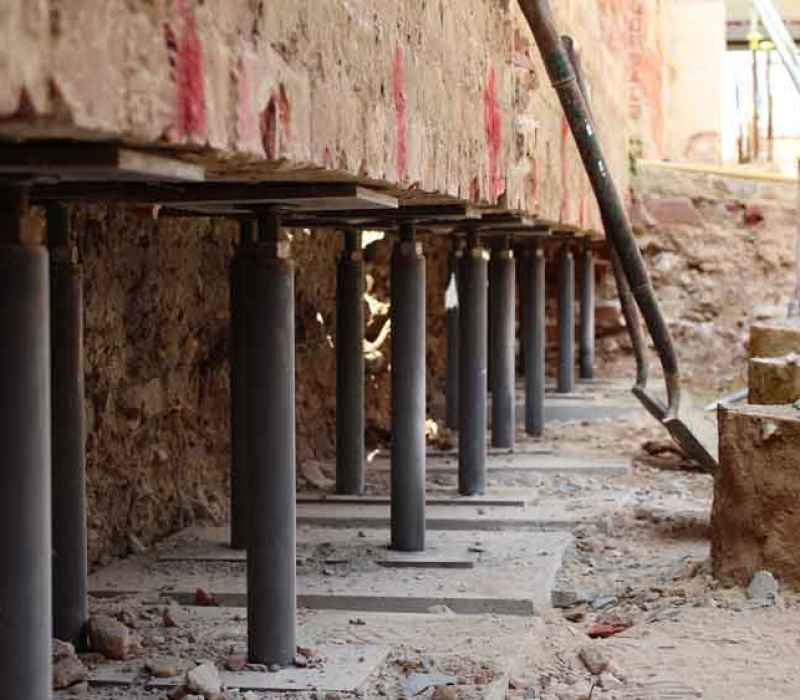
Concrete underpinning is the process of strengthening an existing foundation by excavating sections beneath it and installing reinforced concrete supports that extend the foundation to a deeper, more stable level.
This method improves the foundation’s ability to:
- Carry structural loads more effectively
- Resist soil movement and pressure
- Prevent further settlement or shifting
- Stabilize weakened foundation zones
Instead of replacing the entire foundation, concrete underpinning enhances and reinforces what already exists, making it a highly efficient and durable structural solution.
Why Concrete Underpinning Becomes Necessary
Over time, a home’s foundation can begin to weaken due to environmental conditions, soil behavior, and structural load changes. Concrete underpinning becomes necessary when the foundation can no longer safely support the structure without reinforcement.
Soil Settlement and Ground Movement
One of the most common causes of foundation instability is soil movement beneath the home. Soil can compress, shift, or erode over time, creating uneven support conditions.
This leads to:
- Foundation sinking in certain areas
- Uneven load distribution
- Structural stress points forming
Concrete underpinning transfers the load to more stable soil layers below.
Aging Foundation Materials
Older homes often have foundations that naturally degrade over time due to:
- Long-term exposure to moisture
- Material fatigue
- Outdated construction methods
- Natural concrete wear
Underpinning restores strength where the original structure has weakened.
Water and Moisture Damage
Water infiltration and poor drainage can weaken both soil and concrete over time.
This can result in:
- Erosion beneath the foundation
- Cracking in foundation walls
- Reduced structural support capacity
Concrete underpinning helps stabilize affected areas and reduce further movement.
Increased Structural Load Demands
Home renovations, additions, or changes in usage can increase the weight placed on a foundation beyond its original design limits.
Underpinning helps redistribute and strengthen load capacity to handle these changes safely.
Early Warning Signs of Foundation Problems
Concrete underpinning is often recommended when early structural warning signs begin to appear.
These may include:
- Cracks in basement walls or floors
- Stair-step cracking in masonry
- Uneven or sloping floors
- Doors and windows sticking or misaligned
- Visible foundation movement or shifting
- Gaps forming between walls and ceilings
- Water seepage through foundation walls
These indicators suggest that the foundation is under stress and may require reinforcement.
How Concrete Underpinning Works
Concrete underpinning follows a controlled structural process designed to reinforce the foundation without compromising the stability of the home above.
Each stage is carefully executed to ensure safety and long-term durability.
Structural Evaluation and Foundation Assessment
The process begins with a detailed inspection of the foundation system.
This includes:
- Identifying cracks and movement patterns
- Measuring settlement levels
- Evaluating soil conditions
- Reviewing load distribution
- Assessing structural weak points
This assessment determines how much reinforcement is needed and where it should be applied.
Planning the Underpinning Layout
Once the structure is evaluated, a reinforcement plan is developed.
This includes:
- Identifying sections to be excavated
- Planning load transfer points
- Determining reinforcement depth
- Establishing structural sequencing
This ensures the foundation remains stable during all stages of work.
Controlled Excavation Beneath the Foundation
Small sections beneath the foundation are carefully excavated in a controlled sequence.
This allows:
- Continuous structural support
- Safe load distribution during work
- Prevention of foundation movement
- Gradual reinforcement installation
Only small sections are worked on at a time to maintain stability.
Structural Methods, Soil Behavior, and Foundation Strengthening Techniques
Concrete underpinning is a highly controlled structural process, and the method used depends heavily on how the foundation is failing, what type of soil supports the structure, and how the building loads are distributed. Because every home behaves differently under stress, the underpinning system must be tailored rather than standardized.
At Plumber On Demand, concrete underpinning is designed to restore stability at the foundation level while ensuring the structure above remains fully supported throughout every stage of work.
Common Concrete Underpinning Methods
There are several established methods used in concrete underpinning. Each one is selected based on structural conditions and long-term stability requirements.
Mass Concrete Underpinning Method
Mass concrete underpinning is one of the most traditional and widely used techniques. It involves excavating sections beneath the existing foundation and filling them with reinforced concrete to extend the foundation deeper into stable soil.
This method is commonly used when:
- The foundation has moderate settlement
- Soil conditions are stable but shallow
- Structural reinforcement is needed in stages
- Load transfer can be managed gradually
The work is completed in sections so the building remains supported at all times.
Reinforced Concrete Beam Underpinning
In this method, reinforced concrete beams are installed to redistribute structural loads away from weakened foundation zones.
It is typically used when:
- Load distribution across the foundation is uneven
- Certain sections of the structure carry excessive weight
- Structural walls require additional support
- A more engineered load-sharing system is needed
This approach helps balance structural forces across the foundation system.
Deep Concrete Base Extension
When a foundation needs to be extended deeper due to poor soil conditions or significant settlement, deep concrete base extension is used.
This method allows:
- Transfer of structural loads to deeper stable soil layers
- Improved foundation depth and stability
- Correction of significant settlement issues
- Long-term structural reinforcement
It is often used in more advanced foundation correction projects.
Soil Conditions and Their Role in Concrete Underpinning
Soil behavior is one of the most important factors in foundation stability. Concrete underpinning is often designed specifically to overcome soil limitations.
Compressible Soil Layers
Some soils compress under the weight of a building, especially if they contain loose particles or organic material. This leads to gradual foundation sinking.
Concrete underpinning bypasses these weak layers by transferring load to deeper, more stable ground.
Expansive Soil Movement
Certain soils expand when wet and contract when dry. This repeated movement places stress on foundation walls and can cause cracking or shifting.
Underpinning helps reduce the impact of this movement by anchoring the foundation more securely.
Soil Erosion and Void Formation
Water movement under or around a home can wash away soil, creating empty spaces beneath the foundation.
These voids reduce support and increase the risk of uneven settlement.
Concrete underpinning restores structural support by replacing or reinforcing these weak areas.
Load Transfer in Concrete Underpinning
A key goal of concrete underpinning is load transfer—moving the weight of the structure from unstable soil to stronger, deeper support layers.
This process ensures:
- Even distribution of structural weight
- Reduced stress on weakened foundation areas
- Improved long-term stability
- Better resistance to future movement
By correcting load pathways, the foundation becomes more balanced and durable.
Structural Stability During Underpinning Work
Because concrete underpinning involves working directly beneath a live structure, maintaining stability throughout the process is essential.
This is achieved through:
- Sectional excavation techniques
- Temporary structural support systems
- Controlled sequencing of concrete placement
- Continuous monitoring of movement
Only small sections are excavated and reinforced at a time to ensure the structure remains stable throughout construction.
Integration With Basement and Foundation Systems
Concrete underpinning is often performed in basement environments, where foundation access is available.
This allows for integration with:
- Basement wall reinforcement systems
- Drainage and waterproofing improvements
- Load-bearing support adjustments
- Structural alignment corrections
This integrated approach ensures the foundation and basement system function together as one stable structure.
Long-Term Structural Behavior After Underpinning
Once concrete underpinning is completed, the foundation is significantly stronger and more stable. However, long-term performance depends on maintaining surrounding conditions.
Key factors include:
- Soil stability around the home
- Proper water drainage management
- Prevention of excessive moisture buildup
- Monitoring for new structural changes over time
When properly maintained, a reinforced foundation can remain stable for decades.
Benefits of Concrete Underpinning
Concrete underpinning provides long-lasting improvements that strengthen both the foundation and the overall structural performance of the home.
Restores Foundation Stability
The primary benefit of concrete underpinning is the restoration of structural stability in the foundation.
This includes:
- Stabilizing shifting or sinking foundation areas
- Strengthening weakened load-bearing zones
- Correcting uneven structural settlement
- Reinforcing the base of the home for long-term performance
Once stabilized, the foundation can safely support the structure above without ongoing movement.
Stops Ongoing Structural Movement
Foundation movement typically worsens over time if left untreated. Concrete underpinning helps stop this progression by securing the foundation to more stable soil layers.
This helps prevent:
- Expansion of foundation cracks
- Increased settlement over time
- Further wall bowing or shifting
- Progressive structural imbalance
Improves Structural Alignment in the Home
When the foundation stabilizes, the effects are felt throughout the entire structure.
Homeowners often notice:
- More level floors
- Improved door and window alignment
- Reduced wall cracking inside the home
- Better overall structural balance
These improvements reflect a properly supported foundation system.
Increases Long-Term Property Confidence
A stable foundation is one of the most important factors in property value and long-term confidence in a home.
Concrete underpinning helps:
- Improve inspection outcomes
- Reduce concerns about hidden structural issues
- Strengthen buyer confidence
- Support long-term property value retention
Supports Future Renovation Potential
Homes with reinforced foundations are better suited for future upgrades and renovations.
This includes:
- Basement finishing projects
- Structural modifications
- Home expansions or additions
- Interior redesigns requiring stable load support
Without a stable foundation, these improvements may not be possible or may require additional correction.
When Concrete Underpinning Is Required
Concrete underpinning is typically recommended when foundation issues move beyond surface-level concerns and indicate deeper structural instability.
Visible Foundation Cracks or Movement
Cracks that widen over time or appear in structural patterns often indicate underlying foundation stress.
Uneven or Sloping Floors
Floors that tilt or feel uneven are a common sign that the foundation is no longer providing consistent support.
Wall Bowing or Structural Separation
Foundation walls that lean inward or show separation from other structural components often require reinforcement.
Ongoing Soil or Moisture-Related Issues
Water infiltration or unstable soil conditions can weaken foundation support over time, making underpinning necessary.
Long-Term Considerations After Concrete Underpinning
Once concrete underpinning is completed, the focus shifts to maintaining stability and protecting the reinforced structure.
Monitoring Structural Conditions
Homeowners should periodically check for:
- New or changing cracks
- Shifts in floor level
- Misaligned doors or windows
- Signs of moisture intrusion
Early detection helps maintain long-term stability.
Managing Water and Drainage Around the Home
Water is one of the most significant factors affecting foundation performance. Proper drainage reduces pressure on the foundation and helps preserve underpinning work.
This includes:
- Directing water away from the home
- Maintaining proper grading around the structure
- Preventing pooling near foundation walls
Maintaining Soil Stability
Soil conditions around the home should remain as consistent as possible. Excessive moisture changes can still affect even a reinforced foundation over time.
Why Professional Concrete Underpinning Matters
Concrete underpinning is a deep structural process that directly affects the stability of the entire home. It must be performed with precision, planning, and structural understanding.
Improper execution can result in:
- Continued foundation movement
- Uneven load distribution
- Long-term structural instability
- Costly corrective repairs
Professional underpinning ensures:
- Correct depth and placement of reinforcement
- Safe excavation sequencing
- Proper load transfer to stable soil layers
- Long-term foundation durability
At Plumber On Demand, every concrete underpinning project is completed with careful attention to structural integrity and long-term performance.
For professional evaluation or foundation assessment, contact 905-220-5006.
Why Homeowners Choose Plumber On Demand
Homeowners rely on Plumber On Demand for concrete underpinning because of our structured, safety-focused approach to foundation stabilization.
Our process includes:
- Detailed foundation inspections
- Clear identification of structural weaknesses
- Customized underpinning strategies
- Controlled and safe execution methods
- Focus on long-term structural performance
We ensure that every foundation is reinforced properly and built to last.
Concrete underpinning is one of the most effective methods for restoring and strengthening a compromised foundation. By extending and reinforcing the base of the structure, it ensures that the home is supported by stable ground conditions and protected against future movement.
Unlike temporary repairs, concrete underpinning addresses the root cause of foundation instability. It improves structural balance, enhances long-term durability, and restores confidence in the safety of the home.
At Plumber On Demand, we specialize in delivering concrete underpinning solutions that prioritize strength, precision, and long-term stability. Every project is carefully planned to ensure the foundation is reinforced correctly and the home remains secure for years to come.
If you are experiencing foundation movement or structural concerns, contact Plumber On Demand today at 905-220-5006 for a professional assessment and expert guidance.
Contact Plumber On Demand