
Weeping Tiles Installation Ohsweken
 (459)
(459)
(459)

Professional Weeping Tiles Installation Services | Plumber On Demand
Perimeter Drain Tile at the Footing—Slope, Filter Sock, Outlet, and Clay Tile Replacement
Weeping tiles installation is the drainage-pipe job at the foundation footing. Perforated pipe (weeping tile, drain tile, or a footing-level French drain) collects groundwater and carries it to a sump or approved storm outlet.
At Plumber On Demand, we install and replace weeping tile for homes and commercial buildings. This page is about the pipe, gravel, slope, and outlet—not a full exterior membrane system and not the sump pump as a standalone product.
If your basement wets at the cove after rain, or an old clay drain has clogged, contact Plumber On Demand today at 289-501-6316.
What Weeping Tiles Installation Means
Weeping tile is perimeter drainage pipe set at footing level. Despite the word “tile,” modern systems are usually plastic perforated pipe.
Older homes often have clay or concrete tile that has silted, separated, or collapsed.
A weeping tiles installation may include:
- Excavation to the footing on the interior, the exterior, or both
- Removal of failed clay tile, broken pipe, and mud-filled stone
- New perforated pipe with a designed slope
- Filter sock and/or fabric so fines do not clog the perforations
- A gravel envelope that lets water reach the pipe
- Connection to a sump basin, storm line, or approved discharge
- Cleanouts or access where the layout needs future service
The pipe’s job is to relieve water at the footing so it does not push through the cove or saturate the lower wall.
It is not a waterproofing membrane painted on the wall, and it is not the pump that lifts water after the pipe delivers it.
Why Weeping Tile Matters
Groundwater does not need a dramatic flood to damage a basement. Water sitting at the footing finds the cove joint, hairline cracks, and porous masonry.
Working weeping tile helps:
- Lower the water level next to the footing
- Give hydrostatic pressure a path of least resistance into a drain
- Reduce repeated dampness at the floor-wall joint
- Replace clay systems that no longer convey water
- Feed a sump or storm outlet in a controlled line instead of through the slab
- Protect finishes and stored items from chronic seepage at the perimeter
A sump that rarely runs is not proof the tile is fine.
The pipe may be clogged, and water may be taking a path through the wall instead.
Why Weeping Tile Fails or Was Never Installed
Many wet basements have a drainage-pipe problem, not a “mystery leak.”
Common situations include:
- Original clay tile that filled with silt and roots
- Sections of tile that separated so water dumps into soil
- Pipe installed without slope, so it holds water
- Missing filter, so fines packed the gravel and perforations
- No outlet, or an outlet that was buried or crushed
- Additions that never tied new footings into the old drain
- Interior floors poured without a working perimeter channel
- Exterior pipe crushed during later landscaping or paving
If the wall membrane is intact but the footing is sitting in water, the missing piece is often the tile.
Signs You Need Weeping Tiles Installed or Replaced
Weeping tile work is often indicated when:
- Water appears at the cove after rain or snowmelt
- The lower wall is damp in a line around much of the basement
- An inspection camera or excavation finds collapsed clay tile
- A sump is present but the basement still seeps at the edges
- Old stone or clay drains are visible and full of mud
- One side of the building is wet because that run of pipe is dead
- You can hear or see that a “drain” outside no longer takes water
A single isolated crack with a dry cove elsewhere may be leak repair. Widespread footing-level wetness is a drainage-pipe conversation.
Interior Placement vs. Exterior Placement
Weeping tile can sit on the inside of the footing, the outside, or, in some buildings, both. The physics are similar: collect water at the lowest practical point and take it away. The construction path is not.
• Exterior Weeping Tile
Exterior pipe is set in a trench outside the wall, usually when that wall is already excavated or when the soil-side drain is the one that failed. It intercepts groundwater before it loads the wall.
Exterior placement needs access, spoil handling, and careful backfill so the pipe is not crushed.
• Interior Weeping Tile
Interior pipe is set along the inside of the footing, often under the slab edge or in a formed channel. Water that reaches the interior face is collected and piped to a sump.
Interior placement is used when exterior excavation is blocked by decks, walks, additions, or lot limits.
• Choosing a Side
The right side depends on where water is, what can be opened, and whether an existing drain is salvageable. This job remains the pipe and its envelope—not a full exterior waterproofing membrane package.
Slope, Sock, Gravel, and Outlet
Weeping tile that “looks installed” can still fail if four details are wrong.
• Slope
Pipe must fall toward the sump or storm connection. Flat pipe silts in. Reverse slope sends water to a low spot in the trench.
• Filter Sock and Fabric
A sock on the pipe and/or fabric around the stone keeps soil fines out. Without a filter, clay and silt become the drain media.
• Gravel Envelope
Stone around the pipe is the collection zone. Native soil packed against perforations is a clog waiting to happen.
• Outlet
Collected water must go somewhere defined: a sump basin, a storm connection where allowed, or another approved discharge. A beautiful loop of pipe with no outlet is a storage trench.
Replacing Clogged Clay Tile
Clay weeping tile was standard for decades. Sections are short. Joints open. Roots and mud enter. Once the interior of the clay is packed, water bypasses the drain entirely.
Replacement typically means:
- Opening the run to the footing
- Removing clay, broken connectors, and contaminated stone
- Checking whether only one elevation failed or the whole loop is dead
- Installing continuous perforated pipe with proper joints
- Rebuilding the gravel and filter envelope
- Tying the new pipe to a working outlet
Spot-repairing one clay stick in a mud-filled run often leaves the rest of the loop useless.
The question is whether the drain still conveys water, not whether a piece of clay is still visible.
Connection to a Sump or Storm Line
Weeping tile is a collector. It is not the pump.
• Sump Connection
Interior and many exterior systems terminate at a sump basin. The pipe should enter so water actually reaches the basin, not dump beside it into soil.
The pump, standpipe, and discharge line are separate equipment.
Installing tile does not automatically mean replacing a pump, and replacing a pump does not install tile.
• Storm Connection
Where codes and site conditions allow, tile may connect to a storm system. That connection must be legal, graded, and protected from backflow where required.
Dumping footing drains into a sanitary sewer is not the job. Outlet design is part of weeping tiles installation, not an afterthought.
Why DIY Weeping Tile Work Is Risky
A shallow trench with cheap pipe is not footing drainage.
DIY weeping tile projects may:
- Set pipe above the footing so water still sits at the cove
- Skip slope and create a silt trap
- Use solid pipe where perforated pipe is needed, or the reverse
- Forget filter fabric and pack the pipe with native clay
- Crush pipe during backfill
- Break into a slab without a plan for the channel and patch
- Connect to the wrong sewer or to no outlet at all
- Undermine a footing with an uncontrolled excavation
Failed DIY drains are a common reason professionals are called to replace a “new” system that never ran.
Our Weeping Tiles Installation Process
The sequence keeps the pipe at the right elevation with a real outlet.
• 1. Moisture Path and Drain Assessment
We look at where water shows, whether an old clay or plastic drain exists, and whether the practical placement is interior, exterior, or a combination.
• 2. Outlet Planning
Before digging a long run, we confirm where water will go: sump, storm, or another approved discharge. Pipe without an outlet is not a system.
• 3. Access and Layout
We mark the perimeter run, note obstructions, and plan slab cuts or exterior trenches so the pipe can follow the footing.
• 4. Excavation to Footing Elevation
Soil or slab is opened to the drain elevation. The trench is kept stable enough to set pipe without collapsing onto the work.
• 5. Removal of Failed Tile and Contaminated Stone
Clogged clay, crushed plastic, and mud-filled gravel come out so the new envelope is not sitting in the old failure.
• 6. Pipe, Slope, Sock, and Gravel
New perforated pipe is set to fall toward the outlet, filtered, and bedded in stone so water can enter along the run.
• 7. Connection and Testing of Flow
Joints, sump entries, and storm ties are completed. We want water to move in the pipe, not disappear into a dark trench.
• 8. Close-Up and Surface Restoration in Scope
Slab patches, backfill, and grade in the work zone are closed so the drain remains protected. Decorative finishes beyond the drainage job are separate.
Weeping Tiles for Residential Properties
Homes typically need weeping tile when:
- Finished or storage basements wet at the edges after storms
- Older clay systems have reached the end of their useful life
- A renovation will cover a cove that still seeps
- An addition never received a tie-in to the original loop
- Interior placement is required because the yard cannot be opened
Homeowners often ask whether they need “waterproofing” or “just the drain.” If the wall is sound and the problem is water at the footing, the drain is the core job.
A full exterior membrane is a different scope.
Weeping Tiles for Commercial Buildings
Commercial footings can be long, stepped, or interrupted by loading areas and areaways.
Commercial weeping tile work often includes:
- Long perimeter runs with multiple outlets or sumps
- Phasing so occupied floors stay in service
- Coordination with existing storm structures
- Documentation of pipe size, slope, and termination points
- Interior placement under slabs that cannot be excavated outside
A dead drain under a commercial slab can wet inventory along an entire wall. The repair is still a pipe-and-envelope job, scaled to the building.
Weeping Tiles for Landlords and Property Managers
In rentals, tenants report “the basement leaks” when the cove is wet. The cause may be failed tile, not a unit plumbing problem.
We assist with:
- Distinguishing footing drainage failure from supply or sewer leaks
- Unit and common-area access for interior runs
- Clear notes on what pipe was replaced and where it outlets
- Sequencing around occupied buildings
- Explaining why a new pump did not stop edge seepage if the tile is clogged
Managers need a drain that actually collects, not another mechanical gadget on a dead line.
Weeping Tiles Installation Cost Factors
Price follows the run of pipe and how hard that run is to open.
Factors that commonly affect cost include:
- Linear footage of interior vs. exterior trench
- Slab thickness and how much floor must be cut
- Depth, soil type, and shoring needs
- Amount of old clay and contaminated stone to remove
- Number of corners, steps in the footing, and tie-ins
- Distance and method of outlet to sump or storm
- Access, occupied-building constraints, and spoil handling
- Restoration of slab, backfill, or grade in the work area
A short interior run to an existing sump is a different job than replacing an entire clay loop around a building. An on-site assessment estimates the work.
Insurance and Weeping Tile Documentation
Groundwater and seepage are often treated differently in policies than a sudden pipe burst. Coverage depends on the policy and the cause. We do not promise payment.
Helpful documentation during weeping tiles installation includes:
- Photos of cove seepage and damp perimeter before opening
- Photos of clogged clay, collapsed pipe, or missing drains
- Notes on interior vs. exterior placement and outlet type
- Records of pipe, filter, gravel, and connections as installed
- After photos of closed trenches or slab patches
We do not file claims or decide coverage. We capture what the existing drain was doing and what was installed so later conversations are based on facts.
What Weeping Tiles Installation Does Not Include
This job has a clear edge.
Weeping tiles installation is not:
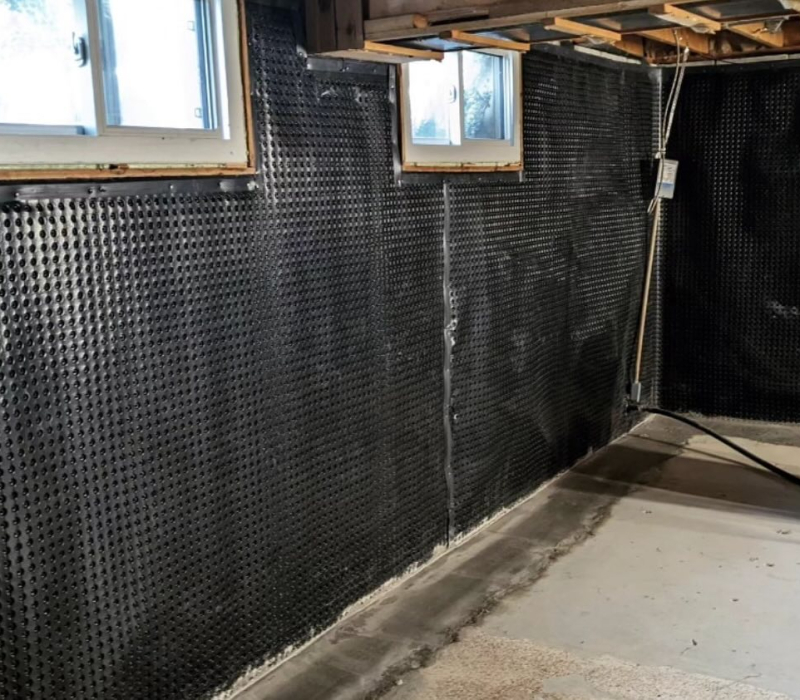
- Full exterior waterproofing with membrane and dimple board as the primary scope
- Sump pump sale, float adjustment, or pump replacement as the main job
- Injection of a single crack or sealing of a pipe penetration (leak repair)
- Extraction and cleanup after a burst pipe or sewage backup
- A new storm sewer main for the whole property
- A guarantee that an insurer will pay for seepage or groundwater
If the wall needs an exterior membrane, that is a waterproofing system. If a pump has failed, that is mechanical. If one hole in the wall is leaking, that is targeted leak repair. Tile is the perimeter collector.
Areas We Serve
Plumber On Demand provides weeping tiles installation for residential and commercial properties across a wide range of communities.
We work with:
- Homeowners
- Property managers
- Landlords
- Contractors
- Business owners
- Facility managers
- Real estate professionals
The Importance of Acting Quickly
A clogged or missing footing drain leaves water against the foundation every wet period.
Prompt weeping tile work can help:
- Stop repeated cove seepage before finishes are ruined
- Replace clay that is already collapsing, before more of the loop fills
- Give a sump a real supply line instead of a dry basin beside a wet wall
- Reduce hydrostatic load at the footing
- Avoid covering a failed drain with new flooring
Waiting until after a renovation hides the cove makes the same pipe job more destructive later.
Schedule Weeping Tiles Installation Today
If water shows at the basement perimeter after rain, or you suspect old clay tile has failed, Plumber On Demand is ready to help.
Our weeping tile services focus on footing-level pipe, slope, filter, gravel, clay tile replacement, and a defined outlet to a sump or approved storm connection.
Contact Plumber On Demand today at 289-501-6316 to schedule a weeping tile assessment.
Cleanouts, Camera Checks, and Future Service
Perimeter drains are buried. If they cannot be inspected, the next failure is a guess.
Where the layout allows, weeping tile jobs may include:
- Cleanouts at accessible points
- Camera confirmation of existing pipe before full replacement
- Locating collapses so the opened run is the failed run
- Marking outlet paths so later work does not crush the line
Not every old clay system can be saved with a flush. Packed fines and separated joints often mean replacement. A camera helps decide before the entire slab is opened.
Benefits of Hiring Plumber On Demand for Weeping Tiles
Footing drains fail in the details: elevation, slope, filter, and outlet.
When you choose Plumber On Demand, you benefit from:
• Pipe-First Scope
We install the collector. We do not pretend a pump brochure is a drain.
• Interior or Exterior Placement
We choose the side that matches access and the water path.
• Clay Replacement Experience
Failed original tile is treated as a system, not as one broken stick.
• Clear Communication
You know where the pipe will run, where water will go, and what is not included.
• Residential and Commercial Support
We work with homeowners, landlords, property managers, and business owners.
French Drain Language vs. Footing Weeping Tile
People use “French drain” for many gravel-and-pipe ideas, including shallow yard drains.
Footing weeping tile is more specific:
- It sits at foundation footing elevation, not in a lawn swale
- It is meant to relieve groundwater at the structure
- It must outlet to a sump or approved storm path
- It is sized and filtered for silt-heavy soils around buildings
A landscaping French drain that never reaches the footing will not dry a wet cove. This service is the structural-perimeter drain at the footing.
Footing Steps, Corners, and Interrupted Runs
Footings are not one flat loop. Steps, corners, additions, and mechanical pads break the drain path. Tile has to follow those changes or water ponds at the transition.
Layout problems we see include:
- Footing steps where pipe is left too high on the lower side
- Corners pulled so tight that the pipe kinks
- Additions that never received a tie-in to the original clay loop
- Interior runs stopped at a stair, pad, or chimney
- Exterior runs interrupted by a stoop or buried obstruction
A drain that is “mostly around the building” can still wet the one corner where the pipe never dropped with the footing.
We plan the run so elevation changes are handled in the pipe, not left as a wet pocket.
Why Homeowners Trust Plumber On Demand
A wet perimeter is frustrating. People are tired of running a dehumidifier while the cove still darkens after storms.
Clients choose Plumber On Demand because we offer:
• Straightforward Scope
We explain weeping tile as drainage pipe at the footing—not as a full wall membrane and not as a pump.
• Elevation-Correct Installation
Pipe that sits too high does not protect the cove. We set drain height to the footing.
• Reliable Communication
You get a practical plan for interior vs. exterior runs and a real outlet.
Frequently Asked Questions About Weeping Tiles Installation
• Is weeping tile the same as a sump pump?
No. Weeping tile is the perimeter pipe that collects water. A sump pump lifts water after the pipe delivers it to a basin.
• Is this the same as exterior waterproofing?
No. Exterior waterproofing includes excavation plus membrane or dimple board on the wall. Weeping tile is the drainage pipe at the footing and may be interior or exterior.
• What is clay tile and why replace it?
Older systems used short clay sections. Joints open and mud fills the inside. Once clogged, water bypasses the drain. Replacement uses continuous perforated pipe with filter and gravel.
• Can weeping tile be installed from the inside?
Yes. Interior placement along the footing is common when the exterior cannot be excavated.
• Does the pipe need a slope?
Yes. Without fall toward the outlet, silt settles and the run becomes a trench full of water.
• What is a filter sock?
A sock or fabric around stone keeps soil fines out of the perforations so the pipe keeps accepting water.
• Will a new pump fix clogged weeping tile?
Usually not. A pump cannot collect water that never reaches the basin because the perimeter pipe is dead.
• How long does installation take?
Timelines vary with linear footage, interior vs. exterior access, slab cuts, and outlet work. A partial run differs from a full perimeter replacement.
• Does insurance cover weeping tile replacement?
Coverage depends on your policy and the cause of the water. Seepage and groundwater may be treated differently from sudden plumbing failures. We document conditions; we do not promise payment.
• Can I install weeping tile in a shallow backyard trench?
A yard trench that never reaches the footing will not drain the cove. This job is footing-level pipe.
• What should I do while waiting for service?
If it is safe, keep storage off damp floors, extend downspouts, photograph wet cove lines after rain, and avoid dumping soil against the foundation.
• How do I get started?
Call Plumber On Demand at 289-501-6316 to describe the seepage and schedule a weeping tile assessment.
Contact Plumber On Demand Today
A wet basement perimeter after rain often means the footing drain has failed.
Plumber On Demand provides weeping tiles installation for residential and commercial clients.
If you need perimeter drain tile installed or old clay tile replaced, contact Plumber On Demand today.
📞 Call 289-501-6316
Speak with our team about your situation, request an assessment, and learn how weeping tile can help.