
Sump Pump Alliston
 (459)
(459)
(459)

Professional Sump Pump Services | Plumber On Demand
Repair, Replacement, Testing, and Backup Protection for Existing Sump Systems
A sump pump lifts collected groundwater out of an existing pit.
This page is about that pump and the system around it. It is not about installing a brand-new interior drain and pit from scratch.
At Plumber On Demand, we diagnose failure, repair or replace the pump in an existing pit, and address check valves, alarms, and backups.
If your existing sump is not keeping up or the pump has failed, contact Plumber On Demand today at 705-220-2903.
What Sump Pump Service Means
Sump pump service focuses on the pump you already have—and the pit, discharge, and controls that make it work.
The pit is already there. Water is already being collected.
The question is whether the pump, check valve, power, and backup can move that water out.
Professional sump pump work may include:
- Diagnosis of a pump that will not start, will not stop, or cannot keep up
- Repair of the existing unit when the failure is serviceable
- Replacement of the pump in an existing pit
- Testing of float operation, discharge, and check valve
- Check valve replacement when water slams back into the pit
- High-water alarms so a failure is noticed before overflow
- Backup pumps for power loss or primary-pump failure
This is not a full new-system installation article.
Cutting a new pit and running new weeping tile is a different project. Here the system exists; the pump and supporting parts need to work.
Why a Working Sump Pump Matters
An interior drain only helps if the pit can be emptied.
When the pump fails, collected groundwater has nowhere to go except onto the floor. A reliable sump pump helps:
- Keep an existing pit from overflowing during rain and snowmelt
- Protect mechanical equipment and stored items
- Reduce repeating wet-floor events that start at the sump
- Give warning through alarms before overflow
- Provide a backup path when power or the primary pump fails
- Make an existing drainage system actually discharge
A pit full of water with a dead pump is not a drainage system. It is a hole waiting to spill.
Sump Pump Types: Submersible vs. Pedestal
Most existing residential pits use one of two pump styles.
Service starts with what is in the pit now and what the pit can physically accept.
• Submersible Sump Pumps
A submersible pump sits in the water.
The motor is sealed to run while submerged. The float is typically attached to the pump or uses a tethered or vertical switch beside it.
Submersible units are common in covered pits.
They keep the motor down in the pit rather than on a post above the water.
• Pedestal Sump Pumps
A pedestal pump mounts the motor on a column above the pit.
The impeller is in the water. The motor stays dry above the cover or opening.
Pedestal units can be easier to access for some repairs.
They need vertical clearance and a pit that accepts the column.
Replacement is not “any style at any cost.” Pit depth, cover, discharge size, and switch clearance matter.
We match the replacement to the existing pit.
How Existing Sump Systems Fail
Pumps fail in patterns. Knowing the pattern prevents installing a new pump on a clogged discharge. Typical failure modes include:
- A float switch stuck in the off or on position
- A burned motor after the pump ran dry or ran continuously
- Clogged intake from silt, gravel, or debris
- A failed check valve that lets water fall back and short-cycle the pump
- Power loss, a tripped GFCI, or a dead outlet
- Impeller wear that leaves the pump running but moving little water
- A discharge line that is frozen, crushed, or disconnected
- A pump undersized for the inflow the existing drains now deliver
Overflow is the symptom. The cause may be the pump, the switch, the valve, the power, or the pipe leaving the building.
Signs Your Sump Pump Needs Service
Sump pump service is often needed when:
- The pit is full and the pump is silent
- The pump runs constantly and never shuts off
- The pump short-cycles every few seconds
- You hear banging in the discharge line when the pump stops
- The basement smells stagnant near the pit
- Water appears on the floor around a pit that used to keep up
- The alarm has sounded, or you only find water after the fact
- The pump is old, noisy, or has been reset more than once this season
If the pit exists and water is reaching it, the first job is to make the pump and discharge reliable.
That is different from installing a new drainage system.
Repair vs. Replacement in an Existing Pit
Not every failed sump needs a new pump. Not every old pump is worth repairing.
• Often Repairable
- A jammed or tangled float with a sound motor
- A clogged intake screen
- A failed check valve with a pump that still moves water
- A power or GFCI issue with a pump that tests fine once powered
- A discharge obstruction outside the pit
• Often Replaced
- A motor that will not run or that trips power repeatedly
- A cracked housing on a submersible unit
- A switch that has failed internally
- A pump that cannot keep up even when the discharge is clear
- A unit that has already been repaired and is failing again
Replacement in an existing pit means the new pump must fit the basin and cycle on a float that has room to move.
A pump sitting crooked on debris will fail the same way as the last one.
Why DIY Sump Pump Work Is Risky
Pulling a pump looks simple. The pit is a confined, wet, electrically live assembly. DIY sump work may:
- Replace the pump but leave a failed check valve that destroys the new motor
- Install a pump whose float cannot travel in that pit
- Miss a crushed or frozen discharge line outdoors
- Leave an unsealed cover or an open pit hazard
- Work on a live circuit in standing water
- Assume a new pump will fix inflow that never reaches the pit
- Skip a backup and alarm, then leave during a storm
Professional service tests the whole existing system: power, switch, pump, valve, and discharge.
Swapping the motor alone is only part of that chain.
Our Sump Pump Service Process
Every pit is different, but service typically follows a clear sequence.
• 1. Safety and Pit Assessment
We review power, standing water, and whether the problem is the pump, switch, valve, or discharge.
• 2. Confirm This Is an Existing System
We distinguish pump service in a pit that already collects water from a request to install a new drainage system.
This visit is about the pump and supporting parts.
• 3. Diagnose the Failure Mode
We check float travel, motor response, intake debris, check valve, and outdoor discharge.
• 4. Repair or Replace the Pump in the Existing Pit
Serviceable parts are repaired. When the unit is done, we replace the pump so it seats and cycles in the basin you already have.
• 5. Check Valve and Discharge Verification
We confirm water leaves the building and does not slam back into the pit.
• 6. Testing Under Realistic Cycle Conditions
We test start, stop, and discharge so the float is not set so high the floor floods first.
• 7. Alarms and Backup Options
We add or test high-water alarms and discuss backup pumps when power loss or primary failure would overflow the pit.
• 8. Guidance for Ongoing Testing
You leave knowing how the system should sound and what an alarm means.
A working pump is not a new waterproofing installation.
Check Valves and Discharge Lines
The check valve keeps pumped water from falling back into the pit. When it fails, the pump lifts the same water over and over.
Discharge problems that look like pump failure include:
- A stuck or leaking check valve
- A discharge pipe that has separated at a joint
- A line that is frozen at the exterior in winter
- A crushed or undersized pipe that chokes flow
- An outlet that dumps water back toward the foundation
Sump pump service includes the path out of the pit, not only the impeller. A new pump on a failed valve is a repeat call waiting to happen.
Alarms and Backup Pumps
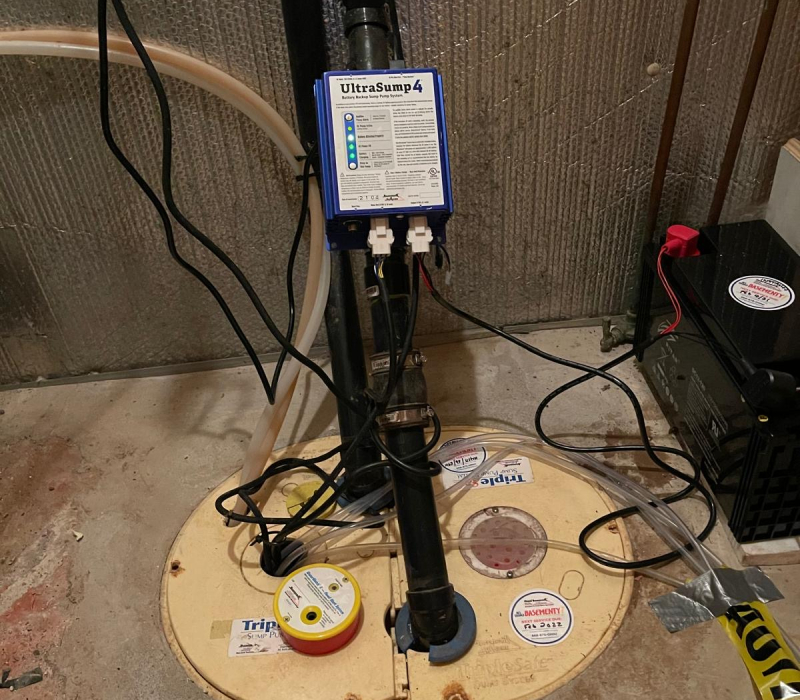
Primary pumps need electricity and a working switch. Storms knock out power at the same time groundwater inflow rises. That is when pits overflow.
• High-Water Alarms
An alarm sounds when water in the pit rises above a normal cycle. It does not pump water. It tells someone the primary unit is not keeping up.
• Backup Pumps
A backup pump operates if the primary fails or if power is out, depending on type. Battery units can run for a limited time without utility power.
Water-powered backups use supply water and do not rely on household electricity.
They have their own installation limits and water-use considerations. Backup is not a substitute for fixing a failed primary pump.
It is a second chance when the existing system is already the building’s groundwater outlet.
Sump Pump Service for Residential Properties
Homeowners usually need service when the pit they already have is overflowing or the pump is noisy. Typical residential work involves:
- Replacing a failed submersible pump in a lined pit
- Matching pedestal versus submersible to what the pit allows
- Repairing a float that jammed on the liner or on debris
- Replacing a check valve that is causing short-cycling
- Adding an alarm after a quiet overnight overflow
- Installing or servicing a backup pump on the same existing pit
Families want the lower level dry during the next rain. That depends on the pump in the pit working—not on treating a dead pump as waterproofing.
Sump Pump Service for Commercial Buildings
Commercial properties may have larger pits or mechanical rooms that cannot take on water if a sump fails. Service often addresses:
- Duty pumps that run hard during storms and wear out sooner
- Alarms that notify staff, not only a basement occupant
- Backup capacity where inventory or equipment sits near the pit
- After-hours failure when the building is closed
- Documentation of pump replacement and testing
- Discharge routing that must not flood a dock or neighboring space
Facility managers should treat a dead commercial sump as an equipment failure with a water consequence. It is not a janitorial wet-floor event.
Sump Pumps for Landlords and Property Managers
Rental buildings often have a shared basement pit. When the pump fails, multiple parties are affected. We assist with:
- Fast diagnosis of pump versus power versus discharge
- Replacement in the existing pit with testing before we leave
- Clear notes on what failed and what was replaced
- Alarm and backup recommendations for lightly visited basements
- Guidance so tenants do not unplug the sump or store goods in the pit
A landlord who only hears about the sump after the floor is wet is hearing about it too late.
Testing an Existing Sump Pump
Testing is not kicking the float once. A useful test watches the pump start, discharge, stop, and not restart from a bad check valve.
Professional testing typically checks:
- That the pump starts at a water level below floor overflow
- That the pump shuts off before the pit runs dry
- That discharge actually leaves the building
- That the check valve holds
- That the cover, liner, and float have clearance
- That GFCI or dedicated power is stable
- That an alarm, if present, still functions
Owners can do simple seasonal tests if it is safe: pour water into the pit and watch a full cycle.
Sump Pump Cost Factors
Cost varies because pits and failures vary. Price is driven by what must be replaced. Factors include:
- Repair of a switch or valve versus full pump replacement
- Submersible versus pedestal, and whether the pit can accept the type
- Performance needed for the existing inflow
- Check valve, discharge repair, or frozen-line work
- Alarm installation
- Battery backup or water-powered backup equipment
- Access, pit depth, and debris in the basin
- After-hours response when the pit is already overflowing
Replacing a pump in a clean pit is a different job than fishing a failed unit out of a debris-filled basin.
Insurance and Sump Pump Documentation
Whether water from a failed sump is treated as covered depends on the policy and the cause. We do not promise coverage. Helpful documentation includes:
- Photos of the pit, pump, and any overflow on the floor
- Notes on whether the pump would not start, short-cycled, or lost power
- Records of what was repaired or replaced
- Test results after service
We help capture what the existing system did and what was corrected.
Your insurer decides how the policy applies. Sudden failure and lack of maintenance can be viewed differently.
What Sump Pump Service Does Not Include
It is useful to know where pump service stops. Sump pump service is not:
- Full new-system installation of a pit and weeping tile where none exist
- Interior or exterior basement waterproofing of the foundation
- Cleanup and restoration after a large flood event
- A guarantee that groundwater inflow will never exceed the pump
- Electrical service upgrade of the entire building
- Guaranteeing insurance payment
If you need a new drainage system, that is a different scope. Pump service puts an existing pit’s discharge back to work.
Benefits of Hiring Plumber On Demand for Sump Pump Service
Failure is usually a chain: switch, motor, valve, power, discharge. When you choose Plumber On Demand, you benefit from:
• Existing-System Focus
We service the pump in the pit you have, rather than treating every call as a new waterproofing installation.
• Type-Aware Replacement
Submersible and pedestal pumps are matched to pit depth, cover, and float travel.
• Valve, Alarm, and Backup Thinking
A new pump without a working check valve or any warning device is an incomplete repair.
• Clear Communication
You know whether the unit was repaired or replaced, how it tested, and what still depends on power.
• Residential and Commercial Support
We work with homeowners, landlords, property managers, and business owners.
Power, GFCI, and Why Pumps Stop During Storms
Many sump failures are electrical. A GFCI trips, a cord comes loose, or the storm takes out power while inflow peaks. Sump pump service pays attention to:
- Whether the pump has a dedicated, reliable receptacle
- Whether a GFCI has tripped and why it keeps tripping
- Cord condition on submersible units
- The fact that a primary pump does nothing during an outage without a backup
If the pump only fails when it rains hard at night, ask whether power, inflow, or a weak motor is the real limit.
We look at both the unit and the conditions it has to survive.
Float Switches and Why Pumps Run Dry or Never Stop
The float tells the pump when to start and stop. A tethered float can tangle on the discharge pipe or the liner.
A vertical switch can bind. A failed switch can leave the pump off while the pit fills, or on until the motor burns.
A high-quality pump with a jammed float is still a failed system.
Areas We Serve
Plumber On Demand provides sump pump services for residential and commercial properties across a wide range of communities.
We work with:
- Homeowners
- Property managers
- Landlords
- Contractors
- Business owners
- Facility managers
- Real estate professionals
The Importance of Acting Quickly
A pit that is not pumping is on a timer. Inflow from existing drains continues whether the motor is alive or not. Prompt sump pump service can help:
- Stop an overflowing pit from wetting the floor
- Save a motor that is overheating from a stuck float
- Prevent a failed check valve from destroying a replacement pump
- Get an alarm or backup in place before the next outage
- Restore discharge so the existing drainage system can do its job
If you hear the pump struggling, or the pit is higher than usual, do not wait for water on the slab.
Schedule Sump Pump Service Today
If your sump pump has failed, short-cycles, or needs replacement in the existing pit, Plumber On Demand is ready to help.
Our sump pump services focus on the pump and existing system, not on selling a full new drain-tile installation as the only answer.
Contact Plumber On Demand today at 705-220-2903 to schedule sump pump service.
Pit Condition, Covers, and Debris
The pump is only as reliable as the basin it sits in. Debris and missing covers jam floats. During service we often address:
- Debris that must be removed before a new pump is set
- Whether the cover allows service without leaving an open hole
- Float clearance against the liner and discharge pipe
- Standing sludge that will clog the next intake the same way
A clean, covered, correctly sized existing pit makes repair and replacement straightforward. A neglected pit makes every pump look defective.
Why Homeowners Trust Plumber On Demand
A dead sump is stressful because the basement can wet while you are asleep or away. Clients choose Plumber On Demand because we offer:
• Pump-First Diagnosis
We find whether the motor, float, valve, power, or discharge failed. We do not default to a whole new drainage system speech.
• Replacement That Fits the Pit
The new unit has to cycle in the basin you already have.
• Practical Next Steps
Testing, alarms, and backup protect an existing system. They are not a substitute for waterproofing construction.
Frequently Asked Questions About Sump Pumps
• Is this the same as sump pump installation?
No. This service repairs, replaces, and tests the pump in an existing pit. Full new-system installation of a pit and drains is a separate project.
• Should I get a submersible or a pedestal pump?
It depends on the existing pit, cover, and clearance. We match the type to the basin rather than forcing a style that cannot cycle.
• Why does my pump turn on and off so fast?
Short-cycling often means a failed check valve, a pit that is too small for the flow, or a float with no room to travel.
• Can you replace just the pump?
Yes, when the pit, discharge, and valve are sound. If those parts failed too, replacing only the pump repeats the overflow.
• Do I need a backup pump?
A backup helps when power fails or the primary unit fails. It does not replace repairing the main pump.
• What does a high-water alarm do?
It warns that water in the pit is too high. It does not pump. It is how you learn about a failure before the floor is wet.
• Why did the pump fail during a storm?
Inflow rises and power may drop at the same time. A weak motor, tripped GFCI, clogged discharge, or missing backup all show up under that load.
• How often should I test my sump pump?
Seasonal testing is wise, and after any work on the discharge. Pour water for a full cycle if it is safe, or schedule a professional test.
• Does insurance cover sump pump failure?
Coverage depends on your policy, maintenance, and the water event. We document what failed and what was replaced. We do not decide coverage.
• My pit is empty. Is the pump fine?
Not necessarily. An empty pit in dry weather does not prove the float, valve, and discharge will work in a storm.
• Will a new pump stop all basement seepage?
A pump only empties water that reaches the pit. Seepage that never enters the existing drain is a waterproofing or diagnosis issue.
• How do I get started?
Call Plumber On Demand at 705-220-2903 to describe the pit and pump problem and schedule sump pump service.
Contact Plumber On Demand Today
An existing sump only protects the building if the pump, check valve, power, and discharge work.
Plumber On Demand provides sump pump services for residential and commercial clients.
If you need help with a sump pump in an existing system, contact Plumber On Demand today.
📞 Call 705-220-2903
Speak with our team about your pump, request testing or replacement, and learn how service can help.