
Moisture Measuring Cheltenham
 (459)
(459)
(459)

Moisture Measuring Services | Plumber On Demand
Diagnostic Moisture Testing During and After Water Damage
Wet carpet, stained drywall, and a musty smell are clues—not measurements.
After a leak or flood, materials can look dry while insulation, subfloors, and wall cavities remain wet. Moisture measuring shows where water went, how wet materials still are, and when drying goals have been met.
At Plumber On Demand, moisture measuring is a diagnostic service.
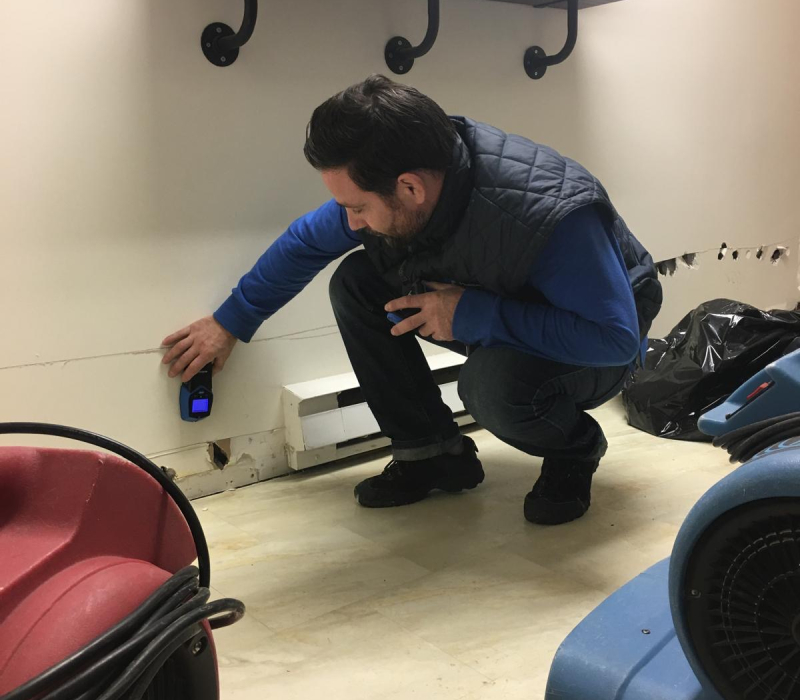
We use pin meters, pinless meters, thermo-hygrometers, thermal imaging, and moisture mapping to locate hidden moisture, set drying targets, and verify that assemblies have reached a stable condition.
If you need moisture measuring after a leak, flood, or incomplete drying job, contact Plumber On Demand today at 905-220-5006 to schedule a diagnostic assessment.
What Moisture Measuring Is
Moisture measuring is the use of instruments to detect and record water in building materials and indoor air. It answers questions eyes cannot: Is this wall still wet? How far did water travel? Has drying actually finished?
A diagnostic moisture visit typically includes:
- Pin (penetrating) meter readings in wood and other materials
- Pinless (non-penetrating) scans across larger wall and floor areas
- Thermo-hygrometer readings of temperature and relative humidity
- Thermal imaging to find temperature patterns that often track wet zones
- Moisture mapping that marks affected vs. unaffected assemblies
- Comparison readings on dry-standard materials in the same building
- Notes on cavities, insulation, and flooring systems that hide water
You cannot “see” dry. Dry is a measured condition relative to unaffected materials and drying goals—not a dry-looking paint film.
Why You Cannot See Dry
Paint, vinyl, and laminate can look normal while the paper face of drywall, the underlayment, or the bottom of a baseboard is still holding water. Airflow from a fan can dry the surface and leave the core wet.
Appearance fails as a test because:
- Surface evaporation happens faster than drying inside cavities
- Dark stains can remain after materials are dry—or be absent while materials are wet
- Concrete can feel cool and look dry while remaining high in moisture
- Wood can look unchanged at moisture levels that still support problems later
- Insulation holds water that never shows on the finished face of a wall
Moisture measuring replaces “it feels dry” with readings you can compare over time.
Why Moisture Measuring Matters
Accurate readings support better decisions about extraction, demolition, drying time, and rebuild.
Moisture measuring helps:
- Locate hidden water behind walls and under floors
- Define the real boundary of the loss, not only the puddle
- Set drying goals instead of running equipment indefinitely
- Know when it is reasonable to stop drying
- Reduce the chance of closing a wall that is still wet
- Support documentation if you later speak with an insurer
- Explain why a section of drywall or flooring should be opened
Without measurements, drying is a guess. With measurements, drying has a start point, a target, and an endpoint.
When Moisture Measuring Is Needed
Diagnostic moisture work is useful whenever water may still be in the building—even if the floor looks dry.
Typical triggers include:
- After a burst pipe, supply-line failure, or appliance leak
- After basement flooding or a drain backup
- During structural drying, to track daily progress
- After a previous drying attempt that still left odors or soft drywall
- Before installing new flooring over a previously wet subfloor
- When a musty smell persists with no obvious puddle
- After firefighting water, which can soak areas far from a fire
- During real estate or renovation work when staining is found
- When occupants report a “damp” room that looks finished
Measuring is also used at the end of a water-damage job to confirm drying goals before rebuild.
Pin Meters: Direct Readings in Materials
Pin meters use two probes that penetrate the material. They are especially useful in wood, trim, and some other assemblies where a contact reading is needed.
Pin meters help when you need:
- A reading at a specific depth or location
- Confirmation after a pinless scan flags an area
- Wood moisture comparisons (affected joist vs. dry-standard joist)
- Readings in baseboards, door jambs, and framing once finishes are opened
Pins leave small marks. We use them where the information is worth the mark, and we note locations on the moisture map.
Pinless Meters: Scanning Without Extra Holes
Pinless meters read a zone beneath the sensor using electromagnetic signals. They are useful for scanning large wall and floor areas quickly without punching holes in every location.
Pinless meters help when you need to:
- Sweep along baseboards to find the wet edge
- Compare many spots on the same wall
- Check flooring systems before deciding to lift materials
- Screen an area before using a pin meter for confirmation
Pinless readings can be influenced by metal, backing materials, and assembly thickness. That is why we often pair pinless scans with pin checks instead of relying on a single tool.
Thermo-Hygrometers: Air Temperature and Humidity
Materials dry into the air around them. If indoor air is already humid, drying stalls even with fans running.
A thermo-hygrometer measures:
- Temperature
- Relative humidity
- (When calculated) related values such as dew point or grains of moisture in air, depending on the meter
These readings help explain whether the space is supporting drying or re-wetting surfaces. They are part of the drying record, not a substitute for material moisture readings.
Thermal Imaging: Patterns, Not Proof by Itself
Thermal cameras show surface temperature differences. Wet materials often (not always) appear cooler because of evaporation or thermal mass. Thermal imaging is a search tool.
Thermal imaging is useful to:
- Find anomalies behind walls that deserve meter confirmation
- Trace a wet path from a ceiling stain to a wall cavity
- Prioritize where to take pin or pinless readings
- Communicate a pattern visually on a moisture map
Thermal images are not a moisture percentage by themselves. A cold exterior corner, a HVAC supply, or a metal stud can look similar to a wet patch. We confirm with meters.
Moisture Mapping: Turning Readings Into a Picture
A moisture map is a room-by-room or wall-by-wall record of what is wet, what is dry-standard, and where the boundary sits.
A useful map typically shows:
- Rooms inspected
- Locations of readings (walls, floors, ceilings, cabinets)
- Wet, damp, and comparable-dry zones
- Hidden-cavity concerns (insulation, subfloor, behind tub surrounds)
- Notes on materials that cannot be fully tested without opening
Mapping prevents the common mistake of drying only the room where water was seen while the adjacent closet or hallway still reads wet.
Drying Goals: Knowing When Drying Is Done
Drying is done when affected materials reach a goal that is comparable to unaffected materials in the same building, and indoor humidity is stable enough that materials will not reabsorb moisture.
Drying goals depend on:
- Material type (wood, drywall, concrete, underlayment)
- Readings from unaffected “dry standard” areas
- Indoor temperature and humidity
- Whether cavities were opened so air can actually reach wet insulation
Stopping because the surface looks dry, or because a certain number of days passed, is not a drying goal. Measuring is how the endpoint is decided.
Hidden Moisture Behind Walls and Under Floors
Water follows gravity, capillary paths, and cavities—not floor plans.
• Behind Walls
Water from a failed supply line or overflow often runs inside the cavity, wets insulation, and shows up as a small stain at the baseboard. Pinless scans along the wall, thermal patterns, and selective openings help find the real wet height.
• Under Floors
Laminate, vinyl, and carpet can look presentable while underlayment and subfloor remain wet. Moisture measuring under flooring systems often decides whether materials can dry in place or need to be lifted.
• In Ceilings and Cabinets
A bathroom leak can wet the ceiling below and the cabinet toe-kick beside it. Mapping both assemblies avoids leaving a wet pocket after the obvious stain is addressed.
Our Moisture Measuring Process
• Event History
We ask where water started, how long it sat, and what has already been done (fans, wet/dry vacuums, demolition).
• Visual and Safety Walk-Through
We note staining, swelling, safety issues, and rooms that must be included even if they look dry.
• Instrument Survey
We scan with pinless meters and thermal imaging, then confirm key points with pin meters.
• Air Readings
We record temperature and relative humidity in affected spaces.
• Moisture Map and Dry-Standard Comparison
We compare affected materials with unaffected materials in the same structure.
• Recommendations
You receive a clear picture: where moisture remains, whether cavities should be opened, and what drying or further investigation is appropriate.
• Follow-Up Measuring During Drying
If drying equipment is in place, we remeasure to track progress toward drying goals—not to “run machines until someone guesses they are done.”
Moisture Measuring for Residential Properties
Home moisture problems often hide in everyday assemblies:
- Basement walls and slab edges
- Bathroom and kitchen supply-line failures
- Laundry overflows
- Ceiling cavities under bathrooms
- Carpeted rooms after a flood
- Hardwood and engineered floors
- Crawlspaces and rim joists
- Exterior-wall condensation vs. leak moisture (meters help separate patterns)
Homeowners get a diagnostic explanation: what is wet, what is not, and what should happen next.
Moisture Measuring for Commercial Buildings
Commercial sites add scale, occupancy, and mixed materials.
Measuring in commercial properties often involves:
- Large floor plates and long corridors
- Shared walls between tenants
- Mechanical rooms and condensate lines
- After-hours access so readings can be taken without disrupting operations
- Documentation packages for owners and facility managers
Offices, retail, restaurants, warehouses, multi-unit buildings, and service facilities all benefit from a mapped wet boundary instead of opening every wall “just in case.”
Residential vs. Commercial: How the Diagnostic Differs
The tools are the same. The planning is not.
Residential visits often focus on a few rooms, occupied living space, and finish materials that cannot take many pin holes.
Commercial visits often require:
- Systematic grids on large floors
- Coordination with other tenants
- Moisture maps that facility teams can file
- Repeat visits on a schedule around business hours
In both cases, the purpose is diagnostic: know where moisture is before committing to demolition or rebuild.
Cost and Scope Factors
Moisture measuring cost and time depend on how much of the building must be tested—not on a flat “one meter, one room” assumption.
Scope factors include:
- Number of rooms and floors
- How long water sat before the visit
- Whether finishes must be opened for cavity readings
- Concrete vs. wood vs. mixed assemblies
- Need for thermal imaging in addition to meters
- Follow-up visits during a multi-day drying job
- Access (occupied units, locked suites, after-hours)
- Contents that block walls and floors
A single appliance leak with a clear dry standard is a smaller diagnostic than a basement flood that reached multiple rooms and a hallway.
Related Insurance Notes
Moisture logs are often requested when a water loss is discussed with an insurer. Measuring supports a factual record of what was wet and when it dried.
Keep in mind:
- Readings document condition; they do not decide coverage
- We do not file claims or guarantee payment
- Sudden plumbing failures and overland flooding may be treated differently under a policy
- Sewer backup may require a specific endorsement
- Adjusters may ask for dated logs and maps; we can provide those from our visits
Moisture measuring is still valuable if you never file a claim: it tells you whether the building is actually dry.
Benefits of Hiring Plumber On Demand for Moisture Measuring
• Diagnostic Focus
We measure to answer “where is the water” and “is drying done,” not to sell unnecessary demolition.
• More Than One Tool
Pin, pinless, humidity, and thermal methods are used together so one false pattern does not drive the whole plan.
• Hidden-Moisture Emphasis
Walls, floors, and cavities are part of the survey—not only the puddle.
• Clear Drying Endpoints
We explain drying goals in practical terms: comparable to dry-standard materials, with humidity in a range that supports those readings.
• Residential and Commercial Capability
Homes, rentals, and commercial floors get mapped with the same measurement discipline.
Moisture Measuring During Active Drying
Once air movers and dehumidifiers are running, measuring becomes a progress check.
During drying we typically:
- Revisit the same map points
- Watch whether readings fall, stall, or rise
- Adjust equipment placement when a zone is not moving
- Identify materials that will not dry in place
- Record the date drying goals were met
This is how you know drying is finished—not when the fans get loud enough or a calendar date arrives.
Moisture Measuring After a “Finished” Job
Sometimes a property was dried by someone else, flooring was reinstalled, and odors or cupping appeared later.
A post-drying diagnostic can:
- Check subfloors and wall cavities that were never mapped
- Compare current readings with a new dry standard
- Identify trapped moisture under new finishes
- Support a plan to open, dry, or replace only the assemblies that still read wet
You cannot assume a previous job is complete because equipment was removed.
Concrete, Wood, and Mixed Assemblies
Different materials need different interpretation.
• Wood and Wood-Based Products
Pin readings in framing, subfloors, and trim are compared with unaffected wood in the same climate and building.
• Drywall
Paper-faced gypsum can hide cavity moisture. Surface scans plus selective openings often matter more than a single face reading.
• Concrete and Masonry
Slabs and foundation walls hold moisture differently than wood. Cool thermal patterns and high meter readings on concrete need careful interpretation alongside indoor humidity.
We explain what a reading means for that material instead of treating every number as the same “wet/dry” score.
Areas We Serve
Plumber On Demand provides moisture measuring for residential and commercial properties across a wide range of communities.
We work with:
- Homeowners
- Landlords and property managers
- Business owners and facility managers
- Restoration and renovation contractors who need diagnostic readings
- Real estate professionals evaluating a stained or previously flooded space
Why Early Measuring Saves Unnecessary Openings
Opening every wall is expensive and disruptive. Measuring first targets openings to assemblies that actually read wet.
Early diagnostics can help:
- Limit demolition to the wet boundary
- Avoid missing a wet closet or hallway
- Set equipment only where it is needed
- Give occupants a realistic drying timeline based on readings
If readings show a cavity is wet, opening it is a measured decision—not a default.
Schedule Moisture Measuring Today
If you cannot tell whether a room is dry, or you need to know when drying is actually finished, Plumber On Demand can measure, map, and explain the results.
Contact Plumber On Demand today at 905-220-5006 to schedule a moisture measuring assessment.
What Occupants Can Do Before the Visit
You do not need to become a technician, but a few steps help the diagnostic:
- If safe, stop the water source
- Avoid running random fans that only dry the surface before we arrive (unless extraction is already underway and directed)
- Leave stained materials in place when possible so we can photograph and measure them
- Clear access to baseboards and the wet path
- Note when the leak started and when it was stopped
Do not punch large inspection holes randomly; misplaced openings can spread contamination and still miss the wet zone.
Readings vs. Indoor Air Quality Testing
Moisture measuring is not the same as mold sampling or a full indoor air quality study. It answers whether materials and air humidity support drying and whether hidden water remains.
If growth is visible or odors persist after materials are confirmed dry, a different service conversation may follow. The first question after water damage is still: is it actually dry?
Moisture Measuring and Rebuild Timing
Rebuild too soon and new drywall or flooring can trap remaining moisture. Wait without data and the project stalls for no measured reason.
We use readings to support timing questions such as:
- Can this wall be closed?
- Can flooring go back down?
- Should insulation be replaced because it will not dry?
- Is the slab still too wet for certain floor systems?
Those are diagnostic answers tied to meters—not calendar rules of thumb.
Frequently Asked Questions About Moisture Measuring
• Can I tell if a wall is dry by looking at it?
No. Surfaces can look dry while cavities, insulation, and subfloors remain wet. Measuring is how dry is confirmed.
• What is the difference between a pin meter and a pinless meter?
Pin meters penetrate for a specific reading. Pinless meters scan a zone without extra holes. We often use both, then confirm important spots.
• Does thermal imaging prove moisture?
No. Thermal imaging shows temperature patterns that may track wet areas. Meter readings confirm moisture.
• When is drying actually done?
When affected materials reach a drying goal comparable to unaffected materials in the same building, and indoor humidity supports those readings—not when the room merely looks dry.
• Do you measure during the drying process or only at the end?
Both. Initial mapping defines the wet area. Follow-up readings track progress and the endpoint.
• Will measuring find moisture under flooring?
It often can, using pinless scans, thermal patterns, and targeted checks. Some floor systems still require lifting a section to confirm the subfloor.
• Is moisture measuring the same as mold testing?
No. Moisture measuring locates water in materials and air conditions that affect drying. Mold sampling is a separate type of evaluation.
• Do you guarantee insurance will pay for drying based on your logs?
No. Logs document condition and work. Coverage is decided by your policy and insurer. We do not file claims or guarantee payment.
• How long does a moisture measuring visit take?
It depends on the number of rooms, access, and whether cavities must be checked. A small leak is faster than a multi-room flood map.
• Can commercial spaces be measured after hours?
Yes. We work with facility schedules so mapping can be done with appropriate access.
• What if a previous contractor already said it was dry?
We can remeasure. If readings still show wet assemblies, we map what remains and recommend next steps. Appearance and a prior verbal “it’s dry” are not a substitute for current readings.
• How do I get started?
Call Plumber On Demand at 905-220-5006 to describe the water event and schedule a diagnostic moisture measuring visit.
Contact Plumber On Demand Today
You cannot see dry. After a leak or flood, the only reliable way to know where water went—and when drying is finished—is to measure it.
Plumber On Demand provides moisture measuring with pin meters, pinless meters, thermo-hygrometers, thermal imaging, and moisture mapping for residential and commercial properties.
If you need to locate hidden moisture or confirm that drying goals have been met, contact Plumber On Demand today.
📞 Call 905-220-5006
Speak with our team about your situation, request a diagnostic assessment, and learn how moisture measuring shows what is still wet.