
Micro Pile Underpinning Acton
 (459)
(459)
(459)
Micro Pile Underpinning Services for Advanced Foundation Support and Long-Term Stability
A micro pile underpinning system is a highly engineered foundation strengthening method used to stabilize structures built on weak, shifting, or unpredictable soil conditions. It is designed to transfer the weight of a building deep into stable ground layers using small-diameter, high-strength piles that reinforce the foundation from beneath.
Unlike traditional shallow foundation repairs, micro pile underpinning bypasses unstable soil near the surface and anchors the structure into deeper, more reliable strata. This makes it one of the most effective solutions for homes and buildings experiencing serious settlement, structural movement, or soil-related instability.
At Plumber On Demand, micro pile underpinning is performed with precision planning and structural control to ensure the building remains stable during every stage of reinforcement.
If you are noticing signs of foundation movement or structural stress, contact Plumber On Demand at 905-409-0596 for a professional assessment.
What Is Micro Pile Underpinning?
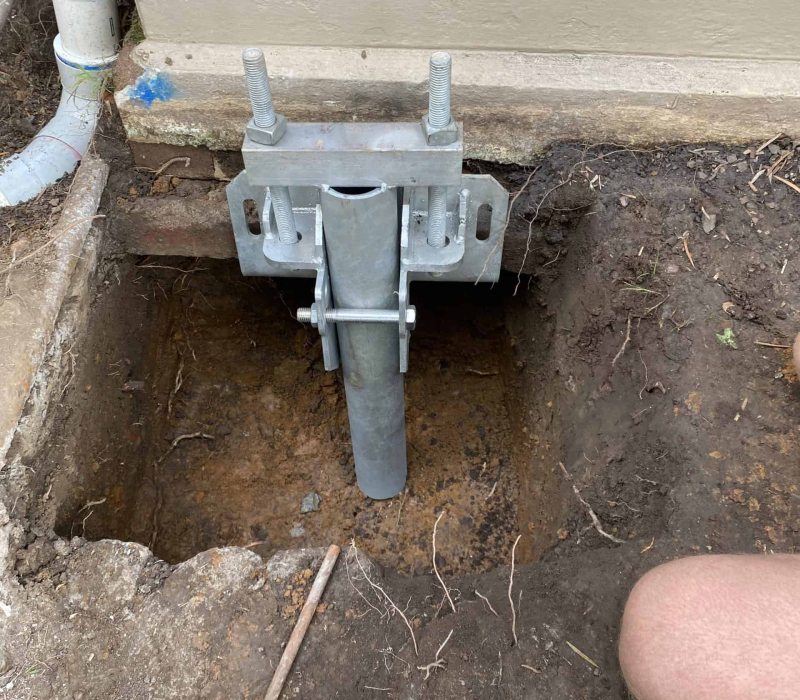
Micro pile underpinning is the process of installing small-diameter, high-strength structural piles beneath an existing foundation to transfer building loads to deeper, more stable soil or rock layers.
These piles act as deep support columns that bypass weak surface soils entirely, creating a new load path that strengthens the entire structure.
This method is commonly used when:
- Surface soil cannot support the structure
- Severe foundation settlement is occurring
- Traditional underpinning methods are not suitable
- Access conditions are limited or complex
- High structural precision is required
Why Micro Pile Underpinning Becomes Necessary
Micro pile underpinning is typically used in situations where standard foundation repair methods are not sufficient due to soil depth, instability, or structural complexity.
Weak or Unstable Soil Conditions
Some properties are built on soil that lacks the strength to support long-term structural loads. This may include:
- Loose or sandy soil
- Clay that expands and contracts
- Soil with high moisture content
- Fill material that was not properly compacted
Micro piles bypass these weak layers entirely.
Severe or Ongoing Foundation Settlement
When a structure continues to settle unevenly over time, it indicates that the foundation is no longer supported by stable ground conditions.
This can lead to:
- Uneven floors
- Wall cracking
- Structural misalignment
- Ongoing movement in the building
Micro pile underpinning provides deep stabilization to stop this movement.
Limited Access or Structural Constraints
In some properties, space limitations or structural design make traditional underpinning methods difficult.
Micro piles are ideal because they:
- Require minimal excavation footprint
- Can be installed in tight spaces
- Adapt to complex structural layouts
- Reduce disruption to the surrounding area
Heavy Structural Load Requirements
Buildings with higher structural loads or concentrated weight areas may require deeper support than standard foundation systems can provide.
Micro piles help distribute these loads safely into stable ground layers.
Early Signs That Micro Pile Underpinning May Be Needed
Foundation issues that require micro pile underpinning usually develop gradually before becoming more serious.
Common warning signs include:
- Progressive foundation settlement
- Visible cracks in basement or exterior walls
- Uneven or sloping floors
- Doors and windows becoming misaligned
- Gaps forming between structural elements
- Repeated foundation repairs without lasting results
These signs often indicate that shallow soil support is no longer sufficient.
How Micro Pile Underpinning Works
Micro pile underpinning follows a highly controlled engineering process designed to transfer structural loads safely to deep stable layers.
Structural Assessment and Load Analysis
The process begins with a detailed evaluation of the foundation system.
This includes:
- Identifying settlement patterns
- Measuring structural movement
- Assessing soil conditions
- Reviewing load-bearing points
- Mapping foundation stress zones
This determines where micro piles will be installed and how deep they must reach.
Designing the Micro Pile System
Once the structure is evaluated, a custom pile design is created.
This includes:
- Determining pile depth requirements
- Planning load transfer pathways
- Identifying installation points
- Ensuring structural balance across the foundation
Each system is engineered based on the specific behavior of the home and soil conditions.
Controlled Installation of Micro Piles
Micro piles are installed through carefully drilled shafts that extend deep into stable soil or bedrock.
This process ensures:
- Minimal disruption to the structure
- Precise placement of support points
- Strong anchoring into stable ground layers
- Gradual load transfer from the existing foundation
Deep Load Transfer Systems, Structural Behavior, and Soil Stabilization
Micro pile underpinning is a highly engineered foundation solution designed for situations where traditional shallow support methods are no longer effective. Instead of relying on near-surface soil, this system transfers structural loads deep into stable ground layers, creating a permanent and reliable support path for the building above.
At Plumber On Demand, micro pile underpinning is implemented as a precision stabilization system, ensuring that each load point is properly supported and that the structure remains stable during and after installation.
Types of Micro Pile Systems Used in Underpinning
Micro pile systems can vary depending on soil conditions, structural load, and access limitations. Each system is designed to achieve the same outcome—deep structural stability—but through different engineering approaches.
Steel-Cased Micro Piles
Steel-cased micro piles are one of the most common systems used in foundation stabilization. They consist of small-diameter steel pipes driven or drilled deep into the ground and filled with reinforced grout or concrete.
These are used when:
- High load-bearing capacity is required
- Soil conditions are variable or unstable
- Long-term structural reinforcement is needed
The steel casing provides strength and durability while the internal fill ensures solid load transfer.
Grouted Micro Piles
Grouted micro piles use high-strength cement grout injected into drilled shafts to create a solid structural column beneath the foundation.
These are ideal when:
- Access is limited for heavy equipment
- Soil conditions require deep penetration
- A flexible but strong reinforcement system is needed
The grout bonds with surrounding soil to improve overall ground stability.
Rock-Socketed Micro Piles
When bedrock is available at deeper levels, micro piles can be anchored directly into rock formations.
This method provides:
- Extremely high load-bearing capacity
- Maximum long-term stability
- Resistance to soil movement and settlement
Rock-socketed piles are often used in severe foundation failure situations.
Load Transfer Mechanics in Micro Pile Underpinning
The key function of micro pile underpinning is load transfer—redirecting the weight of the structure away from weak surface soil and into deep stable layers.
Bypassing Weak Soil Layers
Most foundation problems begin in near-surface soil, which may be unstable due to moisture changes, poor compaction, or organic material.
Micro piles bypass these layers completely and transfer loads deeper into stronger ground.
Deep Structural Anchoring
Once installed, micro piles act as deep structural anchors that hold the building in place.
They:
- Prevent further settlement
- Stabilize uneven load distribution
- Create permanent support points beneath the structure
Redistribution of Structural Loads
After installation, the building’s weight is gradually transferred from the original foundation to the micro pile system.
This controlled redistribution ensures:
- No sudden structural shifts
- Balanced load sharing across piles
- Reduced stress on weakened foundation areas
Soil Behavior and Its Impact on Micro Pile Performance
Soil conditions play a major role in determining how micro pile systems are designed and installed.
Soft and Compressible Soil Layers
In soft soil conditions, surface layers compress easily under structural weight. Micro piles bypass these layers entirely to reach stable ground.
Expansive Clay Soil
Clay soils expand when wet and contract when dry, causing repeated movement in foundations. Micro piles reduce the impact of this movement by anchoring the structure below active soil zones.
Fill and Disturbed Soil Conditions
In areas where soil has been artificially filled or disturbed, load-bearing capacity is often inconsistent. Micro piles provide a consistent and reliable support path beneath these conditions.
Structural Stability During Micro Pile Installation
Because micro pile underpinning is performed beneath an existing structure, maintaining stability throughout installation is critical.
This is achieved through:
- Careful sequencing of pile installation
- Controlled load transfer stages
- Continuous monitoring of structural movement
- Installation of piles in strategically planned locations
Only select points are worked on at a time to ensure the building remains fully supported.
Comparison With Traditional Underpinning Methods
Micro pile underpinning differs significantly from traditional concrete underpinning in both depth and performance.
- Traditional underpinning strengthens shallow foundation zones
- Micro piles transfer loads to deep stable ground layers
This makes micro piles more suitable when:
- Soil near the surface is too weak
- Settlement is severe or ongoing
- High structural precision is required
- Long-term stability is a priority
Benefits of Micro Pile Underpinning
Micro pile underpinning provides one of the most advanced forms of foundation stabilization available. It is especially effective in difficult soil conditions where traditional methods are not sufficient.
Provides Deep and Permanent Foundation Support
The primary benefit of micro pile underpinning is its ability to anchor a structure into deep, stable soil or bedrock.
This ensures:
- Long-term structural stability
- Resistance to future soil movement
- Reliable load transfer to deep ground layers
- Permanent reinforcement of weak foundations
Unlike shallow repairs, this system addresses the root of the problem at depth.
Stops Ongoing Foundation Settlement
One of the most damaging foundation issues is continuous settlement over time. Micro pile underpinning stops this movement by creating fixed support points beneath the structure.
This helps prevent:
- Progressive sinking of foundation sections
- Worsening structural cracks
- Uneven floor levels
- Increasing stress on load-bearing walls
Once stabilized, the structure remains in position.
Works in Extremely Weak Soil Conditions
Micro piles are specifically designed for environments where surface soil cannot support structural loads.
They perform well in:
- Loose or sandy soil
- Clay-heavy expanding soils
- Filled or disturbed ground
- Moisture-affected soil layers
By bypassing these conditions entirely, the foundation is supported by more reliable ground below.
Minimizes Structural Disruption Above Ground
Despite being a deep structural solution, micro pile underpinning is designed to reduce disruption to the existing building.
Benefits include:
- Limited excavation footprint
- Minimal impact on interior spaces
- Controlled installation process
- Reduced structural disturbance during work
This makes it suitable for both residential and commercial properties.
Supports Long-Term Property Stability
A stabilized foundation improves the overall performance of the entire home.
Homeowners often benefit from:
- More consistent structural alignment
- Reduced interior cracking over time
- Improved door and window performance
- Better long-term durability of the building
When Micro Pile Underpinning Is Required
Micro pile underpinning is typically recommended when foundation conditions require deep structural intervention.
Severe or Ongoing Settlement
If the foundation continues to sink or shift over time, deeper structural support is required to stop the movement.
Unstable or Unpredictable Soil Conditions
Properties built on weak or inconsistent soil often require deep anchoring systems for long-term stability.
Failed or Insufficient Previous Repairs
If previous foundation repairs have not resolved movement issues, micro pile underpinning may be required as a more permanent solution.
Structural Load Concentration Issues
Buildings with heavy or uneven load distribution may require deep support to balance structural pressure effectively.
Long-Term Considerations After Micro Pile Underpinning
Once installation is complete, the focus shifts to maintaining stable ground and monitoring structural performance.
Monitoring Structural Behavior
Homeowners should periodically observe for any changes in:
- Floor level consistency
- Wall cracking patterns
- Door and window alignment
- Basement condition changes
Early observation helps ensure continued stability.
Maintaining Ground and Drainage Conditions
Even with deep structural support, surrounding soil and water conditions should be managed properly.
This includes:
- Preventing water accumulation near the foundation
- Maintaining proper drainage flow
- Avoiding excessive soil saturation
Preserving Long-Term Structural Balance
Micro pile systems are designed for long-term performance, but overall building stability is enhanced when environmental conditions remain controlled.
Why Professional Micro Pile Underpinning Matters
Micro pile underpinning is a highly technical structural process that requires precision engineering and controlled execution. Because it involves deep load transfer beneath an existing structure, incorrect installation can lead to serious stability issues.
Improper work can result in:
- Uneven load distribution
- Continued structural movement
- Damage to foundation systems
- Long-term instability
Professional installation ensures:
- Accurate load calculations
- Proper pile depth and placement
- Safe structural support during installation
- Long-term foundation reliability
At Plumber On Demand, every micro pile underpinning project is completed with strict attention to structural integrity and long-term performance.
For professional assessment and foundation evaluation, contact 905-409-0596.
Why Homeowners Choose Plumber On Demand
Homeowners rely on Plumber On Demand for micro pile underpinning because of our structured, safety-focused approach to deep foundation stabilization.
Our process includes:
- Detailed structural inspections
- Soil condition evaluation
- Customized pile design strategies
- Controlled installation methods
- Focus on permanent structural stability
We ensure every foundation is reinforced with long-term reliability in mind.
Contact Plumber On Demand