
Foundation Underpinning Acton
 (459)
(459)
(459)

Foundation Underpinning: Strengthening Your Home’s Foundation for Long-Term Stability
Your home’s foundation is one of its most important structural components. It supports the entire weight of the building while protecting it against soil movement, moisture intrusion, and natural settling. When foundation problems develop, they can affect every part of your property, from cracked walls and uneven floors to sticking doors and serious structural damage. Foundation underpinning is one of the most effective long-term solutions for stabilizing and strengthening an existing foundation.
At Plumber On Demand, we understand how stressful foundation problems can be. Our experienced team provides professional foundation underpinning services designed to restore structural stability, protect your investment, and give you peace of mind. Whether your home has begun to settle, the foundation has shifted due to changing soil conditions, or you are planning a basement lowering project, we have the expertise to complete the job safely and efficiently.
If you suspect foundation problems, don’t wait for them to become more severe. Contact Plumber On Demand today at 905-409-0596 to schedule an inspection and learn how our foundation underpinning solutions can help protect your property for years to come.
What Is Foundation Underpinning?
Foundation underpinning is a specialized construction process that strengthens and stabilizes an existing building foundation. Rather than replacing the entire foundation, underpinning extends it deeper into stable soil or bedrock, allowing the structure to regain its strength and prevent additional movement.
Many older homes were built using shallow foundations that may no longer provide adequate support due to changing soil conditions, nearby construction, erosion, water damage, or natural settlement over time. Foundation underpinning reinforces these structures by transferring the building’s weight onto stronger, more stable ground beneath the original footing.
This process is commonly used for:
- Homes experiencing foundation settlement
- Buildings with structural movement
- Properties with cracked foundations
- Basement lowering projects
- Home additions requiring additional structural support
- Buildings affected by expansive clay soils
- Properties damaged by water infiltration
- Older homes with deteriorating foundations
Proper foundation underpinning not only addresses existing structural issues but also helps prevent future foundation movement that could result in costly repairs.
Why Foundation Underpinning Is Important
A stable foundation keeps your entire home safe. When a foundation begins to move, nearly every part of the structure can be affected.
Ignoring foundation problems often leads to:
- Larger structural cracks
- Uneven floors
- Bowing or leaning walls
- Roof damage
- Plumbing problems
- Water intrusion
- Basement flooding
- Reduced property value
- Expensive future repairs
Foundation underpinning provides permanent structural reinforcement by strengthening the existing foundation before these issues become significantly worse.
Investing in professional underpinning today may save homeowners tens of thousands of dollars in future structural repairs.
Common Signs You May Need Foundation Underpinning
Foundation damage rarely happens overnight. In most cases, homeowners notice subtle warning signs that gradually become more serious over time.
Some of the most common indicators include:
Cracks in Foundation Walls
Hairline cracks may be normal as concrete cures, but widening cracks or horizontal cracks often indicate foundation movement requiring immediate attention.
Cracks in Interior Walls
Drywall cracks around doors, windows, and ceilings frequently develop when a foundation begins settling unevenly.
Uneven Floors
Floors that slope or feel uneven can indicate sections of the foundation have shifted.
Doors and Windows That Stick
As a building moves, door and window frames may become misaligned, making them difficult to open or close properly.
Gaps Around Windows
Visible spaces around window frames often develop when the structure settles unevenly.
Exterior Brick Cracks
Diagonal stair-step cracks in brick or masonry are classic signs of foundation settlement.
Basement Water Problems
Water entering through foundation cracks may indicate structural movement combined with waterproofing issues.
Bowing Basement Walls
Hydrostatic pressure from saturated soil can push foundation walls inward, requiring immediate structural evaluation.
Chimney Movement
A chimney that begins separating from the home often indicates differential foundation settlement.
If you notice any of these warning signs, contacting Plumber On Demand at 905-409-0596 can help identify the underlying cause before more extensive repairs become necessary.
What Causes Foundation Problems?
Several factors can contribute to foundation movement.
Soil Settlement
One of the most common causes is natural soil consolidation. As soil compresses over time, foundations may gradually settle.
Expansive Clay Soil
Certain clay soils expand dramatically when wet and shrink during dry weather. This continuous movement places stress on foundations.
Poor Drainage
Improper grading or clogged drainage systems allow water to accumulate around the foundation, weakening the supporting soil.
Plumbing Leaks
Underground plumbing leaks may wash away supporting soil beneath a foundation, creating voids that allow sections of the home to sink.
Tree Roots
Large trees located close to a home can absorb significant amounts of moisture from the soil, causing shrinkage and settlement.
Freeze-Thaw Cycles
In colder climates, repeated freezing and thawing causes soil movement that places additional pressure on foundation walls.
Poor Construction
Older foundations may have been built using outdated construction methods or insufficient footings.
Nearby Construction
Excavation on neighboring properties can disturb surrounding soil conditions, contributing to settlement.
Understanding the cause of foundation movement is essential because the most effective underpinning solution depends on the specific conditions affecting your property.
How Foundation Underpinning Works
Every property is different, but the general underpinning process follows several important steps.
Step 1: Structural Assessment
A comprehensive inspection evaluates:
- Foundation condition
- Structural movement
- Crack patterns
- Soil conditions
- Water infiltration
- Load distribution
This information determines the most appropriate underpinning strategy.
Step 2: Engineering Design
Each underpinning project requires careful planning to ensure the new structural supports safely carry the building load.
Engineers calculate:
- Required bearing capacity
- Underpinning depth
- Load transfer
- Excavation sequence
- Reinforcement requirements
Step 3: Excavation
Small sections beneath the existing footing are excavated one at a time to maintain structural stability throughout the project.
Step 4: Reinforcement
Steel reinforcement and high-strength concrete are installed to create new, deeper foundation support.
Step 5: Curing
Concrete is allowed to cure fully before excavating the next section.
This staged approach ensures the building remains fully supported throughout construction.
Step 6: Final Inspection
After completion, the entire underpinning system is inspected to verify structural integrity and proper load transfer.
Types of Foundation Underpinning
Several underpinning methods may be used depending on the building, soil conditions, and engineering requirements.
Mass Concrete Underpinning
This traditional method involves excavating beneath the existing footing and pouring reinforced concrete to extend the foundation deeper.
Advantages include:
- Proven reliability
- Long lifespan
- Excellent structural support
- Suitable for many residential homes
Mini-Piled Underpinning
Steel piles are driven or drilled into stable soil beneath the foundation.
This method is often recommended when:
- Access is limited
- Deep stable soil is required
- Heavy structural loads exist
Beam and Base Underpinning
Concrete beams distribute structural loads across multiple underpinning bases.
This approach works well for complex foundation configurations.
Pier Underpinning
Concrete or steel piers transfer building loads to stronger soil layers deep below the surface.
This system minimizes additional settlement.
Basement Underpinning
Homeowners lowering basement floors often require underpinning to safely deepen the foundation while maintaining structural integrity.
Benefits of Foundation Underpinning
Professional foundation underpinning provides numerous long-term benefits.
Increased Structural Stability
Underpinning strengthens the entire building by transferring structural loads to more stable ground.
Prevents Future Settlement
A properly designed underpinning system significantly reduces the risk of ongoing movement.
Protects Property Value
Homes with stable foundations maintain higher resale values and inspire greater buyer confidence.
Supports Renovations
Foundation underpinning allows homeowners to safely complete basement finishing projects, home additions, and structural renovations.
Improves Safety
Correcting structural instability reduces the risk of wall collapse, severe cracking, and additional building damage.
Long-Term Investment
Although underpinning represents a significant investment, it often prevents far more expensive repairs in the future.
Foundation Underpinning Services for Residential and Commercial Properties
Foundation problems can affect virtually any type of building. Whether you own a single-family home, a commercial property, a multi-unit residential building, or an older heritage structure, foundation underpinning provides a dependable solution for restoring structural stability.
At Plumber On Demand, we provide customized underpinning solutions based on the specific needs of every property. Our experienced team works closely with structural engineers and follows industry best practices to ensure every project is completed safely, efficiently, and in compliance with local building requirements.
If you’ve noticed signs of foundation movement or are planning a basement renovation that requires additional structural support, call Plumber On Demand today at 905-409-0596 to discuss your project.
Residential Foundation Underpinning
A home’s foundation is constantly subjected to pressure from the weight of the structure above and the movement of the soil below. Over time, this combination can lead to settlement, cracking, and structural instability.
Residential foundation underpinning is designed to reinforce your home’s existing foundation while preventing further movement.
Our residential underpinning services are ideal for:
- Detached homes
- Semi-detached homes
- Townhouses
- Duplexes
- Heritage homes
- Bungalows
- Two-storey homes
- Custom-built residences
Whether your foundation has settled gradually over decades or has experienced sudden movement due to water damage or soil erosion, professional underpinning provides a permanent structural solution.
Commercial Foundation Underpinning
Commercial buildings often place significantly greater loads on their foundations. Even minor structural movement can affect business operations, employee safety, and property value.
Commercial underpinning may be required for:
- Office buildings
- Retail plazas
- Apartment buildings
- Warehouses
- Restaurants
- Medical facilities
- Industrial buildings
- Mixed-use developments
Commercial foundation underpinning projects require careful planning to minimize disruption while maintaining structural safety throughout construction.
Why Foundations Settle Over Time
Many homeowners assume that foundations remain unchanged after construction, but every building experiences some degree of settlement.
Normal settlement usually occurs gradually during the first several years after construction. Problems arise when settlement becomes uneven or excessive.
Several factors contribute to foundation settlement.
Soil Compression
Loose soil naturally compresses under the weight of a building. If the soil was not properly compacted during construction, settlement may continue for years.
Water Saturation
Heavy rainfall, poor drainage, or leaking plumbing can soften supporting soils beneath the foundation.
As soil loses its ability to support structural loads, portions of the foundation begin sinking.
Dry Conditions
Extended droughts cause clay soils to shrink.
This shrinkage creates empty spaces beneath foundations, allowing sections of the building to settle unevenly.
Seasonal Movement
In many regions, seasonal moisture changes constantly expand and contract the surrounding soil.
Repeated movement places ongoing stress on foundation walls.
Tree Root Activity
Large mature trees absorb significant groundwater.
As nearby soil dries out, it contracts, increasing the likelihood of settlement beneath foundations.
The Foundation Underpinning Inspection Process
Every successful underpinning project begins with a detailed inspection.
At Plumber On Demand, our assessment focuses on identifying both visible and hidden structural concerns before recommending repairs.
A typical inspection includes:
Exterior Evaluation
We inspect:
- Foundation walls
- Brickwork
- Masonry joints
- Exterior cracks
- Drainage patterns
- Grading
- Retaining walls
- Landscaping
Interior Inspection
Inside the home we examine:
- Basement walls
- Floor elevation
- Wall cracks
- Ceiling cracks
- Door alignment
- Window operation
- Moisture damage
- Signs of water infiltration
Structural Measurements
Laser levels and precision measuring equipment help determine whether the structure has shifted.
These measurements establish baseline data used throughout the repair process.
Soil Evaluation
Understanding soil conditions is essential when designing an underpinning system.
Different soil types require different engineering solutions.
Basement Lowering and Foundation Underpinning
Many homeowners choose foundation underpinning while lowering their basement.
Basement lowering creates additional ceiling height, making previously unusable basements suitable for:
- Family rooms
- Rental suites
- Home offices
- Home gyms
- Entertainment areas
- Bedrooms
- Recreation rooms
- Storage
Since excavation extends below the existing footing, underpinning becomes necessary to safely support the home during construction.
By completing both projects together, homeowners maximize usable living space while strengthening the home’s foundation.
The Basement Underpinning Process
When lowering a basement floor, underpinning follows a carefully controlled sequence.
Planning
Every project begins with engineering drawings and permit approvals.
Sectional Excavation
The existing foundation is never excavated all at once.
Instead, small sections are completed individually to maintain continuous support.
Reinforcement Installation
Steel reinforcing bars strengthen the new concrete underpinning sections.
Concrete Placement
High-strength structural concrete is poured beneath the original footing.
Sequential Progression
Only after one section has cured does excavation continue beneath the next section.
This systematic approach prevents structural instability throughout construction.
Basement Floor Excavation
After underpinning is complete, excavation continues to achieve the desired basement depth.
New Concrete Floor
A new basement slab is installed over properly prepared subgrade.
Waterproofing During Foundation Underpinning
Many homeowners choose to upgrade waterproofing while foundation work is underway.
Combining these projects can significantly improve long-term basement protection.
Waterproofing improvements may include:
- Exterior waterproof membranes
- Interior drainage systems
- Foundation crack repair
- Weeping tile replacement
- Sump pump installation
- Drainage improvements
- Vapour barriers
- Moisture control systems
Addressing waterproofing during underpinning helps protect the newly reinforced foundation from future water damage.
How Long Does Foundation Underpinning Take?
Every project varies depending on:
- Home size
- Foundation condition
- Soil type
- Basement depth
- Engineering requirements
- Permit approvals
- Weather conditions
Small residential underpinning projects may take several weeks.
Larger projects involving basement lowering or commercial buildings can require considerably more time.
Throughout construction, careful sequencing is more important than speed because maintaining structural stability remains the highest priority.
Is Foundation Underpinning Worth the Investment?
For homeowners facing structural movement, foundation underpinning often represents one of the best long-term investments they can make.
The benefits extend far beyond repairing cracks.
Professional underpinning can:
- Prevent future structural damage
- Improve property value
- Increase buyer confidence
- Support home renovations
- Reduce ongoing maintenance costs
- Improve structural safety
- Extend the life of the home
Waiting too long often allows settlement to continue, increasing repair costs over time.
Can Foundation Problems Affect Plumbing?
Absolutely.
Foundation movement frequently impacts underground plumbing systems.
As foundations settle, plumbing pipes may:
- Crack
- Separate
- Shift
- Develop leaks
- Lose proper slope
These plumbing issues may cause:
- Drain backups
- Water leaks
- Increased water bills
- Sewer problems
- Moisture beneath the foundation
As Plumber On Demand, we understand the close relationship between plumbing systems and structural foundations.
When necessary, we evaluate both foundation movement and plumbing conditions to identify any contributing factors before recommending repairs.
Preventing Future Foundation Problems
Although no foundation lasts forever without maintenance, homeowners can greatly reduce future risks.
Some preventative measures include:
Maintain Proper Drainage
Ensure rainwater flows away from the home’s foundation.
Clean gutters regularly and extend downspouts away from the house.
Repair Plumbing Leaks Promptly
Underground water leaks can gradually erode supporting soil.
Early leak detection helps prevent settlement.
Monitor Foundation Cracks
Small cracks should be inspected before they become larger structural concerns.
Maintain Consistent Soil Moisture
Avoid allowing soil to become extremely dry during extended hot weather.
Grade Landscaping Properly
The ground should slope away from the home to reduce water accumulation.
Inspect Regularly
Routine inspections help identify developing foundation issues before expensive repairs become necessary.
Why Choose Plumber On Demand for Foundation Underpinning?
Choosing the right contractor is one of the most important decisions you’ll make when addressing foundation problems.
At Plumber On Demand, we understand that foundation underpinning requires careful planning, skilled workmanship, and attention to every structural detail.
Our team is committed to delivering reliable solutions that prioritize safety, quality, and long-term performance.
When you work with us, you benefit from:
- Experienced professionals
- Thorough property assessments
- High-quality materials
- Code-compliant construction practices
- Clear communication throughout the project
- Clean and organized job sites
- Reliable scheduling
- Customer-focused service
From the initial inspection to the final walkthrough, our goal is to provide a foundation solution that protects your property for decades to come.
If you’re experiencing foundation settlement, structural cracks, or planning a basement lowering project, contact Plumber On Demand today at 905-409-0596 to schedule a consultation.
Advanced Foundation Underpinning Methods
No two properties experience foundation problems in exactly the same way. The age of the building, soil composition, structural load, groundwater conditions, and the severity of settlement all influence the best repair method. At Plumber On Demand, every foundation underpinning project begins with a thorough evaluation to determine the most effective solution for your home or commercial property.
Modern foundation underpinning has evolved significantly over the years, offering several techniques that can be tailored to specific structural conditions. Selecting the appropriate method helps ensure the foundation remains stable for decades while minimizing disruption during construction.
Mass Concrete Underpinning
Mass concrete underpinning is one of the oldest and most trusted methods of strengthening an existing foundation. This technique involves excavating beneath the existing footing in carefully planned sections before pouring reinforced concrete underneath to create a deeper and stronger foundation.
Because only small sections are excavated at a time, the building remains safely supported throughout the project. Once each section has cured, work progresses to the next area until the entire foundation has been reinforced.
Mass concrete underpinning is commonly used for:
- Residential homes
- Older masonry buildings
- Basement lowering projects
- Foundation settlement repairs
- Structural reinforcement before renovations
This method has remained popular because of its proven durability, cost-effectiveness, and ability to significantly improve structural integrity.
Reinforced Concrete Underpinning
For buildings carrying heavier structural loads, reinforced concrete underpinning offers additional strength through the use of steel reinforcement bars embedded within the concrete.
The steel reinforcement improves the concrete’s ability to resist cracking and structural movement while increasing the overall load-bearing capacity of the foundation.
This approach is often recommended for:
- Multi-storey homes
- Commercial buildings
- Apartment complexes
- Buildings with significant structural damage
- Homes undergoing major additions
Mini-Pile Underpinning
Some properties require deeper support than conventional concrete underpinning can provide. Mini-pile underpinning uses steel piles that are driven or drilled deep into stable soil or bedrock beneath the existing foundation.
The structural load of the building is transferred from unstable upper soils to stronger ground located much deeper below the surface.
Mini-pile underpinning is particularly useful when:
- Surface soils are weak
- High groundwater levels are present
- Access around the building is limited
- Deep foundation support is required
- Existing settlement is severe
Although this method is more specialized, it provides exceptional long-term stability under challenging soil conditions.
Beam and Base Underpinning
Beam and base underpinning distributes structural loads across reinforced concrete beams supported by strategically positioned underpinning bases.
Instead of reinforcing every section of the foundation individually, the beams spread the building’s weight more evenly across multiple support points.
This method may be selected for:
- Complex foundation layouts
- Irregular building designs
- Older structures requiring additional reinforcement
- Buildings with varying load distributions
Pier Underpinning
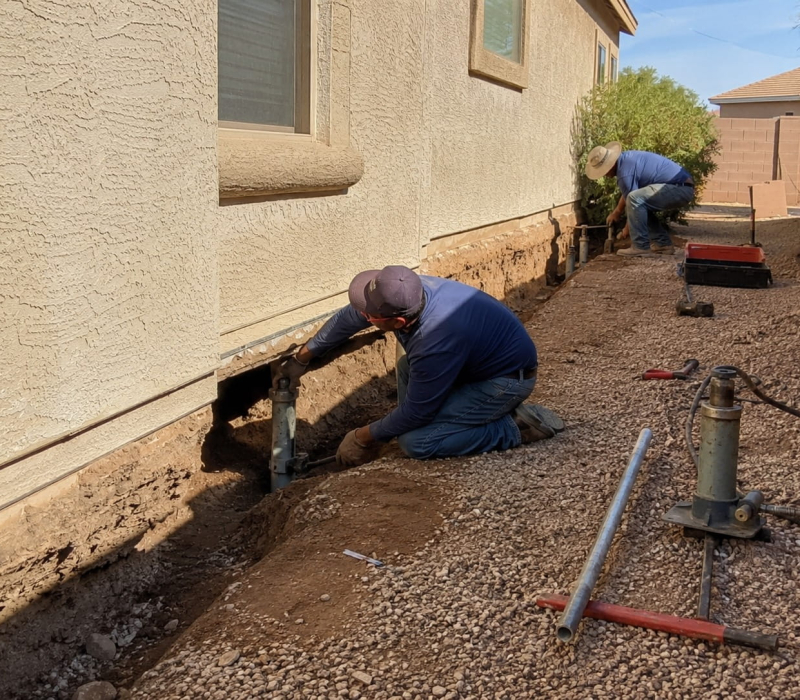
Concrete or steel piers extend below the existing foundation to reach stronger supporting soils. Hydraulic equipment carefully transfers the building’s weight onto the new piers, helping stabilize the structure and reduce further settlement.
Pier underpinning can often be completed with less excavation than traditional methods, making it an attractive option for certain properties.
Engineering Considerations for Foundation Underpinning
Foundation underpinning is much more than simply adding concrete beneath an existing home. Every project involves careful structural planning to ensure the building remains safe during construction and continues performing well long after the work is complete.
Several engineering factors must be considered before work begins.
Structural Load Analysis
Every building places a unique load on its foundation.
Engineers calculate:
- Total building weight
- Concentrated load areas
- Bearing pressure
- Existing footing dimensions
- Settlement patterns
These calculations determine how much additional support is required and where it should be installed.
Soil Bearing Capacity
Different soils provide different levels of structural support.
For example:
- Dense gravel provides excellent support.
- Sand can perform well if properly compacted.
- Clay may expand and contract with moisture changes.
- Organic soils often provide poor bearing capacity.
- Fill material may settle significantly over time.
Understanding the soil beneath a home helps determine the appropriate depth and design of the underpinning system.
Water Table Conditions
Groundwater can significantly affect foundation performance.
High water tables increase hydrostatic pressure against basement walls while saturated soils lose some of their load-bearing capacity.
Proper drainage planning becomes an essential component of many underpinning projects.
Existing Structural Damage
Every crack tells part of the building’s story.
Engineers examine:
- Crack width
- Crack direction
- Crack location
- Recent movement
- Historical repairs
These observations help determine whether foundation movement is active or has stabilized.
Building Permits and Inspections
Foundation underpinning is considered a major structural modification and typically requires permits before construction begins.
Permit requirements help ensure that all work complies with applicable building regulations and structural safety standards.
Depending on the project, the approval process may include:
- Structural engineering drawings
- Building permit applications
- Site inspections
- Excavation approvals
- Concrete inspections
- Final structural review
Working with experienced professionals helps ensure the project progresses smoothly while meeting all regulatory requirements.
Common Myths About Foundation Underpinning
Homeowners often delay necessary repairs because of misconceptions surrounding foundation work. Understanding the facts can help you make informed decisions before problems become more severe.
Myth: Small Cracks Are Always Harmless
While some minor shrinkage cracks are common, expanding cracks, horizontal cracks, or stair-step cracks may indicate structural movement.
An inspection helps determine whether the damage is cosmetic or requires foundation underpinning.
Myth: Foundation Settlement Stops on Its Own
Some settlement stabilizes naturally, but active movement rarely resolves without addressing the underlying cause.
Ignoring settlement often allows damage to spread throughout the structure.
Myth: Underpinning Means Rebuilding the Entire House
Foundation underpinning strengthens the existing foundation without demolishing the home.
Carefully planned construction methods allow the building to remain supported throughout the project.
Myth: Foundation Repairs Only Affect the Basement
Foundation movement can impact:
- Interior walls
- Exterior masonry
- Roof framing
- Flooring
- Windows
- Doors
- Plumbing systems
- Utility connections
Because every part of the building depends on a stable foundation, structural movement often affects multiple areas simultaneously.
Myth: Cosmetic Repairs Solve Structural Problems
Patching drywall cracks or repainting walls may temporarily improve appearance, but these repairs do not address the underlying structural issue.
Without correcting foundation movement, cosmetic damage often returns.
Factors That Influence Foundation Underpinning Costs
Every homeowner wants to understand the potential investment involved in foundation repairs. While costs vary from one property to another, several key factors influence the overall scope of work.
These include:
- Size of the home
- Extent of foundation damage
- Depth of underpinning required
- Soil conditions
- Accessibility
- Basement lowering requirements
- Waterproofing upgrades
- Drainage improvements
- Engineering requirements
- Permit fees
- Existing plumbing or utility relocations
Rather than relying on generalized estimates, a detailed site inspection provides the most accurate understanding of the work required and the associated costs.
At Plumber On Demand, we believe in providing honest assessments and transparent recommendations based on the specific needs of your property. If you’re concerned about foundation movement or planning a basement renovation, contact our team at 905-409-0596 to schedule a professional evaluation.
Why Homeowners Trust Plumber On Demand for Foundation Underpinning
Foundation repairs are among the most significant investments a homeowner can make. Choosing an experienced contractor can make all the difference in the quality and longevity of the repair. At Plumber On Demand, we understand that every property is unique, which is why we take the time to evaluate your home’s specific needs before recommending a foundation underpinning solution.
Our goal is to provide dependable workmanship, quality materials, and exceptional customer service from the initial consultation through project completion. Whether you’re dealing with foundation settlement, basement cracks, or planning a basement lowering project, our team is committed to delivering results that stand the test of time.
When you choose Plumber On Demand, you can expect:
- Experienced and knowledgeable professionals
- Thorough foundation inspections
- Customized underpinning solutions
- High-quality construction materials
- Safe and efficient work practices
- Clear communication throughout the project
- Respect for your home and property
- Reliable service from start to finish
If you’ve noticed signs of foundation movement or are considering foundation underpinning as part of a renovation, contact Plumber On Demand today at 905-409-0596 to schedule an inspection.
How to Maintain Your Foundation After Underpinning
Once foundation underpinning has been completed, regular maintenance can help protect your investment and reduce the risk of future issues. While underpinning significantly strengthens your home’s foundation, proper care of the surrounding property remains important.
Keep Water Away From the Foundation
Water is one of the leading causes of foundation problems. Make sure gutters and downspouts are clean and direct water several feet away from your home. Proper grading around the property also helps prevent water from pooling near the foundation.
Inspect for New Cracks
Occasionally inspect your basement walls, foundation, and interior walls for any new cracks or changes to existing ones. While small hairline cracks can occur naturally, noticeable changes should be evaluated by a professional.
Address Plumbing Leaks Quickly
Hidden plumbing leaks beneath your home can weaken the supporting soil over time. Prompt repairs can help prevent unnecessary moisture from affecting your foundation.
Maintain Consistent Moisture Levels
During long periods of dry weather, the soil around your home can shrink. Keeping moisture levels relatively consistent helps reduce soil movement, particularly in areas with clay-rich soil.
Schedule Periodic Inspections
A professional inspection every few years can identify potential concerns before they become costly structural problems.
Frequently Asked Questions
How do I know if I need foundation underpinning?
Common signs include large foundation cracks, uneven floors, sticking doors and windows, and visible settlement around your home. A professional inspection can determine whether underpinning is the right solution.
How long does foundation underpinning take?
The timeline depends on the size of the project and the condition of the foundation. Smaller projects may take a few weeks, while larger projects can take longer.
Can I stay in my home during the project?
In many cases, homeowners can remain in their homes while work is being completed. This depends on the scope of the project and will be discussed before construction begins.
Does foundation underpinning increase home value?
A properly repaired and stabilized foundation can improve buyer confidence and help preserve the value of your property.
Can foundation underpinning prevent future settlement?
While no foundation is completely immune to movement, professionally completed underpinning significantly improves structural stability and helps reduce the risk of future settlement.
Protect Your Home with Professional Foundation Underpinning
Your home’s foundation supports everything above it. When foundation problems are ignored, they rarely improve on their own. Small cracks can become major structural issues, uneven settlement can affect walls and flooring, and water intrusion can create additional damage over time.
Foundation underpinning provides a reliable, long-term solution by strengthening the existing foundation and transferring the weight of your home to more stable ground. Whether you’re dealing with structural settlement, planning a basement lowering project, or simply want the peace of mind that comes with a stable foundation, investing in professional underpinning is one of the best ways to protect your property.
At Plumber On Demand, we’re committed to delivering high-quality foundation underpinning services that homeowners can depend on. From the initial inspection to the final stages of construction, our team focuses on safety, precision, and lasting results.
If you’ve noticed signs of foundation movement or would like a professional assessment of your home’s structural condition, don’t wait for the problem to worsen. Contact Plumber On Demand today at 905-409-0596 to schedule a consultation. Our experienced team is ready to help you protect your home with dependable foundation underpinning solutions that are built to last.