
Flood Services Cheltenham
 (459)
(459)
(459)

Professional Flood Services | Plumber On Demand
Inspection, Extraction, Cleanup, Drying, Restoration, and Prevention in One Service Line
Flood recovery is not a single task. It is a sequence: find out what happened, remove the water, clean what the water left, dry the structure, rebuild finishes, and reduce the chance it happens again.
Property owners often call the first company they can reach and hope that company does “everything.” Flood services, as a complete offering, means knowing which stage you are in and moving through the line without skipping a step or paying for the wrong one.
At Plumber On Demand, we provide flood services for residential and commercial properties as an umbrella of related work—inspection, extraction, cleanup, drying support, restoration planning, and prevention guidance. You do not need five different explanations of the same event.
You need a clear map of what happens first, what happens next, and when each stage should start.
If you need flood services after a plumbing failure, appliance leak, backup, or indoor flooding event, contact Plumber On Demand today at 905-220-5006 to schedule an assessment.
What Flood Services Means
Flood services is the full response line for water that has entered a building. It is not only mopping.
It is not only rebuilding. It is the coordinated set of stages that take a property from wet and damaged back to dry, clean, and finished.
A complete flood services line typically includes:
- Inspection and moisture assessment
- Water extraction
- Cleanup of silt, contents, and contaminated surfaces
- Drying and dehumidification of remaining structure
- Restoration of drywall, flooring, trim, and paint after drying
- Source repair and prevention recommendations
Calling “flood services” should tell you where you are on that line. If water is still standing, you are not in restoration.
If the house is gutted and dry, you are not in extraction. The umbrella exists so those stages are planned together instead of treated as unrelated jobs.
Why a Full Flood Services Line Matters
Floods get more expensive when stages are skipped or done in the wrong order. Extracting without cleanup leaves silt. Drying without extraction leaves ponds.
Restoring without drying traps moisture. Cleaning without fixing the leak invites a second flood.
A coordinated flood services approach helps:
- Match the response to the actual stage of damage
- Avoid rebuilding too early or cleaning too late
- Keep documentation consistent from first visit to final rebuild
- Reduce gaps when multiple trades would otherwise work in isolation
- Give occupants one explanation of the path forward
- Connect plumbing source repair with the water-damage work that follows
The value of flood services is the sequence, not a promise that every property needs every stage.
When to Call Which Stage
Knowing which stage to request saves time.
• Call for Inspection First When
- You are not sure how far water traveled
- You smell moisture but see little standing water
- Multiple rooms or a ceiling cavity may be involved
- You need a written sense of extraction vs. drying vs. rebuild needs
• Call for Extraction When
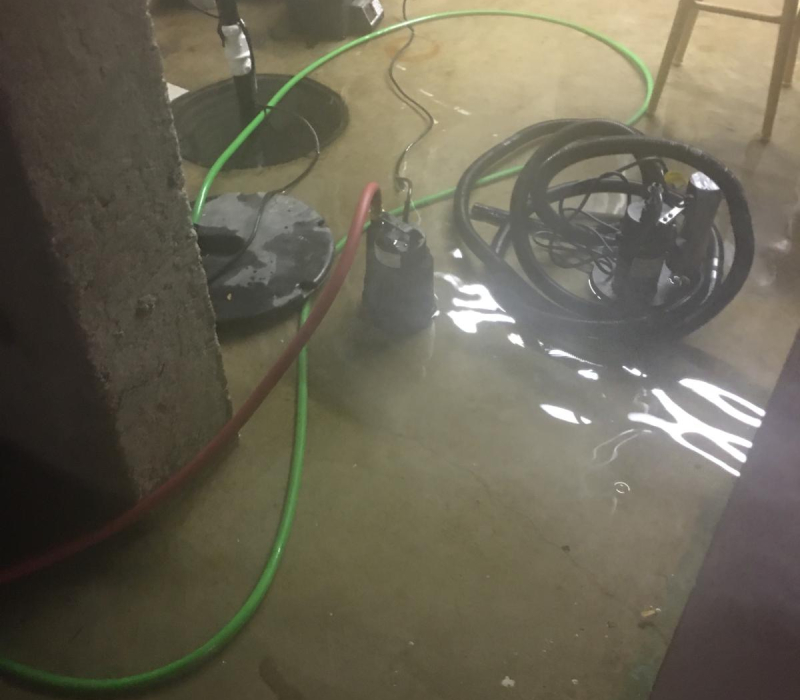
- Water is standing on floors
- A pipe, appliance, or drain is still releasing water (after shutoff)
- Carpet, padding, or finished floors are saturated
• Call for Cleanup When
- Water has receded but silt, debris, or contaminated residue remains
- Contents are wet and need sorting
- Odor or sanitation is the immediate problem
• Call for Drying When
- Bulk water is gone
- Structure and cavities remain damp
- You need equipment and monitoring before walls can close
• Call for Restoration When
- Materials that had to come out are out
- Remaining structure is dry
- The job is to put drywall, flooring, trim, and paint back
• Call for Prevention When
- The loss is stabilized
- You want the source repaired and similar failures reduced
Plumber On Demand helps you identify the correct entry point so you do not hire a rebuild crew to extract a basement, or a cleaning crew to hang drywall.
Common Causes That Trigger Flood Services
Flood services are requested after many kinds of indoor water events:
- Burst or leaking pipes
- Failed fittings and supply lines
- Water heater tank or pan failures
- Washing machine and dishwasher floods
- Toilet overflows and drain backups
- Sump or seepage events in lower levels
- Ceiling releases from upstairs plumbing
The cause determines source repair. The spread of water determines which service stages are required.
A small, caught-early leak may need inspection, a limited extraction, and drying. A major event may need the entire line.
Signs You Need Flood Services (Not Just a Mop)
Professional flood services are often needed when:
- Water reached more than a single contained spill
- Floors, walls, or ceilings are involved
- You cannot tell whether water is still in cavities
- Contents, sanitation, or odor are part of the problem
- Finishes will have to come out
- The leak source is a plumbing system, not a tipped bucket
If the event is larger than a wipe-up, you are in flood-services territory. The question is which stage, not whether the property needs a structured response.
How the Stages Work Together
Flood services overlap at the edges, but they are not interchangeable.
Inspection tells extraction where to work. Extraction makes cleanup possible. Cleanup makes drying honest—fans should not blow silt around a dirty room.
Drying makes restoration possible. Restoration only lasts if prevention and source repair are real.
A typical path:
1. Inspect and stop the source
2. Extract standing water
3. Clean residue and contents
4. Dry remaining materials
5. Restore finishes
6. Confirm prevention items are complete
Some properties enter at step 3 because the owner already removed standing water. Some enter at step 5 because another team finished drying.
The umbrella still matters: someone should confirm that earlier stages were actually finished.
Why DIY “Full Flood Service” Is Risky
Property owners sometimes try to be the general contractor for their own flood: shop-vac the floor, run a box fan, throw away carpet, then hang drywall on the weekend.
That approach often:
- Misses water in wall cavities and under cabinets
- Dries contaminated residue into dust
- Closes walls that are still wet
- Throws away salvageable contents—or keeps items that should go
- Leaves no moisture records for insurance
- Repairs finishes but not the pipe that caused the loss
- Creates a second demolition a few weeks later when odor or swelling returns
Professional flood services exist because the stages have dependencies. Doing them out of order is how small floods become long projects.
Our Flood Services Process
• 1. Inspection and Event History
We review how water entered, how long it was present, and which rooms and cavities are likely involved. This step decides the first working stage.
• 2. Source Control
If a pipe, valve, appliance, or drain is still the problem, stopping the water is part of flood services—not a separate mystery.
• 3. Extraction
Standing water is removed so cleanup and drying can begin. Extraction is stage work, not the entire recovery.
• 4. Cleanup
Silt, damaged contents, and contaminated surfaces are addressed according to water category and material type.
• 5. Drying and Monitoring
Remaining structure is dried with a plan, not with unattended fans aimed at random corners.
• 6. Restoration Planning and Rebuild
When the property is ready, finishes are replaced: drywall, flooring, trim, and paint as needed.
• 7. Prevention and Closeout
We review what failed, what was repaired, and what will reduce recurrence. You should know which stages were completed and which were not required.
• 8. Documentation
Photos, affected-area notes, and stage completion support insurance conversations and later contractors if additional work is needed.
One Service Line vs. Many Unrelated Contractors
Some losses involve several companies who never see each other’s scopes. The extraction team leaves. A cleaner arrives.
A drywall crew shows up while a corner is still wet. Nobody owns the sequence.
An umbrella flood services line helps by:
- Setting stage gates (no restoration until dry)
- Keeping one description of the water category and affected rooms
- Reducing duplicate demolition
- Making it obvious when a stage was skipped
- Connecting plumbing repair with the water work it caused
You can still use specialists. The point is that inspection, extraction, cleanup, drying, restoration, and prevention are planned as one event.
Emergency vs. Scheduled Flood Services
Not every flood-services call is the same urgency.
• Emergency Entry
Active water, ceiling collapse risk, sewage on floors, or water spreading into new rooms needs rapid extraction and source control.
Inspection is compressed into the same visit.
• Scheduled Entry
A room that flooded days ago, was shop-vac’d, and now smells or feels damp may start with inspection and drying assessment rather than emergency pumping.
• Restoration Scheduling
Rebuild work is rarely the 2 a.m. task. It is scheduled after drying is verified.
Flood services as a line includes both urgency and planning.
The mistake is treating restoration like an emergency extraction, or treating an active flood like a next-week estimate appointment.
Flood Services for Residential Properties
Homeowners usually need a path, not a jargon list. Typical residential flood services involve:
- Basements and lower levels
- Laundry and water heater rooms
- Kitchens and bathrooms
- Living spaces after supply-line failures
- Ceilings after upstairs leaks
We explain which stages apply to that house. A laundry-room hose failure might be extraction, cleanup, drying, and a small restoration.
A sewage backup might emphasize cleanup and disposal before anyone talks about new flooring.
Flood Services for Commercial Buildings
Commercial properties need stage planning around operations.
Flood services for businesses often include:
- Rapid inspection to separate wet zones from usable space
- Extraction and cleanup timed around occupancy
- Drying that does not shut down an entire floor if isolation is possible
- Restoration phasing so customer or work areas return first
- Documentation for property and interruption claims
Facility managers benefit from a single sequence they can report to ownership: we are in drying, not yet in rebuild; or we are in restoration, source already repaired.
Save vs. Replace Across the Flood Services Line
Save-versus-replace looks different at each stage.
• During Cleanup
Contents, carpet padding, and contaminated porous goods are the main decisions.
• During Drying
Some materials are given a chance to dry; others are removed because they will not dry in time or cannot be sanitized.
• During Restoration
Finishes that came out are replaced. Remaining dry structure is kept.
A coordinated flood services plan does not save an item at cleanup only to discover during restoration that it must come out anyway—unless conditions changed.
Early honesty about what cannot stay reduces double handling.
Flood Services Cost Factors
Cost follows stages and severity, not a single “flood fee.”
Factors include:
- How many stages are actually required
- Square footage and number of rooms
- Water category and contamination
- Contents volume
- Whether cavities were involved
- Restoration finish level (drywall and paint vs. full flooring replacement)
- After-hours emergency response vs. scheduled work
- Access and occupied-building constraints
Inspection is how you avoid paying for restoration on a job that still needs extraction, or paying for a full-line package when only drying remains.
Insurance and Flood Services
Insurers often think in stages even when homeowners do not. Mitigation (extract, dry, protect from further damage) is frequently documented separately from permanent repairs (restoration).
Cause of loss still drives coverage.
Helpful practices across the flood services line:
- Photograph each stage
- Keep source identification clear (pipe, appliance, backup, seepage)
- Separate emergency mitigation notes from rebuild estimates
- Do not assume outside flooding and indoor plumbing failures are treated the same
We help document the work. Your policy and carrier determine payment. Calling early still helps, because delayed stages can look like neglect of further damage.
Prevention as a Flood Service
Prevention is the last stage of the line, not a brochure. After a flood, prevention may include:
- Pipe, fitting, or appliance repair or replacement
- Shutoff valve access
- Supply hose replacement
- Water heater maintenance or replacement after a tank failure
- Drainage and sump reliability where seepage contributed
- Guidance on storage off floors in water-prone rooms
Flood services that skip prevention return to step one. The umbrella includes the repair of what caused the water, especially when the source is plumbing.
Benefits of Hiring Plumber On Demand for Flood Services
Property owners need a team that can say which stage they are in.
When you choose Plumber On Demand, you benefit from:
• Stage Clarity
Inspection, extraction, cleanup, drying, restoration, and prevention are named as distinct work.
• Plumbing-Aware Response
Many indoor floods start with pipes and appliances. Source control is part of the line.
• Right-Sized Scopes
You should not buy a rebuild because you asked for “flood help.”
• Clear Communication
You know what was done, what is next, and what is not in the current stage.
• Residential and Commercial Support
We work with homeowners, landlords, property managers, and business owners.
Inspection Drives Every Later Stage
Skipping inspection is how rooms get missed. Water follows gravity, voids, and finish floors.
It appears in a hallway and originates in a wall. It drips from a light fixture after an upstairs leak.
Inspection in flood services looks for:
- The source
- The lowest point water reached
- Adjacent rooms and units
- Ceiling and wall cavities
- Contents and sanitation concerns
- Whether restoration will be needed later
A short inspection at the start of flood services prevents a long argument at the end about why a closet or toe-kick was never addressed.
Areas We Serve
Plumber On Demand provides flood services for residential and commercial properties across a wide range of communities.
We work with:
- Homeowners
- Property managers
- Landlords
- Contractors
- Business owners
- Facility managers
- Real estate professionals
The Importance of Not Skipping Stages
Each skipped stage shows up later as a callback.
Skipping extraction leaves water. Skipping cleanup leaves silt and odor. Skipping drying fails new drywall.
Skipping restoration leaves a demolished building. Skipping prevention repeats the loss.
A flood services line exists so those skips are visible. If a stage is not needed, that should be a decision—not an accident.
Schedule Flood Services Today
If water has entered your property and you are not sure whether you need extraction, cleanup, drying, or a rebuild, Plumber On Demand is ready to help.
Our flood services offering maps the full line so you enter at the right stage and finish the ones that apply.
Contact Plumber On Demand today at 905-220-5006 to schedule a flood services assessment.
Landlords, Managers, and Multi-Unit Coordination
In multi-unit buildings, flood services often cross unit lines. A leak in one suite becomes extraction in another and restoration in a hallway.
We assist with:
- Identifying which units are in which stage
- Scheduling occupied-building work
- Consistent documentation for ownership and insurers
- Communication that does not mix “we extracted” with “we rebuilt”
Managers need stage language they can send to tenants: this unit is in drying; that unit is scheduled for restoration.
Why Property Owners Trust Plumber On Demand
Floods create confusion because every company uses similar words. Clients choose Plumber On Demand because we offer:
• An Umbrella With Named Stages
You can tell where you are on the line.
• Practical Entry Points
Emergency extraction and scheduled restoration are not treated as the same visit.
• Reliable Communication
Next steps are specific: cleanup, drying, rebuild, or prevention—not “we’ll take care of the flood.”
Frequently Asked Questions About Flood Services
• Is “flood services” the same as restoration?
No. Restoration is one stage. Flood services also include inspection, extraction, cleanup, drying, and prevention.
• How do I know which stage to call for?
If water is standing, start with extraction and inspection. If residue and contents are the issue, cleanup.
If the structure is damp, drying. If finishes are gone and the building is dry, restoration.
• Can one visit cover every stage?
Rarely. Extraction can start immediately. Restoration usually waits on drying. Inspection determines the path.
• Do I need every stage after every flood?
No. A small, caught-early event may need inspection, limited extraction, and drying only. Larger or contaminated events use more of the line.
• Should I hire separate companies for each stage?
You can, but someone must own the sequence. An umbrella flood services plan reduces gaps between teams.
• What if another company already extracted the water?
You may enter at cleanup or drying. Inspection still matters so missed cavities and residue are not ignored.
• Does insurance cover flood services?
Coverage depends on the policy and the cause of water. Mitigation and permanent repairs may be documented separately. Contact your insurer.
• How long does the full line take?
Extraction can be hours. Drying can be days. Restoration depends on finishes. Prevention may be a plumbing repair on its own timeline.
• What is the first thing I should do?
If safe, stop the water source and call for inspection/extraction. Do not start rebuilding over wet materials.
• Can flood services include repairing the pipe?
Source control is part of a complete line, especially for plumbing-caused flooding.
• What if I only want cleanup, not restoration?
That is a valid stage request. We will still tell you if drying or rebuild will be needed later so expectations stay accurate.
• How do I get started?
Call Plumber On Demand at 905-220-5006 to describe the event. We will help you enter the flood services line at the correct stage.
Contact Plumber On Demand Today
Flood recovery works best as a sequence, not as a single vague job. Inspection, extraction, cleanup, drying, restoration, and prevention each have a role.
The right flood services plan names those stages and starts at the one you actually need.
Plumber On Demand provides flood services for residential and commercial clients.
If water has entered your property and you need a clear path forward, contact Plumber On Demand today.
📞 Call 905-220-5006
Speak with our team about your situation, request an assessment, and learn how our flood services line can help you move from the first inspection through the stages that apply to your property.