
Drain Field Repair Aurora
 (459)
(459)
(459)
A septic system depends on more than just the tank to function properly. While the septic tank separates and partially treats wastewater, the final and most critical stage of treatment happens underground in the drain field. This area—also known as a leach field or absorption field—is responsible for safely dispersing wastewater into the soil, where natural filtration completes the treatment process.
When the drain field fails, the entire septic system is effectively compromised. Unlike tank issues that can often be corrected through pumping or cleaning, drain field repair deals with soil-level failure, absorption breakdown, and hydraulic system collapse.
At Plumber On Demand, we provide professional drain field repair services designed to restore wastewater absorption, correct system overload, and prevent complete septic system failure.
If your property is experiencing slow drainage, standing water, or septic backups, contact Plumber On Demand at 905-409-0719 for expert drain field repair.
DRAIN FIELD REPAIR | PLUMBER ON DEMAND
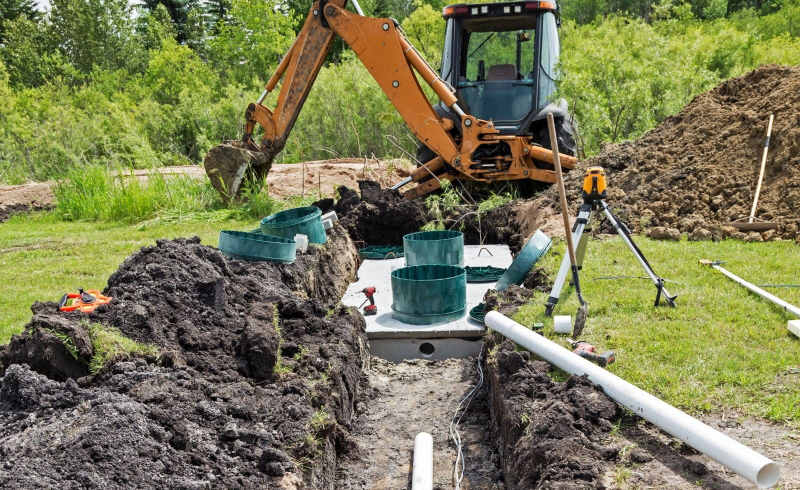
A drain field is a network of underground trenches that distribute treated wastewater from the septic tank into surrounding soil. It typically consists of:
- Perforated distribution pipes
- Gravel or aggregate layers (or modern chamber systems)
- Soil absorption zones
- Distribution lines connected to the septic tank
Once wastewater leaves the tank, it slowly percolates through the drain field and is naturally filtered by soil microbes.
When functioning properly, the drain field is invisible and odor-free. When it fails, however, the effects become noticeable quickly.
What Is Drain Field Repair?
Drain field repair refers to restoring the ability of the soil absorption system to properly handle and filter wastewater.
This may involve:
- Restoring clogged soil absorption zones
- Repairing or replacing damaged distribution lines
- Fixing uneven wastewater distribution
- Relieving hydraulic overload
- Addressing root intrusion
- Rebuilding sections of the drain field
Drain field repair focuses on restoring soil permeability and system balance, not just replacing components.
How Drain Fields Fail
Drain field failure is usually gradual and caused by long-term stress on the system.
• Soil Saturation
Excess wastewater can overwhelm soil, causing it to become saturated and unable to absorb additional liquid.
• Biomat Formation
Over time, bacteria and solids form a thick layer (biomat) that blocks soil pores and reduces absorption.
• Hydraulic Overload
Too much water entering the system too quickly prevents proper filtration and dispersal.
• Pipe or Distribution Failure
Uneven wastewater distribution can overload one section of the drain field while leaving others unused.
• Root Intrusion
Tree roots can enter pipes and disrupt flow, causing blockages and structural damage.
• Soil Compaction
Heavy vehicles or construction above the drain field can compress soil and reduce permeability.
When a drain field begins to fail, the problem usually isn’t isolated—it’s systemic. The soil has reached its absorption limit, distribution is uneven, or long-term buildup has blocked wastewater from filtering correctly. At this stage, drain field repair becomes urgent, because the drain field is the final stage of treatment in a septic system. If it fails, the entire system is compromised.
This section continues the full SEO guide for Drain Field Repair, covering emergency failures, repair and restoration methods, full replacement decisions, cost factors, prevention strategies, environmental risks, and long-term performance management.
Emergency Drain Field Failure
A failing drain field can quickly turn into a property-wide wastewater emergency. Unlike tank issues, drain field problems cannot be resolved with pumping alone because the issue is in the soil absorption system.
Emergency drain field repair may be required when:
- Wastewater is pooling on the ground surface
- Strong sewage odors are present outdoors
- Toilets and drains back up repeatedly
- Grass over the drain field becomes extremely soggy or spongy
- Multiple plumbing fixtures fail at the same time
- The yard develops consistently wet or muddy areas
These conditions indicate that wastewater is no longer being properly absorbed into the soil.
If ignored, emergency drain field failure can lead to:
- Contaminated groundwater
- Full septic system backup
- Structural damage inside the home
- Permanent soil damage
- Costly full system replacement
At Plumber On Demand, emergency drain field repair services focus on immediate stabilization, flow correction, and system recovery assessment.
If you are experiencing drain field failure, call 905-409-0719 immediately.
• Drain Field Repair and Restoration Methods
Drain field repair is not a one-size-fits-all process. The solution depends on soil condition, system age, and severity of failure.
• Soil Recovery and Rest Periods
In early-stage failure, the drain field may recover if wastewater load is reduced.
This involves:
- Reducing water usage
- Allowing soil to dry and recover
- Temporarily diverting system load
This method only works if the soil is not permanently saturated.
• Hydraulic Relief Techniques
When the system is overloaded, technicians may redistribute flow to reduce pressure on failing zones.
This can include:
- Adjusting distribution lines
- Redirecting wastewater flow
- Balancing system output
• Partial Drain Field Repair
If damage is localized, specific sections may be repaired by:
- Replacing clogged distribution lines
- Restoring gravel beds
- Improving soil permeability in affected zones
• Biomat Reduction and Soil Treatment
Over time, biomat buildup can block soil absorption.
Remediation methods may include:
- Soil aeration techniques
- Controlled biological recovery processes
- Surface relief adjustments
• Full Drain Field Replacement
If the soil has permanently lost absorption capacity, full replacement is required.
This involves:
- Excavating the existing drain field
- Installing a new absorption system
- Redesigning distribution layout
- Re-evaluating soil conditions
• Drain Field Repair vs Replacement
One of the most important decisions in septic system management is whether the drain field can be repaired or must be replaced entirely.
• Drain Field Repair
Best when:
- Soil is partially saturated but recoverable
- Distribution lines are still functional
- Damage is localized
- System is relatively modern
• Drain Field Replacement
Required when:
- Soil absorption is permanently lost
- Biomat buildup is severe and irreversible
- Multiple sections have failed
- System is outdated or undersized
Replacement is more expensive but often necessary for long-term system function.
• Cost Factors for Drain Field Repair
Drain field repair costs vary widely depending on several conditions.
Key factors include:
- Severity of soil failure
- Depth and size of drain field
- Soil type and groundwater levels
- Excavation requirements
- Accessibility of the property
- Equipment and labor needs
- Emergency vs scheduled service
Drain field work is typically the most expensive part of septic system repair because it involves large-scale soil and system modification.
• Common Homeowner Mistakes
Many drain field failures worsen due to preventable mistakes.
• Driving or Parking Over the Drain Field
This compresses soil and permanently reduces absorption ability.
• Ignoring Early Warning Signs
Wet grass or slow drains often appear long before full failure.
• Excessive Water Use
Overloading the system accelerates soil saturation.
• Planting Trees Near the Drain Field
Tree roots can invade and damage distribution lines.
• Attempting DIY Soil Repairs
Drain field restoration requires specialized equipment and system knowledge.
Environmental Impact of Drain Field Failure
A failing drain field is not only a plumbing issue—it is also an environmental risk.
When drain fields fail:
- Untreated wastewater can reach groundwater
- Soil contamination may occur
- Nearby wells can become unsafe
- Surface water may be polluted
- Local ecosystems may be affected
Proper drain field repair ensures wastewater is safely filtered before entering the environment.
• How to Prevent Drain Field Failure
Drain field longevity depends heavily on proper use and maintenance.
• Reduce Water Load
Spread water usage throughout the week to avoid overwhelming the system.
Schedule Regular Septic Maintenance
Routine pumping and inspection help prevent solids from reaching the drain field.
• Protect Soil Structure
Avoid heavy loads or construction over the drain field area.
• Prevent Root Intrusion
Keep trees and shrubs at a safe distance from the system.
• Monitor Early Warning Signs
Address slow drains and wet yard areas immediately.
Why Drain Field Repair Matters
The drain field is the final treatment stage in a septic system. If it fails, wastewater has nowhere safe to go.
Proper drain field repair helps:
- Restore wastewater absorption
- Prevent sewage surfacing
- Protect home plumbing systems
- Avoid full system replacement
- Maintain environmental safety
- Extend septic system lifespan
Without a functioning drain field, the entire septic system is compromised.
Why Choose Plumber On Demand for Drain Field Repair
At Plumber On Demand, we specialize in diagnosing and restoring failing drain fields with precision and care.
Our services include:
- Drain field performance evaluation
- Soil absorption testing
- Hydraulic system correction
- Partial and full drain field repair
- Emergency failure response
- Long-term system stabilization
We focus on restoring proper soil absorption and preventing future system collapse.
Frequently Asked Questions About Drain Field Repair
• What is drain field repair?
It is the process of restoring soil absorption and wastewater distribution in a failing drain field.
• Can a failed drain field be fixed?
Sometimes, if soil damage is not permanent, but severe cases require replacement.
• What causes drain field failure?
Common causes include soil saturation, biomat buildup, and hydraulic overload.
• How long does drain field repair take?
It depends on severity, ranging from minor adjustments to full reconstruction.
• Is drain field repair expensive?
It can be costly, especially if excavation or replacement is required.
• Can I use water during drain field repair?
Usage may need to be reduced or restricted depending on system condition.
• What are signs of drain field failure?
Wet yard areas, sewage odors, and backups are common indicators.
• Can rain cause drain field problems?
Yes, heavy rain can worsen saturation and reduce soil absorption temporarily or permanently.
Schedule Professional Drain Field Repair Today
A drain field is the most critical component of a septic system’s final treatment process. When it begins to fail, wastewater can no longer be safely absorbed into the soil, leading to backups, surface pooling, and environmental contamination. Timely drain field repair is essential to restoring system function and preventing full septic system failure.
At Plumber On Demand, we provide professional drain field repair services designed to diagnose soil absorption issues, restore system balance, and protect your property from costly damage.
If you are experiencing signs of drain field failure, contact Plumber On Demand today at 905-409-0719 for expert assistance.
Contact Plumber On Demand