
Basement Reinforcement Acton
 (459)
(459)
(459)

Basement Reinforcement Services for Stronger, Safer, and More Stable Foundations
A basement reinforcement project is one of the most important structural upgrades a home can undergo when the foundation begins showing signs of stress, movement, or long-term wear. Unlike cosmetic repairs, basement reinforcement focuses on strengthening the core structure of the home from beneath the surface, ensuring that the building remains stable, secure, and capable of supporting loads for many years to come.
At Plumber On Demand, basement reinforcement work is approached with precision and care, focusing on restoring structural integrity while preventing further movement or deterioration. Whether a home is experiencing foundation cracking, shifting walls, or long-term settlement, reinforcement provides a permanent solution that addresses the root cause rather than the symptoms.
If you are noticing signs of structural movement or weakening in your basement, contacting a professional early can prevent more serious damage. For expert assistance, call Plumber On Demand at 905-409-0596.
Understanding What Basement Reinforcement Really Means
Basement reinforcement refers to the process of strengthening existing foundation walls, footings, or support structures in a home’s basement to improve stability and load-bearing capacity. It is commonly used when the original foundation is no longer performing at its intended strength due to age, soil movement, water damage, or structural stress.
Rather than replacing the entire foundation, reinforcement works by enhancing what already exists. This makes it a highly effective solution for preserving the home while extending its structural lifespan.
Basement reinforcement may involve:
- Strengthening foundation walls
- Adding structural supports or beams
- Stabilizing shifting or bowing walls
- Improving load distribution
- Addressing weak or deteriorating concrete
- Preventing further foundation movement
Each reinforcement project is tailored to the specific conditions of the home, because no two foundations fail in exactly the same way.
Why Basement Reinforcement Becomes Necessary
A foundation is constantly under pressure. It supports the full weight of the home while also resisting soil movement, moisture changes, and environmental stress. Over time, this constant pressure can begin to take a toll.
Basement reinforcement becomes necessary when the foundation shows signs that it can no longer safely handle these loads without additional support.
Common causes include:
Long-Term Soil Movement
Soil beneath a home is not static. It expands, contracts, and shifts depending on moisture levels and temperature changes. This movement can gradually weaken foundation stability.
Age-Related Structural Wear
Older homes often have foundations that were built using outdated methods or materials that naturally degrade over time. Even high-quality foundations can weaken after decades of use.
Water Damage and Moisture Exposure
Water is one of the most damaging forces affecting basements. Over time, moisture can:
- Weaken concrete
- Cause cracking
- Erode supporting soil
- Increase pressure on walls
Increased Load Demands
Renovations or changes in home use can increase structural loads beyond what the original foundation was designed to handle.
Foundation Cracking and Movement
Visible cracks, shifting walls, or uneven floors often indicate that the foundation is under stress and may require reinforcement to prevent further movement.
Early Warning Signs That Basement Reinforcement May Be Needed
Homeowners often notice subtle changes before serious structural issues develop. Recognizing these signs early can make a significant difference in preventing long-term damage.
Some of the most common indicators include:
- Cracks in basement walls
- Horizontal or stair-step cracking patterns
- Bowing or leaning foundation walls
- Uneven or sloping basement floors
- Gaps forming around windows or doors
- Water seepage through foundation walls
- Visible separation between wall sections
- Doors or windows sticking on upper floors
These symptoms often indicate that the foundation is under stress and may require structural reinforcement to stabilize the home.
How Basement Reinforcement Works in Practice
Basement reinforcement is a structured process designed to restore strength without disrupting the entire home. The exact method used depends on the condition of the foundation and the type of stress it is experiencing.
At Plumber On Demand, reinforcement projects follow a carefully planned sequence to ensure safety and long-term effectiveness.
Structural Assessment and Load Analysis
Every reinforcement project begins with a detailed evaluation of the basement structure.
This includes:
- Inspecting foundation walls for damage
- Identifying stress points and crack patterns
- Measuring movement or shifting
- Assessing soil conditions around the foundation
- Reviewing load distribution across the structure
This stage determines the severity of the issue and the type of reinforcement required.
Identifying Weak Structural Zones
Not all parts of a basement are equally affected. Some areas may remain stable while others experience significant stress.
During assessment, weak zones are identified based on:
- Wall deflection
- Crack severity
- Moisture penetration points
- Load concentration areas
This helps target reinforcement exactly where it is needed.
Designing a Reinforcement Plan
Once the structure has been evaluated, a reinforcement strategy is developed.
This plan may include:
- Structural wall strengthening
- Load redistribution methods
- Support integration strategies
- Stabilization techniques for shifting walls
- Material selection for long-term durability
The goal is always to restore balance and prevent future movement.
Structural Repair Methods and Long-Term Stabilization of Foundations
A properly planned basement reinforcement project is not a single method applied to every home. Instead, it is a combination of structural strategies designed around how a specific foundation is failing, what conditions exist in the soil, and how the home is transferring weight into the ground.
Because basement walls and footings carry constant pressure from both the structure above and the soil surrounding the home, reinforcement must address multiple forces at once. If even one factor is ignored, the problem can continue or return over time.
At Plumber On Demand, reinforcement systems are selected based on structural behavior, not guesswork, ensuring the home is stabilized in a way that lasts.
Common Basement Reinforcement Methods
Basement reinforcement can be completed using several different structural approaches. Each method serves a different purpose depending on how the foundation is behaving and what type of stress it is under.
Wall Stabilization Systems
One of the most common reinforcement needs involves basement walls that are beginning to bow, lean, or crack under soil pressure.
Wall stabilization focuses on restoring rigidity and preventing further movement.
This may involve:
- Strengthening inward-bowing walls
- Securing walls that are shifting laterally
- Reinforcing weak masonry or concrete sections
- Adding structural resistance against soil pressure
These systems are designed to counteract the natural force of soil pushing against basement walls over time.
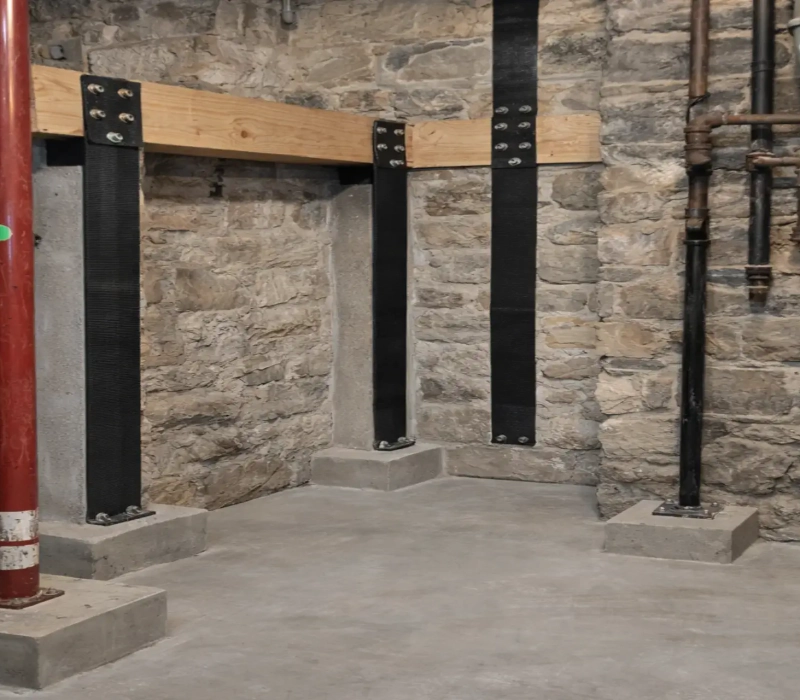
Structural Bracing and Support Integration
When a basement structure shows signs of stress, additional support systems may be introduced to redistribute load and stabilize movement.
This can include:
- Vertical support reinforcement
- Load-bearing redistribution points
- Structural bracing along weakened sections
- Reinforcement of key pressure zones
The purpose is not just to stop movement, but to re-establish balance within the structure so that no single area is carrying excessive load.
Foundation Wall Strengthening
In some cases, basement walls themselves remain intact but have weakened over time due to age or environmental exposure.
Strengthening methods focus on improving the wall’s ability to handle pressure.
This may involve:
- Increasing resistance to soil load
- Reinforcing compromised wall sections
- Stabilizing minor cracking before it expands
- Improving long-term durability of existing concrete or masonry
This type of reinforcement is often preventative as well as corrective.
Structural Load Redistribution
Homes are designed to distribute weight evenly across the foundation. When that balance is disrupted, certain areas become overstressed.
Load redistribution helps correct this imbalance by shifting structural pressure away from weakened zones.
This may involve:
- Adjusting load pathways
- Strengthening supporting structural points
- Reinforcing areas carrying excessive weight
- Restoring even pressure distribution across the foundation
When done correctly, this reduces ongoing stress and helps prevent future movement.
Soil Pressure and Its Impact on Basement Stability
One of the most important factors in basement reinforcement is soil pressure. The soil surrounding a home is constantly exerting force against basement walls, and this pressure changes depending on moisture levels, seasonal conditions, and soil composition.
Expanding Soil Conditions
Certain types of soil expand when they absorb moisture. This expansion increases lateral pressure on basement walls, often leading to bowing or cracking.
Without reinforcement, this pressure continues to build over time.
Dry Soil Shrinkage and Movement
When soil dries out, it can shrink and shift away from the foundation. This creates voids and uneven support conditions beneath the home, which can contribute to structural instability.
Hydrostatic Pressure
Water accumulation in the soil creates hydrostatic pressure, which pushes directly against basement walls.
This pressure can:
- Force water through cracks
- Increase wall deflection
- Accelerate structural weakening
Basement reinforcement must account for these forces to ensure long-term stability.
Integration of Reinforcement and Moisture Protection
A strong basement reinforcement system does more than stabilize structure—it also works alongside moisture management strategies.
Structural weakness and water intrusion often occur together, which means addressing one without the other can lead to incomplete results.
Reinforcement planning often includes:
- Improving wall resistance to moisture pressure
- Reducing pathways for water infiltration
- Supporting drainage efficiency around the structure
- Strengthening areas vulnerable to water-related damage
This combined approach helps protect both the structure and the interior basement environment.
Reinforcement in Older Homes
Older homes often require more extensive basement reinforcement due to long-term exposure to environmental stress and aging materials.
Common issues include:
- Weakened masonry or early concrete construction
- Lack of modern structural reinforcement techniques
- Long-term soil settlement
- Historical water exposure
- Inadequate original load distribution
Reinforcement in these homes is focused on stabilization first, followed by long-term protection.
Preventing Future Structural Movement
A key goal of basement reinforcement is not only fixing current issues but preventing future ones.
This is achieved by:
- Strengthening vulnerable structural points
- Reducing excessive load concentration
- Improving wall resistance to soil movement
- Enhancing overall foundation stability
When properly completed, reinforcement significantly reduces the likelihood of recurring structural issues.
Monitoring Structural Behavior During Reinforcement
Because basement reinforcement directly affects load-bearing systems, ongoing monitoring is essential throughout the process.
This includes:
- Tracking wall movement during stabilization
- Monitoring load transfer adjustments
- Observing soil response to structural changes
- Ensuring no new stress points are introduced
This controlled approach ensures the structure remains stable at all times.
Long-Term Benefits, Structural Value, and Final Website-Ready Content
A properly completed basement reinforcement project does more than correct visible structural issues—it restores confidence in the entire home. When foundation walls, supports, and load-bearing elements are strengthened, the benefits extend upward through every level of the structure. Floors become more stable, walls align more consistently, and the overall building performs as it was originally intended.
At Plumber On Demand, basement reinforcement is approached as a long-term structural investment rather than a temporary repair. The goal is to stabilize the home in a way that prevents future deterioration while improving overall structural reliability.
Benefits of Basement Reinforcement
Basement reinforcement provides a wide range of structural and functional advantages. These benefits are not limited to the basement itself but influence the entire home above it.
Restores Structural Stability
The most important benefit of basement reinforcement is the restoration of structural integrity. When foundation walls or supports begin to weaken, the entire home is affected.
Reinforcement helps:
- Stabilize shifting foundation walls
- Stop or slow ongoing movement
- Restore balance to load-bearing systems
- Strengthen weakened structural points
Once the foundation is stabilized, the home becomes safer and more predictable in its long-term performance.
Prevents Progression of Structural Damage
Foundation issues rarely remain static. Without reinforcement, small cracks or minor movement can gradually worsen over time.
Basement reinforcement helps prevent:
- Expansion of wall cracks
- Increased wall bowing or leaning
- Further structural shifting
- Long-term deterioration of concrete or masonry
By addressing the root cause early, homeowners avoid more extensive repairs later.
Improves Overall Home Performance
A reinforced basement contributes to better structural behavior throughout the entire home.
Homeowners often notice improvements such as:
- More even floors above the basement
- Reduced interior wall cracking
- Better alignment of doors and windows
- Improved structural consistency
These changes reflect a more stable foundation system supporting the structure.
Enhances Long-Term Property Value
A structurally sound home is significantly more attractive in the real estate market. Buyers are increasingly aware of foundation conditions and often view reinforcement as a major advantage.
Basement reinforcement can:
- Increase buyer confidence
- Improve resale appeal
- Reduce concerns during inspections
- Strengthen overall property value perception
A stable foundation is one of the most important factors in long-term property value retention.
Supports Future Renovation Potential
Homes with reinforced basements are better prepared for future upgrades and renovations.
This can include:
- Basement finishing projects
- Structural additions
- Layout modifications
- Conversion into livable space
Without a stable foundation, these upgrades may not be possible or may require additional structural correction later.
When Basement Reinforcement Becomes Necessary
Basement reinforcement is typically recommended when visible or measurable signs of structural stress begin to appear. Recognizing these early helps prevent more serious issues.
Visible Wall Cracking or Movement
Cracks in basement walls, especially horizontal or stair-step patterns, often indicate structural stress that may require reinforcement.
Bowing or Leaning Basement Walls
When walls begin to curve inward or shift out of alignment, it usually means external soil pressure is exceeding structural resistance.
Uneven Floors or Structural Shifting
Movement in the foundation can cause subtle changes throughout the home, including sloping floors or misaligned interior framing.
Water Intrusion Through Foundation Walls
Moisture entering through cracks or weakened sections often indicates both structural and environmental pressure on the foundation.
Long-Term Considerations After Basement Reinforcement
Once reinforcement work is completed, maintaining stability becomes the priority. While the structure is significantly stronger, ongoing environmental conditions still play a role in foundation performance.
Monitoring Foundation Conditions
Periodic visual inspections help identify any new changes early. Homeowners should look for:
- New or widening cracks
- Changes in wall alignment
- Moisture patterns on basement walls
Managing Moisture Around the Home
Water is one of the most influential factors affecting basement structures. Maintaining proper drainage around the home helps protect reinforcement work over time.
Maintaining Stable Soil Conditions
Soil movement is a natural process, but excessive changes in moisture levels can increase pressure on foundation walls. Keeping surrounding soil conditions balanced helps reduce stress on the structure.
Why Professional Basement Reinforcement Matters
Basement reinforcement is not a surface-level repair. It directly impacts the structural integrity of the home and must be handled with precision and experience.
Improper reinforcement can lead to:
- Continued structural movement
- Uneven load distribution
- Increased long-term damage
- Costly secondary repairs
Professional reinforcement ensures:
- Correct identification of structural issues
- Proper load support and redistribution
- Long-term stabilization of foundation walls
- Controlled implementation of reinforcement systems
At Plumber On Demand, reinforcement work is completed with a focus on structural safety, durability, and long-term performance.
For expert assessment or reinforcement planning, contact 905-409-0596.
Why Homeowners Choose Plumber On Demand
Homeowners rely on Plumber On Demand for basement reinforcement because of our structured approach to foundation stability and long-term protection.
Our process focuses on:
- Detailed structural evaluation
- Clear identification of foundation stress points
- Careful reinforcement planning
- Safe, controlled execution
- Long-term stability outcomes
We understand that basement reinforcement is not just about repairing damage—it is about restoring confidence in the entire structure of the home.
A basement reinforcement project is one of the most important steps a homeowner can take when dealing with foundation stress or structural movement. By strengthening basement walls, supports, and load-bearing systems, the home is returned to a stable and secure condition designed to last.
Rather than allowing structural issues to progress, reinforcement provides a controlled and effective way to stabilize the foundation and protect the property from further damage. The result is a stronger home, improved structural performance, and long-term peace of mind.
At Plumber On Demand, we specialize in delivering basement reinforcement solutions that prioritize safety, precision, and durability. Every project is carefully planned and executed to ensure the home remains stable both during and after the reinforcement process.
If you are noticing signs of foundation movement or structural stress, early action is essential. Contact Plumber On Demand today at 905-409-0596 to schedule a professional assessment and learn how basement reinforcement can protect your home for the future.