
Basement Flooding Cheltenham
 (459)
(459)
(459)

Professional Basement Flooding Services | Plumber On Demand
Recurring and Seasonal Basement Flooding Diagnosis, Stabilization, and Long-Term Protection
Basement flooding is often a pattern, not a one-time accident. Water that returns with spring snowmelt, heavy rain, or freeze-thaw cycles points to groundwater pressure, clay soil, foundation seepage, grading problems, or aging drainage infrastructure. Treating each wet episode as a surprise flood without diagnosing the pattern leaves the same slab wet again after the next thaw or storm.
At Plumber On Demand, we provide basement flooding services that focus on why water keeps returning. We stabilize active wet conditions, help identify likely pathways such as seepage, overloaded sumps, and aging drains, and outline longer-term protection so homeowners and property managers can plan beyond a single extraction visit.
If you need basement flooding service, contact Plumber On Demand today at 905-220-5006 to schedule an assessment.
What Recurring Basement Flooding Means
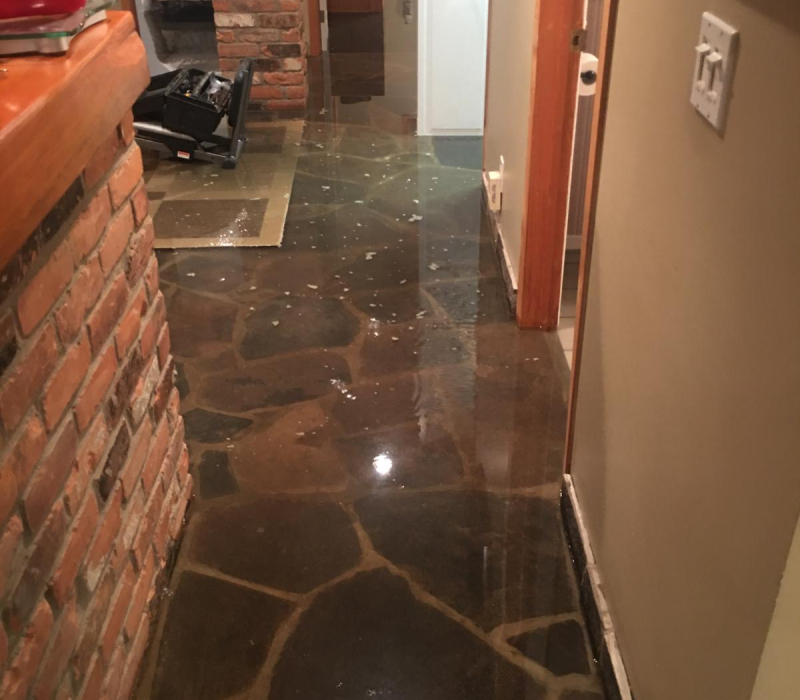
Recurring basement flooding is repeated water entry into the lower level. It may be a shallow film along the wall-floor joint, a seasonal pool in one corner, or a more serious inundation that appears after the same weather pattern.
Unlike a sudden burst pipe, the story is repetition:
- The same corner wets after rain
- The slab dampens every spring melt
- A window well contributes water in the same storms
- A sump runs constantly in wet seasons and still cannot keep up
- Efflorescence and staining show a long history
The service goal is diagnosis and protection, with extraction when water is present—not only emergency pumping with no follow-through.
Why Recurring Flooding Is a Serious Problem
Repeated wetting damages materials even when each event looks “minor.”
Ongoing flooding can lead to:
- Rot and swelling in base plates and bottom drywall
- Persistent musty odor
- Mold growth on wet materials, which can begin within 24–48 hours after each wetting
- Corrosion of mechanical equipment sitting on a damp slab
- Flooring that fails after several wet-dry cycles
- Higher humidity throughout the house
- Tenant complaints in rental lower levels
- Rising repair costs because the same finishes are replaced more than once
A seasonal problem is still a water-damage problem. Frequency does not make it harmless.
Common Causes of Recurring Basement Flooding
• Groundwater Pressure
When the water table rises, pressure against the foundation can push water through cracks, cold joints, and porous masonry.
• Clay Soil and Poor Drainage
Clay holds water against the foundation. After rain or melt, that water has nowhere to go except toward the wall.
• Foundation Seepage
Hairline cracks, deteriorated coatings, and the cove joint where wall meets floor are common seepage paths. Seepage can look like a flood when pressure is high.
• Snowmelt and Freeze-Thaw
Melting snow along foundation walls releases a large volume of water. Freeze-thaw can widen cracks and keep the same path open year after year.
• Aging Weeping Tile and Interior Drains
Collapsed, silted, or disconnected drainage around or under the slab reduces the system’s ability to move water to a sump.
• Grading, Downspouts, and Window Wells
Surface water that is aimed at the house becomes subsurface water. Recurring flooding often starts with downspouts that dump beside the wall.
• Aging Municipal or Private Infrastructure
Older laterals, undersized storm paths, and failing pumps contribute to seasonal surcharge or overflow that looks like “the basement always does this in April.”
Signs You Need Basement Flooding Service
Call for a pattern-focused assessment when:
- Water appears after the same type of weather
- You have extracted water more than once in a year
- White mineral staining shows along the lower walls
- The basement smells damp even when the floor looks dry
- Flooring lifts seasonally and then “settles”
- The sump pump runs frequently or has failed more than once
- Storage on the floor gets wet in the same spots
- Previous patching or paint on the walls keeps failing
One emergency visit treats the water that is there. Recurring flooding needs a diagnosis of why it returns.
Water Categories in Recurring Flooding
Seasonal seepage is not automatically sewage. It is also not automatically clean.
• Clean Water (Category 1)
Unlikely for groundwater that has traveled through soil and building materials. Supply-line leaks are a different, usually sudden, cause.
• Gray Water (Category 2)
Groundwater and storm-related seepage often pick up soil, organic matter, and residues from the slab. Many recurring floods are treated as gray water, especially after contact with stored goods.
• Black Water / Sewage (Category 3)
If seasonal flooding includes drain backup or mixed surcharge, handle it as sewage. Recurring “storm flooding” that actually comes from a floor drain is a backup pattern, not only seepage.
Do not assume a familiar seasonal puddle is harmless because it happens every year. Health risks still apply when water sits, odors develop, or sewage is involved.
Why DIY Approaches Fail on Recurring Flooding
Common mistakes include:
- Mopping each storm and calling the problem solved
- Painting the interior wall without correcting exterior water
- Installing a small consumer pump that cannot keep up
- Sealing a crack from the inside while water pressure remains
- Raising storage on pallets and ignoring the moisture source
- Running a dehumidifier only, without drainage repairs
- Assuming clay soil “just does that” and delaying assessment
- Replacing carpet after every spring without changing the water path
DIY patches can hide the pattern until materials fail more expensively.
Our Basement Flooding Process
• History and Pattern Review
We ask when water appears, how often, how deep, and which walls or corners are involved. Seasonal timing is a diagnostic clue.
• Active Water Stabilization
If water is present, we extract and protect contents so the current episode does not keep damaging materials during the investigation.
• Pathway Inspection
We look at grading clues, window wells, downspouts, sump operation, interior seepage lines, and plumbing fixtures that might be contributing.
• Moisture Mapping
Staining, damp meter readings, and the shape of wet areas help distinguish seepage, overflow, and plumbing sources.
• Infrastructure Check
Sump pits, discharge lines, check valves, and related plumbing are reviewed for failure points that repeat every wet season.
• Material Assessment
We identify what is being damaged repeatedly—drywall, flooring, stored goods—and what should change before the next cycle.
• Protection Planning
You receive practical options that may include drainage corrections, pump improvements, and finish details that tolerate lower-level moisture better.
• Follow-Through Guidance
Recurring flooding is rarely a one-hour fix. We explain what should happen next and what to monitor after the next rain or melt.
Residential Recurring Flooding
Homeowners often live with a “wet corner” until flooring fails or a guest suite becomes unusable. Finished rec rooms hide seepage behind baseboards until odor or swelling appears.
Residential flooding service often addresses:
- Seasonal corner pools
- Dampness along the cove joint
- Window-well contribution
- Sump reliability in spring
- Storage areas that are wet every year
The aim is to break the cycle, not only dry the current mess.
Commercial and Multi-Unit Flooding Patterns
Property managers may see the same lower-level rooms flood after every major rain. Inventory, mechanical rooms, and tenant storage are affected on a schedule.
Commercial pattern work includes:
- Documenting repeat dates and depths
- Coordinating access across tenants
- Protecting equipment pads
- Planning drainage and pump upgrades
- Reducing downtime during predictable wet seasons
A known seasonal risk should have a protection plan before the next melt, not only a vendor on speed-dial after it happens.
Materials: What Repeated Wetting Does
A single flood may spare a material that five wet seasons will destroy.
Vulnerable to repeated flooding:
- Carpet and pad, which rarely survive seasonal saturation
- Paper-faced drywall at the base of walls
- Laminate and many floating floors
- Cardboard storage systems
- Untreated wood that sits on the slab
More durable if kept clean and dried, but still at risk:
- Concrete, which can stay damp and feed humidity
- Masonry, which can show spalling and efflorescence
- Tile, if the substrate and grout remain sound
For recurring flooding, material choice after repairs should match the risk that remains until drainage is corrected.
Cost Factors for Recurring Flooding Work
Costs vary with:
- Whether water is present now
- How many seasons of damage have accumulated
- Finished vs. unfinished space
- Sump and drainage complexity
- Need for repeated drying cycles
- Contents protection
- How much finish material has already failed
Spending only on extraction each spring often costs more over several years than diagnosing the pattern and improving protection.
Insurance Considerations for Seasonal Flooding
Repeated groundwater, seepage, and overland water are often treated differently from a sudden pipe burst. Some policies limit or exclude seepage and flood-type losses, especially if the condition is gradual or longstanding.
Helpful records include:
- Dates of each episode
- Photos of the same location over time
- Weather conditions associated with each event
- Prior repairs and pump replacements
- Professional notes on likely pathways
Plumber On Demand can document what we observe. We do not guarantee coverage. Insurers decide how seepage, flood, and backup language apply.
Long-Term Prevention and Protection
Prevention for recurring flooding is layered:
- Keep water away from the foundation with grading and downspout extensions
- Keep window wells clean and drained
- Maintain sump pumps, backup power, and discharge lines
- Address clogged or failed interior drains where they exist
- Reduce stored goods on the slab
- Use flooring and base details that can be cleaned if a residual risk remains
- Monitor the space after the first heavy rain following repairs
There is rarely a single product that ends every seasonal flood. Matching the fix to groundwater, clay, seepage, or plumbing is the point of diagnosis.
Why Choose Plumber On Demand for Basement Flooding
• Pattern-Focused Assessment
We treat repeat wetting as a diagnostic problem, not only an extraction job.
• Seasonal Awareness
Snowmelt, clay soil, and freeze-thaw are part of the conversation, not footnotes.
• Practical Protection Planning
We outline steps you can take over time, starting with the highest-impact water paths.
• Honest Material Advice
We explain why some finishes fail after several wet seasons even if each event was shallow.
• Support for Owners and Managers
We work with homeowners, landlords, and commercial teams who need a plan, not a temporary mop-up.
Groundwater, Clay Soil, and Why the Same Corner Floods
Water follows the easiest path. A low corner, a utility penetration, or a crack at a cold joint becomes the seasonal outlet.
Clay soil slows drainage away from the wall. After rain, water can perch against the foundation for days. That delay is why a basement can flood the day after a storm, not only during it.
Understanding delay helps you:
- Monitor the day after weather, not only during it
- Avoid assuming a “mystery leak” when it is delayed seepage
- Time pump tests for wet-season conditions
Foundation Seepage vs. a Single Incident Flood
A burst pipe has a start and a stop. Seepage has a weather trigger and a structural path.
Seepage clues:
- Water along the wall-floor joint
- Dampness that appears in the same line after rain
- Mineral deposits
- No overflowing fixtures
Incident-flood clues:
- A sudden high volume from a failed tank or pipe
- Water originating near a specific appliance
- A one-time event with no seasonal history
Mislabeling seepage as a one-off flood leads to the wrong repair.
Aging Infrastructure and Recurring Risk
Older homes and buildings may have:
- Sump pits that are too small for current groundwater loads
- Discharge lines that freeze or break
- Weeping tile that has silted in
- Laterals that surcharge in wet weather
- Window wells that were never drained properly
Infrastructure aging is gradual. Flooding can still look sudden when a pump finally fails during the first spring storm.
A flooding assessment should include the systems that are supposed to manage water, not only the stain on the wall.
Monitoring Between Seasons
Between wet seasons, the basement may look fine. That is when protection work is easiest.
Useful monitoring includes:
- Testing the sump pump before spring
- Checking discharge outlets for blockage or ice risk
- Looking for new cracks or failed interior patches
- Watching humidity trends
- Keeping a simple log of any damp spots after rain
A log turns “it floods sometimes” into a pattern you can act on.
Weeping Tile, Interior Drains, and Sump Capacity
Recurring flooding often traces back to the systems that are supposed to collect groundwater.
Issues we commonly evaluate:
- Sump pits that are undersized or clogged with silt
- Check valves that allow discharge water to return
- Discharge lines that freeze, kink, or empty beside the foundation
- Interior drains that no longer connect as intended
- Pumps with failed floats that only show up in wet weather
A pump that “worked last year” can still be the weak point this season. Capacity and condition both matter.
Grading and Downspouts as Recurring Flood Drivers
A surprising amount of “foundation flooding” starts at the roof and the yard.
Water dumped next to the wall from short downspouts saturates the backfill. Negative grade toward the house aims surface water at the same seepage paths every storm.
Corrections are often unglamorous:
- Extend downspouts farther from the foundation
- Repair settled backfill that slopes inward
- Keep window wells free of leaves and soil
- Direct sump discharge away from the wall, not back into it
These steps do not replace interior extraction when water is already present. They are how you change the seasonal pattern.
Living With Residual Risk While Repairs Are Planned
Some drainage repairs cannot be completed the same week as an extraction. Occupants still need a short-term plan.
Interim steps may include:
- Keep storage off the slab
- Use water alarms near known wet corners
- Test the sump before the next forecast
- Avoid finishing or recarpeting until the pattern is reduced
- Extract promptly if the next episode starts
Residual risk is not the same as ignoring the problem. It is a managed wait for the right repair.
Humidity, Efflorescence, and “Dry but Damp” Basements
Between floods, the slab may look dry while the space still feels wet.
Clues of ongoing moisture:
- White mineral deposits on lower walls
- Musty odor after the space is closed
- Condensation on cold walls or tanks
- Humidity that stays high compared with upper floors
Recurring flooding is not only the day water is visible. Chronic dampness between events still stresses materials and can support mold on wet materials after each wetting cycle.
When to Stop Recarpeting and Start Diagnosing
Replacing carpet after every spring is a sign the water path is unchanged.
If flooring has failed more than once in the same area:
- Treat the next visit as a flooding-pattern assessment
- Record depths and dates
- Inspect pumps and exterior drainage
- Delay new porous finishes until protection improves
A new carpet on an unsolved seepage path is a scheduled loss.
Areas We Serve
Plumber On Demand provides basement flooding services for residential and commercial properties.
We work with:
- Homeowners
- Property managers
- Landlords
- Contractors
- Business owners
- Facility managers
- Real estate professionals
Recurring and seasonal flooding in homes, rentals, and commercial lower levels is within this service.
Frequently Asked Questions About Basement Flooding
• Is seasonal flooding still an emergency?
If water is standing now, it should be extracted. Recurring flooding is also a long-term problem that needs diagnosis.
• Why does my basement flood after the rain stops?
Groundwater and clay soil can delay seepage. Water perched against the foundation may enter hours later.
• Is this the same as a sewer backup?
Not necessarily. Seepage and groundwater are different from reverse flow through drains. Some properties have both patterns.
• Will a dehumidifier stop flooding?
It can reduce humidity. It does not stop water entering through the foundation or an overwhelmed sump.
• Can I just seal the inside of the wall?
Interior sealers often fail if water pressure remains. Source control and drainage usually matter more.
• How soon can mold start after a seasonal wetting?
Mold can begin within 24–48 hours on wet materials after each episode.
• Does insurance cover recurring seepage?
Many policies treat seepage and flood-type water differently from sudden pipe bursts. We do not guarantee coverage.
• Should I finish a basement that floods every spring?
Finishing without a protection plan often leads to repeated damage. Diagnose and reduce water first.
• Why is only one corner wet?
That corner is likely the low point or the open path. The water source may still be along a larger section of wall.
• How do snowmelt and freeze-thaw matter?
Melt delivers a large water load. Freeze-thaw can keep cracks and drainage paths working against you each year.
• Do you help landlords with repeat tenant complaints?
Yes. Pattern documentation and a protection plan are especially useful for rental lower levels.
• What should I do before the next wet season?
Test pumps, clear window wells, extend downspouts, and schedule an assessment if last season’s flooding returned.
Contact Plumber On Demand Today
Basement flooding that returns with rain, snowmelt, or wet soil is a pattern that needs diagnosis as well as extraction. Groundwater, clay, seepage, and aging drainage all require a longer view than a single storm visit.
Plumber On Demand provides professional basement flooding services for homes and businesses, with a focus on recurring and seasonal water problems.
If your lower level floods more than once, or always in the same season, contact Plumber On Demand today.
📞 Call 905-220-5006
Speak with our team about your situation, request an assessment, and learn how our basement flooding services can help you stabilize the space and plan longer-term protection.