
Basement Backup Cheltenham
 (459)
(459)
(459)

Professional Basement Backup Services | Plumber On Demand
Reverse-Flow Wastewater Response for Floor Drains, Toilets, Laundry Tubs, and Sewer Surcharge
A basement backup is reverse flow, not ordinary flooding. Water rising through a floor drain, toilet, laundry tub, or cleanout is wastewater. Treating it like rainwater delays sanitation.
At Plumber On Demand, we provide professional basement backup services that identify the reverse-flow path, extract contaminated water, and sanitize wetted materials.
If you need basement backup service, contact Plumber On Demand today at 905-220-5006.
What a Basement Backup Is
A basement backup is reverse flow of wastewater into the lowest fixtures. A blockage, surcharge, or pump failure forces water backward instead of out the sewer lateral.
Typical entry points include:
- Floor drains in mechanical rooms, workshops, and unfinished areas
- Basement toilets that fill and overflow without anyone using them
- Laundry tubs and standpipes that gurgle, then discharge
- Cleanouts that pop or leak under pressure
- Ejector pits or sewage basins that cannot keep up
- Sump pits that receive contaminated inflow rather than clear groundwater
Backup water is usually gray or black water. It may look like stormwater during rain, but a drain pathway means it is contaminated wastewater.
Why Basement Backup Response Is Urgent
Reverse-flow events move fast. A floor drain can deliver a large volume quickly, and several lower-level fixtures can discharge at once.
Delaying response can lead to:
- Wider contamination of flooring, baseboards, and stored contents
- Wastewater reaching electrical equipment, furnaces, and water heaters
- Odors that persist after the standing water is gone
- Mold growth on wet materials, which can begin within 24–48 hours
- Cross-contamination into stairwells, laundry rooms, and finished rec rooms
- Higher material-removal costs if porous finishes stay wet
Basement backup work is both plumbing and sanitation. Extraction without source control, or drying without disinfection, often leaves the property unstable.
Common Causes of Basement Backup
Understanding the cause determines whether the event is a one-time blockage or a recurring surcharge risk.
• Sewer Lateral Blockages
Roots, grease, wipes, collapsed pipe, and offset joints can restrict the sewer lateral. Wastewater then seeks the lowest opening—often a basement floor drain.
• Municipal Sewer Surcharge
During intense rain, overloaded sewer systems can become pressurized and push wastewater back toward private laterals even when the building plumbing is clear.
• Sump Pump Failure
A failed sump pump is often associated with groundwater. A sump can still receive contaminated inflow, so pit water should not be assumed clean.
• Sewage Ejector or Basin Problems
Homes with fixtures below the sewer invert rely on an ejector pump. A failed float, clogged impeller, or full basin can send wastewater back.
• Backwater Valve Issues
A missing, stuck, or damaged backwater valve can allow surcharge to enter. A valve that closed correctly may still leave wastewater inside that needs extraction.
• Main Line Clogs Inside the Building
Blockages in the building drain, especially near a basement stack or cleanout, can force wastewater out of nearby fixtures.
Signs You Need Basement Backup Service
Call for professional help when you notice:
- Water rising from a floor drain with no hose or appliance running nearby
- A basement toilet filling or overflowing on its own
- Gurgling in lower-level drains when upstairs fixtures are used
- Sewage odor near floor drains, laundry tubs, or the mechanical room
- Slow drainage throughout the house followed by sudden lower-level overflow
- Debris, toilet paper, or gray residue around a drain opening
- A sewage ejector alarm, or a sump that is running constantly during a rain event
- Water appearing at more than one basement fixture at the same time
If multiple fixtures discharge together, the problem is usually in a shared line or a surcharge condition, not a single trap.
Water Categories: Why Backup Water Is Not Stormwater
Water-damage work commonly sorts water into categories so cleanup methods match contamination risk.
• Clean Water (Category 1)
Clean water originates from a sanitary source such as a supply-line break. Basement backup water rarely qualifies.
• Gray Water (Category 2)
Gray water can include laundry discharge, some appliance effluent, and water that has begun to degrade. It is not a simple wet-mop job.
• Black Water / Sewage (Category 3)
Sewage backup, toilet waste overflow, and sanitary surcharge are typically handled as black water.
A basement backup should be treated as contaminated wastewater. Relatively clear water from a floor drain still traveled a wastewater path.
Health risks increase when occupants wade in backup water or use household fans that aerosolize droplets.
Salvaging carpet and upholstery that absorbed sewage is also a common contamination mistake.
Why DIY Basement Backup Cleanup Is Risky
Homeowners often start with a shop vacuum, towels, and a garden hose. Those tools are designed for clean spills, not sewage.
Common mistakes include:
- Using a household vacuum that is not rated for contaminated water
- Spreading residue with mops from the basement into living areas
- Turning on ceiling fans or box fans that blow contaminated droplets
- Leaving carpet pad, underlay, and baseboard cavities wet
- Pouring disinfectants on standing sewage without extraction first
- Assuming a dry floor means the event is over
- Resetting a sump or ejector without confirming the discharge path is clear
- Storing “saved” boxes back on the same wet floor
DIY efforts can also miss the plumbing cause. If the lateral is still blocked, more wastewater can arrive while cleanup is underway.
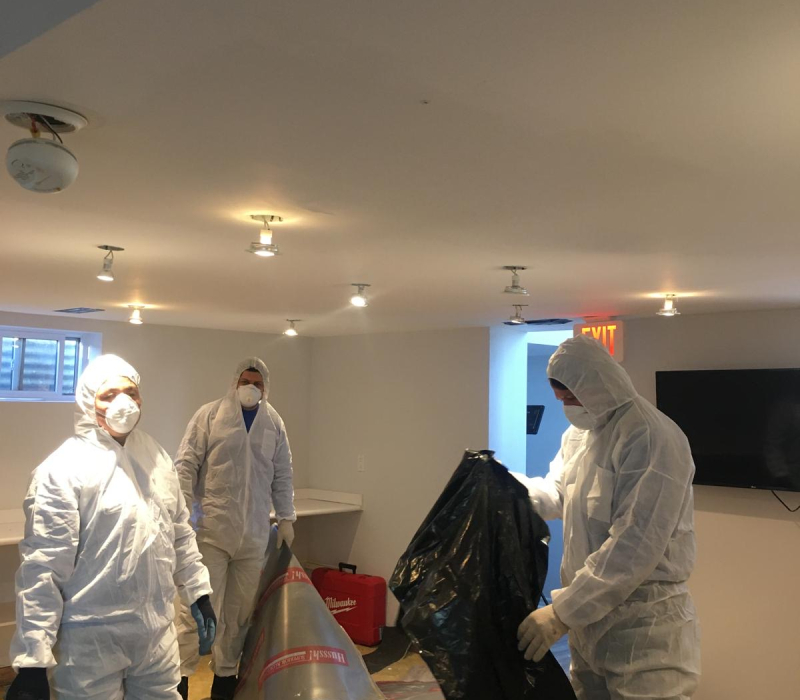
Our Basement Backup Process
Every property is different, but basement backup response typically follows a controlled sequence.
• Safety and Access Review
We start by checking electrical hazards, water depth, and occupancy safety. Utility precautions come before extraction if water reached outlets or equipment.
• Source and Flow-Path Identification
We identify which fixtures discharged, whether the event is still active, and the likely cause: drain clog, lateral restriction, ejector issue, or surcharge.
• Stoppage and Stabilization
When conditions allow, we help stop additional inflow by addressing the blockage, isolating fixtures, or supporting pump operation.
• Contaminated Water Extraction
Standing wastewater is removed with equipment suited to sewage and gray water, not household wet/dry vacuums.
• Contents Protection and Removal Planning
Salvageable items are lifted or relocated. Porous belongings that absorbed sewage are documented so you can make informed keep-or-discard decisions.
• Material Assessment
We evaluate carpet, pad, underlay, drywall, insulation, and finished flooring. Porous materials wetted by sewage often need removal.
• Cleaning and Sanitation
Remaining structural surfaces are cleaned for contaminated wastewater. The goal is residue removal, not a spray over untreated sewage film.
• Drying, Documentation, and Next Steps
Drying equipment is placed based on remaining moisture. You receive a summary of causes, materials, and prevention options such as backwater valve evaluation.
Basement Backup in Residential Properties
Homeowners often discover a backup after rain, overnight, or heavy indoor water use. Finished rec rooms and basement suites raise the stakes.
Residential backup service commonly addresses:
- Unfinished mechanical rooms with floor drains
- Finished lower levels with carpet and baseboards
- Laundry areas with standpipes and tubs
- Basement bathrooms
- Storage zones with cardboard, textiles, and holiday decorations
We help households stabilize the space quickly and understand which contents and finishes are likely salvageable.
Basement Backup in Commercial Buildings
Commercial and multi-unit properties can see backups in staff rooms, storage basements, and shared laundry or mechanical spaces.
Commercial challenges often include:
- After-hours access and security
- Minimizing disruption to operations
- Multiple stakeholders (owners, tenants, insurers)
- Larger volumes of stored goods
- Floor drains tied to grease-prone or high-use plumbing
Plumber On Demand helps businesses and property teams document conditions and move through extraction and sanitation in a practical order.
Materials: What Can Often Be Saved vs. Replaced
Sewage-exposed materials are evaluated by porosity, how long they stayed wet, and whether wastewater reached cavities.
Items and finishes that often require replacement after a sewage backup:
- Carpet pad and many carpets
- Insulation in wet wall cavities
- Swollen particleboard, MDF, and laminate furniture
- Cardboard, paper, and untreated textiles
- Drywall that wicked sewage above the splash line
Items that may be salvageable with proper cleaning, depending on exposure:
- Hard flooring such as tile over intact substrate
- Concrete and masonry after extraction and cleaning
- Some solid-wood furniture if dried and cleaned promptly
- Metal appliances and mechanical equipment after a qualified safety check
- Non-porous stored items that were not submerged in waste solids
A “save everything” approach is rarely realistic with black water.
Conservative material decisions reduce lingering odor and repeated cleaning cycles.
Cost Factors for Basement Backup Service
Project cost depends on conditions, not a single square-footage number.
Factors that influence the scope include:
- Volume and category of water
- Whether the backup is still active
- Finished vs. unfinished basement
- How many rooms and cavities were wetted
- Contents volume and packing needs
- Need for drain clearing, camera inspection, or pump work
- Drying time based on humidity and materials
- After-hours or emergency response requirements
Addressing the plumbing cause and the contamination together is usually more economical than repeating extraction after another backup.
Insurance Considerations for Basement Backup
Sewer backup coverage is often separate from water-damage or overland flood coverage. Many policies require a sewer backup endorsement.
Helpful documentation typically includes:
- Photos of water coming from drains or fixtures, if it is safe to take them
- Notes on which fixtures overflowed
- The time the backup was discovered
- Any recent plumbing slowdowns or municipal notices
- A professional assessment describing the flow path
Plumber On Demand can document what we observe. We do not guarantee claim approval.
Policy language varies, and the insurer makes coverage decisions.
Preventing Future Basement Backups
Prevention focuses on keeping wastewater moving out of the building and limiting reverse flow during surcharge.
Practical measures include:
- Evaluating a backwater valve on the appropriate line
- Maintaining the sewer lateral (roots, grease, offsets)
- Servicing sewage ejector pumps and alarms
- Confirming sump discharge is directed away from the foundation
- Avoiding wipes, grease, and non-flushable products
- Keeping floor drain traps wet so odors and pests are less likely
- Scheduling camera inspection after a first-time backup
A backwater valve is not a substitute for a clear lateral, and a clear lateral does not always stop municipal surcharge.
Why Choose Plumber On Demand for Basement Backup
When wastewater is in the basement, you need plumbing insight and sanitation planning together.
• Reverse-Flow Focus
We treat floor-drain and fixture backups as contaminated events, not as generic wet-basement jobs.
• Source-Based Planning
Blockage, surcharge, ejector failure, and sump issues are not interchangeable. The cleanup plan follows the actual pathway.
• Practical Material Decisions
We explain what is likely salvageable and what typically needs removal after sewage exposure.
• Clear Communication
You get a straightforward account of what happened, what we did, and what should happen next.
• Residential and Commercial Support
We work with homeowners, landlords, property managers, and businesses.
Floor Drains, Toilets, and Laundry Tubs as Reverse-Flow Points
The lowest opening is the path of least resistance when a line is pressurized, so a floor drain often fails first, followed by a toilet or laundry tub.
Useful observations during an event:
- Water appearing only at the floor drain often points to the building drain or lateral
- Simultaneous toilet and tub overflow suggests a shared main-line problem
- Backup only when upstairs fixtures run can indicate a clog that is being charged by household use
- Backup during a regional storm, even with little indoor water use, can indicate surcharge
Do not plug a discharging floor drain with rags as a long-term fix. Blocking one opening can force wastewater out of another fixture, including a toilet.
Backwater Valves and What They Do—and Do Not Do
A backwater valve is designed to close when flow reverses, limiting surcharge from entering the building. It is a key prevention device after a basement backup.
Important limitations:
- A valve cannot remove water that already entered
- A valve that is stuck open will not protect the property
- A valve that is stuck closed can cause internal backups from normal use
- Installation location matters; the wrong line may remain unprotected
- Valves need periodic inspection so debris does not hold them open
After a backup, valve inspection is often as important as cleaning the visible mess.
Sump Failure vs. Sewer Surcharge
These two events are frequently confused because both can appear during storms.
Sump-related water is often groundwater. Sewer surcharge is wastewater under pressure. Mixing the two can under-treat sewage.
Clues that surcharge or sewage backup is involved:
- Water rising from fixtures, not only from walls or a window well
- Sewage odor or visible waste debris
- Multiple plumbing fixtures discharging
- Backup coinciding with indoor water use even without rain
When both a sump and a floor drain are involved, the property may have two water types and needs a combined assessment.
Hidden Contamination After the Water Recedes
When standing water disappears, contamination may remain in:
- Bottom plates and drywall paper
- Carpet tack strips and pad remnants
- The underside of laminate and engineered flooring
- Stored fabric and cardboard at floor level
- Drain pits, ejector basins, and sump interiors
- HVAC returns or equipment bases if they were splashed
Odor that returns after a few days often means residue or damp cavities were left behind. A sanitation check is more effective than fragrance.
What to Do in the First Hour of a Backup
If it is safe to stay out of the water, these steps can limit damage while you wait for service:
- Stop indoor water use: showers, laundry, dishwashers, and toilets
- Keep people and pets out of the basement
- Do not plug a live floor drain with rags as a permanent fix
- Do not run household fans toward sewage
- Photograph fixtures from a dry location if you can do so safely
- Note whether upstairs use made the backup worse
- Leave electrical devices in the water untouched
These steps do not replace extraction.
They reduce how much additional wastewater enters and how far contamination is tracked.
Camera Inspection After Reverse Flow
After the water is controlled, a camera inspection of the sewer lateral can show roots, grease, collapse, or an offset joint.
Inspection is useful when:
- This is the first backup and the cause is unknown
- Backups keep returning after snaking
- The event happened without a regional storm
- Grease or wipes are a suspected contributor
- You are deciding on a backwater valve and want the line condition documented
A camera does not clean the line.
It explains whether cleaning, repair, or surcharge protection is the next plumbing step.
Ejector Pumps, Laundry Standpipes, and Fixture Isolation
Not every backup comes from the municipal connection. Lower fixtures may depend on an ejector pump, and laundry standpipes can discharge under pressure.
Isolation matters during an active event:
- Stopping upstairs laundry can reduce charging of a clogged main
- An ejector alarm should not be ignored because the rest of the house still drains
- A basement bathroom can be the only visible symptom of a whole-line problem
After cleanup, pump service and standpipe connections should be checked so the next cycle of household use does not repeat the overflow.
Reoccupying Finished Space After Sewage Backup
Finished rec rooms and basement suites need a higher sanitation bar before people sleep or store clothing there again.
Reoccupancy planning should consider:
- Whether porous finishes were removed or only surface-cleaned
- Whether odor returns when the space is closed up overnight
- Whether HVAC equipment in the basement was splashed
- Whether stairs and upper landings were tracked
Returning furniture to a floor with pad remnants or damp plates often restarts odor.
Finish cleanup before the room is used as living space again.
Areas We Serve
Plumber On Demand provides basement backup services for residential and commercial properties.
We work with:
- Homeowners
- Property managers
- Landlords
- Contractors
- Business owners
- Facility managers
- Real estate professionals
Finished suites, storage basements, and mechanical rooms are all within the scope of reverse-flow response.
Frequently Asked Questions About Basement Backup
• Is water coming up from a floor drain the same as a flood?
No. Floor-drain discharge is reverse flow through the plumbing system and is typically contaminated wastewater, even if it happened during a storm.
• Can I use a regular shop vacuum?
Household vacuums are not designed for sewage. Using them can spread contamination and damage the equipment.
• Why did my basement toilet overflow when nobody used it?
Pressure in the drain or sewer can force wastewater out of the lowest toilet. That is a classic backup sign, not a fixture defect by itself.
• Should I run water upstairs to “clear the line”?
Adding more water can worsen an active backup. Stop indoor water use until the line is assessed.
• Do I need a backwater valve after one backup?
Many properties benefit from an evaluation. Whether a valve is appropriate depends on layout, municipal conditions, and existing plumbing.
• Is backup water ever considered clean?
Water that traveled through drains or sewers should be treated as contaminated. Do not assume it is rainwater because it looks relatively clear.
• How soon can mold start after a backup?
Mold can begin within 24–48 hours on wet materials, especially paper-faced drywall, carpet, and stored cardboard.
• Will insurance cover a sewer backup?
Coverage often depends on a sewer backup endorsement and the facts of the loss. We can document conditions, but we cannot guarantee claim approval.
• Can I keep the basement carpet?
Carpet and pad exposed to sewage are frequently recommended for removal. Hard surfaces are more likely to be cleanable.
• What if the backup happened while I was away?
Longer dwell time usually means more material impact and stronger odor. Extraction, sanitation, drying, and cause identification still matter.
• Should I bleach the floor immediately?
Standing wastewater should be extracted first. Disinfectant on sewage sludge does not replace cleaning.
• Do you work with landlords and property managers?
Yes. We regularly support occupied and vacant lower levels, including situations where tenants report drain backups.
Contact Plumber On Demand Today
A basement backup is a wastewater emergency. Reverse flow through drains, toilets, and laundry tubs needs extraction and sanitation.
Plumber On Demand provides basement backup services for homes and businesses, focused on contaminated water.
If you need help after a floor-drain overflow or sewer surcharge, contact Plumber On Demand today.
📞 Call 905-220-5006
Speak with our team and request an assessment.