
Asbestos Pipe Insulation Removal Sheffield
 (459)
(459)
(459)

Asbestos Pipe Insulation Removal Services | Plumber On Demand
Professional Asbestos Pipe Insulation Removal for Safe Plumbing Systems, Mechanical Rooms, and Building Renovations
Plumber On Demand provides advanced asbestos pipe insulation removal services for residential, commercial, and industrial properties where aging plumbing and mechanical systems contain hazardous asbestos-based insulation materials. Asbestos pipe insulation is one of the most common and highest-risk forms of asbestos found in older buildings because it is frequently friable, located in concealed mechanical spaces, and directly associated with plumbing systems that require ongoing maintenance or replacement.
For decades, asbestos was widely used to insulate hot water pipes, steam lines, boiler systems, and mechanical piping due to its excellent heat resistance, fireproofing ability, and durability under high temperatures. However, when disturbed, damaged, or deteriorated over time, asbestos pipe insulation can release microscopic fibers into the air that pose serious long-term health risks if inhaled.
Because pipe insulation is often hidden behind walls, ceilings, and mechanical enclosures, asbestos is frequently discovered only when plumbing repairs, renovations, or emergency service work begins. This makes professional asbestos pipe insulation removal a critical safety step before any mechanical or plumbing work is performed in older buildings.
At Plumber On Demand, we specialize in safely identifying, containing, and removing asbestos pipe insulation while coordinating directly with plumbing system access and repair work.
If you suspect asbestos pipe insulation in your property, contact Plumber On Demand at 289-501-6316 before starting any renovation or plumbing project.
What Is Asbestos Pipe Insulation Removal?
Asbestos pipe insulation removal is the controlled process of safely extracting asbestos-containing insulating materials wrapped around pipes, valves, boilers, and mechanical systems while preventing the release and spread of airborne fibers.
This process typically includes:
- Identifying asbestos pipe insulation materials
- Assessing condition and friability
- Mapping affected plumbing and mechanical systems
- Establishing containment zones
- Using specialized wet removal techniques
- Safe packaging and disposal of asbestos waste
- Final decontamination and clearance cleaning
Unlike standard insulation removal, asbestos pipe insulation removal is highly regulated because pipe lagging materials are often extremely friable and can release fibers with minimal disturbance.
Why Asbestos Pipe Insulation Was Used in Buildings
Asbestos pipe insulation was widely used throughout the 20th century for several key reasons:
• Heat Resistance
Asbestos can withstand extremely high temperatures, making it ideal for steam and hot water systems.
• Fire Protection
It was commonly used in boiler rooms and mechanical spaces to prevent fire spread.
• Energy Efficiency
Insulation reduces heat loss in piping systems, improving energy efficiency.
• Durability
Asbestos materials were long-lasting and resistant to breakdown under normal conditions.
However, despite these benefits, asbestos pipe insulation is now recognized as one of the most hazardous asbestos-containing materials when disturbed.
Why Asbestos Pipe Insulation Is Extremely Dangerous
Asbestos pipe insulation is considered one of the highest-risk asbestos materials because it is often:
- Friable (easily crumbles)
- Aged and deteriorated
- Located in hidden mechanical spaces
- Disturbed during plumbing work
Key Risk Factors
• Friability
Pipe insulation can break apart easily, releasing fibers into the air.
• Mechanical Disturbance
Plumbing repairs often require cutting, removing, or exposing pipes.
• Hidden Installation
Insulation is often concealed behind walls or ceilings.
• Aging Materials
Older insulation becomes more brittle over time, increasing risk.
Because of these factors, even minor plumbing work can trigger asbestos exposure if pipe insulation is present.
Common Locations of Asbestos Pipe Insulation
Asbestos pipe insulation can be found throughout building systems, especially in older properties.
• Plumbing Systems (Primary Risk Area)
- Hot water supply lines
- Steam distribution pipes
- Drainage systems in older installations
- Basement plumbing networks
- Vertical pipe risers
• Mechanical Rooms
- Boilers
- Heat exchangers
- Pumps
- Pressure vessels
- Water heating systems
• Wall and Ceiling Cavities
- Hidden pipe runs
- Utility chases
- Above-ceiling piping systems
• Industrial Systems
- High-pressure steam lines
- Manufacturing piping systems
- Utility tunnels
Asbestos Pipe Insulation and Plumbing Work
Plumber On Demand specializes in plumbing systems, making asbestos pipe insulation removal a critical part of our safety-first approach.
Why Plumbing Work Exposes Asbestos Risks
Plumbing repairs often involve:
- Opening walls and ceilings
- Cutting into pipe systems
- Removing old insulation
- Replacing corroded piping
These activities can disturb asbestos insulation that has been stable for decades.
Common Plumbing Triggers
- Pipe replacement in basements
- Boiler upgrades
- Leak repairs in old systems
- Bathroom and kitchen renovations
- Drain line excavation
Types of Asbestos Pipe Insulation
Asbestos pipe insulation is not a single material type. It exists in several forms depending on the era and application.
• 1. Pipe Lagging (Loose Wrap Insulation)
A soft, wrapped insulation commonly found around steam and hot water pipes.
• 2. Cement-Based Pipe Coating
A hardened protective layer applied to pipes for fire resistance.
• 3. Pre-Formed Pipe Sections
Rigid insulation shells installed around piping systems.
• 4. Spray-On Insulation
Applied in industrial and commercial mechanical rooms.
Each type presents different levels of risk during removal.
Signs You May Have Asbestos Pipe Insulation
While asbestos cannot be confirmed visually, several indicators suggest possible presence:
• Building Age
Properties built before the late 1980s are most likely to contain asbestos pipe insulation.
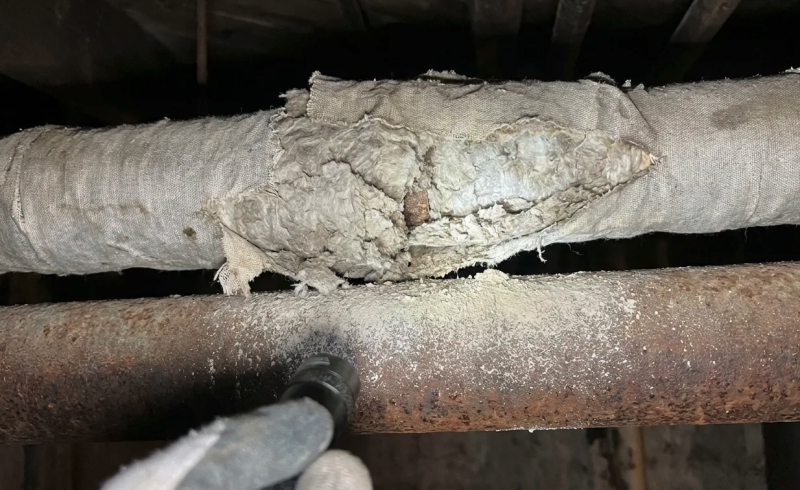
• White or Grey Crumbling Wrap
Old insulation that flakes or crumbles is a major warning sign.
• Mechanical Room Insulation
Older boiler rooms frequently contain asbestos lagging.
• Renovation Exposure
Pipe insulation is often discovered during plumbing upgrades.
• Water Damage
Moisture accelerates deterioration of insulation materials.
Asbestos Pipe Insulation Removal Process (Technical Workflow)
• Step 1: Initial Assessment
We evaluate plumbing systems, insulation conditions, and risk level.
• Step 2: Sampling and Laboratory Testing
If required, samples are analyzed in certified laboratories.
• Step 3: Containment Setup
The work area is fully sealed using specialized barriers and negative air systems.
• Step 4: Wet Removal Method
Insulation is carefully saturated to reduce fiber release during removal.
• Step 5: Controlled Extraction
Pipe insulation is removed using low-disturbance techniques.
• Step 6: Safe Packaging
All asbestos waste is sealed, labeled, and prepared for regulated disposal.
• Step 7: Final Cleaning and Clearance
The area is decontaminated and cleared for safe re-entry and plumbing work.
Risk Levels in Asbestos Pipe Insulation
• Low Risk
- Intact insulation with no disturbance
• Medium Risk
- Aging or slightly damaged insulation
• High Risk
- Crumbling, broken, or actively disturbed insulation
- Pipe removal or cutting required
Pipe insulation quickly escalates to high-risk status once disturbed.
Residential Asbestos Pipe Insulation Removal
Homeowners often encounter asbestos pipe insulation in older homes during renovation projects.
Common Residential Areas
- Basement plumbing systems
- Furnace rooms
- Hot water heating systems
- Laundry room piping
- Bathroom pipe networks
Common Triggers
- Basement finishing
- Bathroom renovation
- Kitchen plumbing upgrades
- Pipe replacement
- Water damage repair
Commercial Asbestos Pipe Insulation Removal
Commercial properties often contain extensive piping networks with legacy insulation systems.
Common Locations
- Office mechanical rooms
- Retail building utility systems
- Schools and hospitals
- Hotels and apartment buildings
Challenges
- Occupied environments
- Large-scale mechanical systems
- Strict compliance requirements
- Tenant coordination
Industrial Asbestos Pipe Insulation Removal
Industrial facilities present some of the most complex asbestos pipe insulation environments.
Common Systems
- Steam distribution networks
- Manufacturing process piping
- Utility tunnels
- Boiler systems
Risks
- High heat systems
- Large pipe networks
- Continuous operational environments
Asbestos Pipe Insulation and Water Damage
Water damage significantly increases risk by weakening insulation materials.
Common causes include:
- Pipe leaks
- Basement flooding
- Burst plumbing lines
- Roof leaks affecting mechanical spaces
Moisture accelerates insulation breakdown and increases fiber release risk.
Why DIY Asbestos Pipe Insulation Removal Is Dangerous
Attempting removal without professional containment can result in:
- Severe airborne contamination
- Whole-building exposure
- Regulatory violations
- High remediation costs
- Long-term environmental contamination
Professional removal is always required.
Benefits of Professional Asbestos Pipe Insulation Removal
- Safe containment procedures
- Controlled fiber management
- Compliance with regulations
- Proper hazardous waste disposal
- Protection for occupants and workers
- Preparation for plumbing upgrades
Emergency Stop Work Situations
Stop work immediately if:
- Pipe insulation is discovered unexpectedly
- Material begins crumbling or dust is released
- Mechanical systems expose hidden insulation
- Plumbing work disturbs unknown wrapped piping
Call professionals before continuing.
Why Choose Plumber On Demand
• Plumbing System Expertise
We understand how asbestos interacts with plumbing infrastructure.
• Safety-First Execution
All work follows strict containment and removal protocols.
• Residential, Commercial, and Industrial Coverage
We handle all property types.
• Fast Response Times
We help keep renovation and repair projects on schedule.
Frequently Asked Questions (FAQ)
• What is asbestos pipe insulation?
It is insulation material containing asbestos fibers used around pipes for heat and fire protection.
• Where is it commonly found?
Basements, boiler rooms, mechanical systems, and older plumbing networks.
• Is it dangerous?
Yes, especially when disturbed.
• Can I remove it myself?
No, professional removal is required.
• How do I confirm it?
Only laboratory testing can confirm asbestos content.
• Is all old pipe insulation asbestos?
Not all, but many older systems contain it.
Contact Plumber On Demand
If you suspect asbestos pipe insulation in your property, do not disturb it.
Call Plumber On Demand at 289-501-6316 for professional asbestos pipe insulation removal services.
Protect your property, your project, and your health.