
Asbestos Floor Tile Removal Gilford
 (459)
(459)
(459)

Asbestos Floor Tile Removal Services | Plumber On Demand
Professional Asbestos Floor Tile Removal for Safe Renovation, Plumbing Access, and Property Restoration
Plumber On Demand provides advanced asbestos floor tile removal services for residential, commercial, and industrial properties where older flooring systems may contain asbestos-containing materials. Asbestos floor tiles are one of the most commonly encountered asbestos products in North American buildings constructed before modern building safety regulations, and they remain a major risk factor during renovation, demolition, and plumbing access work.
Flooring systems are often assumed to be harmless until removal begins. However, asbestos may be present not only in the vinyl tiles themselves but also in the underlying adhesive layers, backing materials, and subfloor coatings. This creates a layered risk structure that can only be properly addressed through professional inspection, controlled removal, and regulated disposal procedures.
Because flooring is directly tied to plumbing systems, drainage lines, and structural access points, asbestos floor tile removal is often a necessary part of plumbing renovations, basement upgrades, bathroom remodeling, and slab excavation work.
At Plumber On Demand, we integrate asbestos safety protocols directly into plumbing and renovation workflows to ensure safe project execution from start to finish.
If you suspect asbestos in your flooring system, contact Plumber On Demand at 705-220-2903 before starting any demolition or renovation work.
Understanding Asbestos Floor Tile Systems
Asbestos floor tile systems are not limited to the visible tile layer. They typically consist of multiple bonded materials that may each contain asbestos.
The Three-Layer Flooring Risk Structure
Most asbestos floor systems include:
• 1. Surface Tile Layer
Vinyl or composite tiles that may contain asbestos fibers for strength and heat resistance.
• 2. Adhesive (Mastic) Layer
A black or dark-colored glue used to bond tiles to the subfloor. This layer is often highly asbestos-contaminated.
• 3. Subfloor Coating
Older concrete or wood subfloors may contain asbestos-based leveling compounds or fireproof coatings.
Each layer presents a separate risk during removal, especially when scraping, sanding, or cutting is involved.
Why Asbestos Was Used in Floor Tiles
Asbestos was widely used in flooring systems due to its performance advantages:
• Durability Enhancement
Asbestos reinforced vinyl tiles, making them more resistant to cracking and wear.
• Fire Resistance
Floor tiles with asbestos were less likely to ignite or spread fire.
• Heat Stability
Asbestos improved stability in high-temperature environments such as kitchens and boiler-adjacent floors.
• Cost Efficiency
Manufacturers used asbestos because it was inexpensive and widely available.
Despite these advantages, the health risks associated with airborne asbestos fibers eventually led to strict regulation and removal practices.
Where Asbestos Floor Tiles Are Commonly Found
Asbestos flooring is still present in many older buildings across multiple property types.
• Residential Properties
- Kitchens
- Bathrooms
- Basements
- Hallways
- Laundry rooms
- Utility rooms
• Commercial Buildings
- Office flooring systems
- Retail stores
- School corridors
- Hospital rooms
- Hotel hallways
• Industrial Facilities
- Factory floors
- Mechanical access areas
- Storage facilities
- Utility corridors
Flooring is often layered, meaning newer materials may conceal older asbestos-containing layers beneath.
Asbestos in Floor Tile Adhesives (Critical Hidden Hazard)
One of the most overlooked risks in flooring removal is asbestos-containing adhesive, commonly known as mastic.
Why Adhesive Is Dangerous
Unlike tiles, adhesive is:
- Thin and widespread
- Difficult to remove completely
- Often scraped or ground during renovation
This makes it one of the most likely sources of airborne asbestos during flooring work.
Common Adhesive Types
- Black asphalt-based mastic
- Yellow or tan bonding compounds
- Cement-based adhesives used under sheet flooring
High-Risk Activities
- Grinding adhesive off concrete
- Dry scraping floors
- Sanding subfloors
- Power tool removal of flooring layers
These activities significantly increase airborne fiber release risk.
Asbestos Floor Tile Removal and Plumbing System Interaction
Plumber On Demand frequently encounters asbestos flooring during plumbing-related renovations.
Floor systems are closely connected to plumbing infrastructure, especially in older buildings.
Plumbing Scenarios That Trigger Floor Tile Disturbance
- Basement drain line replacement
- Bathroom plumbing upgrades
- Kitchen pipe rerouting
- Slab excavation for sewer repairs
- Water line installation or replacement
Why This Is High Risk
Plumbing access often requires:
- Cutting through flooring
- Removing tile sections
- Breaking concrete slabs
- Accessing hidden pipe systems
These actions can disturb asbestos-containing flooring layers unexpectedly.
Risk Classification: How Dangerous Is Asbestos Floor Tile?
Asbestos floor tiles are generally considered non-friable when intact, meaning they do not easily release fibers under normal conditions.
However, risk increases significantly when:
• Low Risk
- Tiles are intact and undisturbed
- No cutting or drilling occurs
• Moderate Risk
- Tiles are cracked or loose
- Partial removal is required
• High Risk
- Tiles are being removed or broken
- Adhesive is being scraped or ground
- Subfloor is being mechanically altered
The transition from non-friable to friable conditions is what creates health hazards.
Signs You May Have Asbestos Floor Tiles
While asbestos cannot be confirmed visually, several indicators suggest potential presence.
• Building Age
Properties built before the late 1980s are most likely to contain asbestos flooring.
• Tile Size and Style
Common asbestos tile sizes include:
- 9×9 inch vinyl tiles
- 12×12 inch vinyl tiles
• Layered Flooring Systems
Multiple flooring layers often indicate older asbestos materials beneath.
• Black Mastic Adhesive
Dark adhesive beneath tiles is a strong indicator of asbestos risk.
• Renovation Discovery
Asbestos flooring is often discovered during demolition or remodeling work.
Asbestos Floor Tile Removal Process (Advanced Technical Workflow)
• Step 1: Site Assessment and Planning
We evaluate flooring systems, building age, and renovation scope.
• Step 2: Sampling and Laboratory Testing
Suspect materials are tested in accredited laboratories.
• Step 3: Work Area Containment Setup
Barriers and negative air systems are installed to control fiber movement.
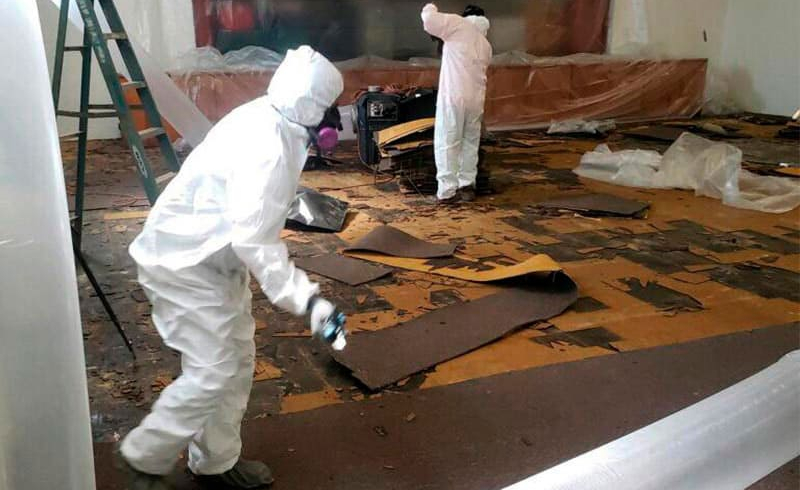
• Step 4: Controlled Tile Removal
Tiles are carefully removed using low-dust techniques to prevent breakage.
• Step 5: Adhesive Management
Mastic is treated or removed using approved non-dust-generating methods.
• Step 6: Waste Packaging and Disposal
All asbestos materials are sealed, labeled, and transported for regulated disposal.
• Step 7: Final Decontamination
Work areas are cleaned and cleared for safe re-entry and renovation.
Residential Asbestos Floor Tile Removal
Homeowners frequently encounter asbestos flooring during renovations.
Common Residential Projects
- Kitchen remodeling
- Bathroom upgrades
- Basement finishing
- Flooring replacement
- Laundry room renovation
Residential Risk Issues
- DIY scraping or demolition
- Unknown layered flooring systems
- Hidden adhesive contamination
Commercial Asbestos Floor Tile Removal
Commercial properties often contain large flooring systems installed during older construction periods.
Common Sites
- Office buildings
- Retail stores
- Schools
- Hospitals
- Hotels
Commercial Challenges
- Large surface areas
- Tenant occupancy
- Operational continuity requirements
- Strict regulatory compliance
Industrial Asbestos Floor Tile Removal
Industrial environments may include asbestos flooring in:
- Manufacturing floors
- Mechanical zones
- Utility corridors
Industrial removal requires strict containment due to scale and exposure risk.
Cost Factors for Asbestos Floor Tile Removal
Several factors influence project cost:
- Size of flooring area
- Number of asbestos layers
- Adhesive contamination level
- Accessibility of space
- Required containment systems
- Disposal regulations
Why DIY Floor Tile Removal Is Dangerous
DIY removal can cause:
- Airborne fiber exposure
- Whole-building contamination
- Regulatory violations
- High remediation costs
- Long-term environmental hazards
Professional removal is strongly recommended.
Benefits of Professional Asbestos Floor Tile Removal
- Safe containment procedures
- Regulatory compliance
- Reduced exposure risk
- Proper hazardous waste handling
- Faster renovation timelines
- Protection for occupants and workers
Emergency Stop-Work Scenarios
Stop all work immediately if:
- Unknown flooring materials are exposed
- Dust is released during tile removal
- Black adhesive is disturbed
- Pipes are exposed through flooring
Call professionals before continuing work.
Frequently Asked Questions (Expanded)
• Are all old floor tiles asbestos?
No, but many manufactured before the 1980s are.
• Is asbestos dangerous in floor tiles?
Yes, especially when disturbed.
• Can I remove tiles safely if I don’t break them?
Risk is lower but still requires caution.
• Is adhesive more dangerous than tiles?
Often yes, due to friability during scraping.
• How do I confirm asbestos?
Only laboratory testing can confirm.
• Can flooring be covered instead of removed?
Yes, encapsulation is sometimes an option.
• Is asbestos still used today?
No, it is heavily restricted.
• What happens if asbestos is found mid-project?
Work must stop and proper procedures followed.
Why Choose Plumber On Demand
- Integrated plumbing + asbestos awareness
- Safe renovation coordination
- Residential and commercial expertise
- Fast response times
- Strict safety compliance protocols
Contact Plumber On Demand
If you suspect asbestos floor tiles in your property, do not begin removal or disturbance.
Call 705-220-2903 for professional asbestos floor tile removal services.
Protect your property. Protect your project. Protect your health.