
Drain Snaking Services Keswick
 (459)
(459)
(459)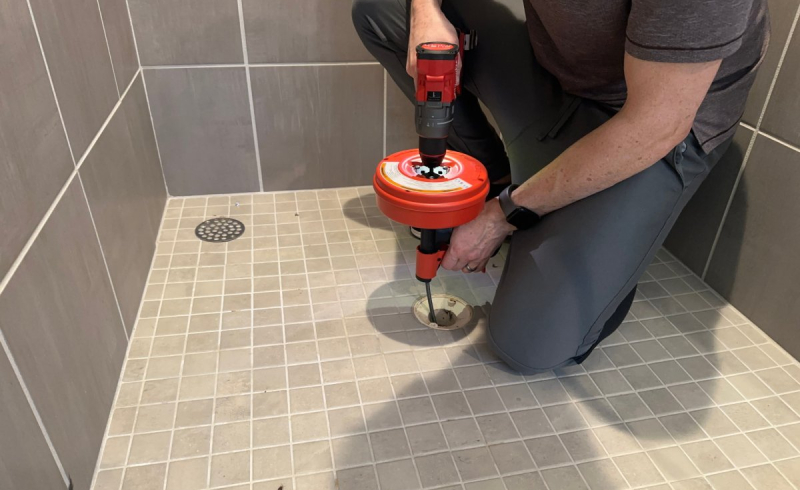
4) Drain snaking is a mechanical method used to clear restrictions inside drain lines with a rotating cable, also called a drain snake or auger. The cable is fed into the pipe through a cleanout, fixture opening, or other access point so the cutting head can break up and retrieve the material that is slowing or blocking flow. It is a targeted service method, not a full pipe replacement and not a high-pressure water cleaning process.
At Plumber On Demand, we provide professional drain snaking services designed to restore drainage in kitchen mains, bath stacks, floor drains, and other interior lines where a cable machine is the right tool. Our technicians select cable size, head type, and access point based on the pipe diameter, the likely restriction, and the layout of the line. The goal is to open the drain by working through the pipe, not by cutting the pipe open.
Many property owners reach for a plunger or a store-bought chemical first. Those steps sometimes move a shallow restriction near a fixture, but they often fail once the blockage sits farther down a branch or in a main. Professional drain snaking uses a powered cable machine, sectional cable, or drum machine to reach farther into the line, work past the trap when needed, and break up grease, soap, hair, paper, and similar buildups that a plunger cannot reach.
Drain snaking is the right method when the pipe itself is still intact and the problem is material inside the pipe. Hydro jetting, camera inspection, and pipe replacement each have a different purpose. A camera confirms what the cable is hitting. Hydro jetting washes the pipe wall after a path is open or when grease coats a long run. Replacement is for collapsed pipe, offset joints, and other structural failure that no cable can repair.
If you need drain snaking services, contact Plumber On Demand today at 905-409-0719.
What Is Drain Snaking?
Drain snaking is the use of a flexible steel cable and a cutting or retrieving head to mechanically clear a drain line.
A typical drain snaking setup includes:
- A cable machine or drum machine
- Sectional or continuous cable
- Cutting heads and retrieval heads
- A cleanout adapter or fixture access
- Personal protective equipment
- A way to contain debris at the access point
The technician feeds the cable into the drain, rotates it, and advances it until the head contacts the restriction. Rotation lets the head bore through, break apart, or hook the material so flow can resume.
Drain snaking is a method. It is not the same as replacing a failed pipe, and it is not the same as washing the entire interior of a line with high-pressure water.
Why Drain Snaking Services Are Important
A drain that is only partly open still allows wastewater to sit in the line, produce odor, and back up into fixtures. Clearing the restriction with a professional cable machine restores the intended path of flow without opening walls or replacing pipe that is still sound.
When a restriction is left in place, common results include:
- Slow fixtures
- Standing water in sinks and showers
- Gurgling at nearby drains
- Recurring backups after a plunger
- Overflow at a floor drain
- Strain on connected fixtures
- Unpleasant drain odor
Professional drain snaking addresses the material in the pipe so the line can drain at a usable rate again. Choosing the method first, rather than cutting pipe by default, keeps the repair proportional to the actual problem.
Common Signs You Need Drain Snaking
A drain often shows mechanical restriction before the pipe itself has failed.
Recognizing these signs helps you request drain snaking instead of guessing at chemicals or assuming the line must be replaced.
Water Draining Slowly From a Fixture
Slow drainage is one of the most common reasons to use a drain snake.
You may notice:
- A sink that fills during use
- A tub that holds water after the stopper is open
- A floor drain that never quite empties
- A kitchen line that lags after dishwashing
A cable can reach the restriction and open a path when the pipe wall is still intact.
• Gurgling Sounds in Nearby Drains
Air trapped behind a restriction often shows up as gurgling in a connected fixture.
Gurgling may indicate:
- A blockage in a shared branch
- A restriction in a bath stack
- A partial obstruction in a kitchen main
- Air displacement as water tries to pass the blockage
Snaking the correct line often restores both drainage and quieter fixture behavior.
• Standing Water After Normal Use
Water that remains in a fixture after use points to a restriction that a plunger may not reach.
Standing water can appear in:
- Kitchen sinks
- Bathroom sinks
- Bathtubs
- Laundry stands
- Interior floor drains
Drain snaking targets the interior of the pipe rather than only the visible trap.
• A Backup That Returns After a Plunger
A plunger can move a shallow plug near the fixture opening.
If the backup returns, the restriction is often:
- Farther down the branch
- Packed around a fitting
- Located beyond the trap
- Built up along a longer run of pipe
A cable machine is designed to travel past that first bend and work the actual blockage.
• Multiple Fixtures Slowing on the Same Stack
When several fixtures on one bath stack or kitchen main slow at the same time, the restriction is often in the shared line rather than in one trap.
This pattern is a strong candidate for drain snaking through a cleanout, because a single cable run can serve the common section of pipe.
• A Floor Drain That Odors or Backs Up
Floor drains collect debris, sediment, and residue that sit at the bottom of the line.
Signs include:
- Slow acceptance of water
- Odor at the grate
- Water rising during nearby fixture use
- Debris visible at the strainer
Snaking a floor drain through the grate opening or a nearby cleanout is a standard method when the line is mechanically blocked rather than collapsed.
• A Kitchen Line That Clings to Grease
Kitchen mains often collect grease, food particles, and soap film.
A cutting head on a cable can bore a path through that material so the line drains again. Snaking is often the first mechanical method used on a kitchen restriction before anyone considers jetting or opening the pipe.
Common Drain Restrictions Drain Snaking Addresses
Drain snaking is used when the pipe can still carry water and the problem is what is sitting inside it.
• Hair, Soap, and Personal Care Buildup
Bathroom branches commonly collect hair bound with soap.
A retrieval or cutting head can:
- Hook hair mats
- Break soap accumulation
- Open the line past the trap
- Restore flow without replacing pipe
This is a frequent use of drain snaking on bath stacks and lavatory lines.
• Grease and Food Residue in Kitchen Mains
Kitchen restrictions often form where grease cools and food particles stick to the pipe wall.
A cable does not dissolve grease. It cuts a path through the mass so water can move. In some kitchens, jetting may follow snaking if the wall coating is heavy, but snaking is still the method that first establishes an opening.
• Paper and Soft Debris in Bath Stacks
Bath stacks and toilet-connected lines can collect paper and soft debris that compact at a fitting or a slight belly that has not yet become a structural failure.
A properly sized cable and head can break that mass so the stack drains. If the cable stops on a hard ledge or cannot pass, the next step is diagnosis, not forcing the same method endlessly.
• Sediment in Floor Drains
Floor drains in basements, mechanical rooms, and utility areas collect grit, scale, and settled solids.
Snaking helps when:
- The strainer is clear but the line is slow
- Sediment has packed a short run
- A floor drain shares a branch with other fixtures
The cable works the interior of the run rather than only rinsing the grate.
• Restrictions Beyond the Trap
Many fixture problems sit past the P-trap, where a household auger is too short or too light.
Professional drain snaking is built around getting past the trap or bypassing it through a cleanout so the cable can travel into the branch and, when needed, toward the main.
• Soft Blockages That Are Not Structural Pipe Failure
Snaking is appropriate when the pipe roundness and joints are still sound.
If the line is collapsed, offset, or broken, the cable will stop, jump, or fail to restore lasting flow. Those conditions belong to camera work and repair, not to more aggressive snaking.
Benefits of Professional Drain Snaking Services
Professional cable work offers a controlled way to open a drain while the pipe remains in place.
• Restored Drainage Without Opening Walls
A cable enters through an existing cleanout or fixture opening.
That approach helps:
- Avoid unnecessary demolition
- Keep sound pipe in service
- Restore use of the fixture sooner
- Limit disruption inside the home
Snaking is a method chosen specifically because the pipe does not need to be cut when the restriction is interior debris.
• Reach That Household Tools Do Not Provide
A powered cable machine can travel farther than a hand crank drum sold for sinks.
Benefits include:
- Access past traps when a cleanout is used
- Enough cable length for kitchen mains and stacks
- Head options matched to hair, grease, or debris
- Controlled feed so the cable stays in the pipe
Distance and control are the practical reasons to request professional drain snaking.
• A Clear Decision Point for the Next Method
When snaking opens the line, the job may be complete.
When the cable cannot pass, that result is useful information. It tells the technician that camera inspection, jetting, or repair may be the next method, instead of repeating the same cable pass without a plan.
• Protection of Intact Pipe
Used correctly, a drain snake works inside a pipe that is still structurally capable of carrying waste.
That helps:
- Preserve existing drain piping
- Avoid replacement of pipe that is not failed
- Limit the scope of work to the restriction
- Keep the plumbing system intact
Snaking is not a substitute for replacement when the pipe itself has failed.
• Faster Return to Normal Fixture Use
Once the cable has opened a path and the line is flushed, sinks, tubs, and floor drains can often return to service the same visit.
That is the practical benefit of choosing a method that clears the interior of the pipe rather than rebuilding it.
Types of Drains We Snake
Plumber On Demand uses drain snaking on interior lines where a cable machine is the appropriate tool.
• Kitchen Mains and Kitchen Branches
Kitchen lines often restrict from grease and food residue.
Snaking a kitchen main typically involves:
- Locating a cleanout or fixture access
- Selecting a cable size for the pipe diameter
- Using a head that can cut a path through grease mass
- Confirming that water then moves through the line
Kitchen snaking is method work on an intact pipe, not a remodel of the kitchen drain.
• Bath Stacks and Bathroom Branches
Bath stacks collect hair, soap, and paper from multiple fixtures.
We snake:
- Lavatory branches
- Tub and shower branches
- Shared vertical stacks where access allows
- Horizontal runs serving those fixtures
The cable is sized to the line so it can travel the stack without unnecessarily scoring a sound pipe.
• Floor Drains
Interior floor drains are common snaking candidates because debris settles at the low point of the run.
Access may be:
- Through the drain opening after the strainer is removed
- Through a nearby cleanout
- Through a connected fixture line when that path is shorter
Floor drain snaking restores the run when the pipe is blocked, not when the pipe has collapsed under a slab.
• Laundry and Utility Drains
Laundry stands and utility sinks collect lint, residue, and occasional solids.
A cable machine can open those branches when household tools stop at the trap. The same method rules apply. If the cable cannot pass an offset or a crushed section, snaking is no longer the correct service.
• Lines Accessed Through Cleanouts
Cleanouts exist so a cable can enter the pipe without removing a fixture.
We use cleanouts to:
- Bypass a difficult trap
- Reach a shared main
- Feed cable in the direction of flow
- Keep the work inside the piping system
Cleanout access is a core part of professional drain snaking, not an afterthought.
How a Drain Snake Works Inside the Pipe
A drain snake is a rotating steel cable with a working head at the leading end.
The machine turns the cable while the technician feeds it into the line. The head must stay inside the pipe. If it climbs a joint or exits at a broken fitting, rotation can damage the opening or fail to reach the restriction.
Getting past a trap is a common technical step. A P-trap is a water seal with two tight bends. A light sink auger can stall there. A professional cable, or access through a cleanout downstream of the trap, is how the technician reaches the branch beyond that seal.
Once the head contacts the restriction, the technician works the cable forward and back so the head can cut, bore, or retrieve. Water is then run to test whether the path is open. Snaking does not rebuild pipe. It removes or breaks up what is occupying the interior.
Cable Sizes and Machine Selection
Cable diameter is matched to the drain, not chosen at random.
Smaller cables are typically used in fixture branches where a heavy cable could jam or score a tight line. Larger cables are used in mains and some floor drain runs where a light cable would coil without advancing. The machine may be a drum unit for smaller lines or a sectional cable machine for longer or heavier work.
Head selection matters as much as cable size. A corkscrew or retrieval head is often used for hair. A cutting or boring head is often used for grease and compacted debris. The wrong head can spin in place or fail to hold the material.
Professional drain snaking services include that matching step. The method only works well when the cable can travel, the head can engage the restriction, and the pipe is still round enough to contain the cable.
Drain Snaking vs Hydro Jetting vs Camera Inspection vs Replacement
Each option is a different tool with a different job.
• When Drain Snaking Is the Right Tool
Snaking is appropriate when:
- The pipe is believed to be intact
- The problem is hair, grease, paper, or similar debris
- Access exists through a cleanout or fixture
- The goal is to open a path mechanically
It is the standard first mechanical method for many interior restrictions.
• When Hydro Jetting May Be Used Instead or After
Hydro jetting uses high-pressure water to wash the pipe wall.
It may be considered when:
- Grease coats a long kitchen run
- A path has already been opened
- The line needs a flush of residual film
- Snaking alone leaves coating on the wall
Jetting is not a substitute for a cable when the technician still needs to bore an initial opening, and it is not a repair for failed pipe.
• When a Camera Is the Next Method
A camera is a diagnostic tool, not a cleaning method.
Camera inspection is useful when:
- The cable will not pass
- Flow returns only briefly
- An offset, belly, or break is suspected
- The technician needs to see the interior before recommending repair
Snaking and camera work often support each other. The snake opens or tests the line. The camera explains why the cable stopped.
• When Replacement Is Required Instead
Replacement is not a snaking method.
Replacement is considered when:
- The pipe is collapsed
- A joint is offset so the cable cannot stay in line
- The wall is broken or missing
- Repeated snaking cannot create lasting flow
A drain snake cannot pull a collapsed pipe back into round or realign an offset joint.
Getting Past a Trap During Drain Snaking
A P-trap holds water to block sewer gas. It also creates two tight bends that a light household auger often cannot pass. Professional drain snaking treats the trap as an access problem, not as the entire job.
• Feeding Through the Fixture Trap
When a cleanout is not available, the cable may enter at the fixture and travel through the trap.
This requires:
- A cable flexible enough for the bends
- Controlled feed so the head stays in the pipe
- Care at the second turn of the trap
- Confirmation that the cable has entered the branch
Getting past a trap this way is a core snaking skill. It is not a reason to cut the pipe open.
• Bypassing the Trap Through a Cleanout
A cleanout downstream of the trap lets the cable enter the branch without negotiating the water seal.
That access is preferred when:
- The trap is tight or already compromised
- The restriction is clearly beyond the fixture
- A shared kitchen main or bath stack needs the cable
- Fixture-side entry would be inefficient
Cleanout entry is still drain snaking. It is simply a better path for the machine.
What Drain Snaking Cannot Fix
Drain snaking cannot repair the pipe. It can only work inside a pipe that still exists as a continuous round channel. Professional drain snaking services include knowing when to stop the cable and change methods.
• Collapsed Pipe
Collapsed pipe stops the cable or sends it into surrounding soil.
A drain snake cannot pull a collapsed section back into round. Once collapse is suspected, snaking stops and camera diagnosis begins.
• Offset Joints
An offset joint creates a ledge the head cannot climb without leaving the intended path.
Forcing the cable at an offset is not drain snaking done well. It is using the method past its limit.
• Broken Fittings and Missing Pipe Wall
A broken fitting can catch the cable. A missing wall means there is no channel for the head to follow.
Those conditions belong to repair, not to a longer cable pass.
• Severe Bellies That Reload Debris
A severe belly can hold debris even after a path is cut, so the restriction returns.
Snaking may move the standing material once. It cannot lift the pipe. Recurring stoppage at the same belly is a signal to change methods.
The Drain Snaking Process
At Plumber On Demand, we follow a defined process so drain snaking stays a controlled method rather than a guess.
• Step 1: Access and Line Identification
We identify the affected fixture group and the best entry point.
That may include:
- A cleanout
- A fixture opening
- A floor drain
- A stack access point
Correct access determines whether the cable can travel toward the restriction.
• Step 2: Cable and Head Selection
We match cable size and head type to the pipe and the likely material.
This step keeps the cable in the line and gives the head a realistic chance to engage the restriction.
• Step 3: Feeding and Working the Cable
The cable is advanced and rotated through the trap or cleanout until it reaches the restriction.
The technician works the head through the material rather than forcing the machine blindly. Getting past a trap, when the cleanout is not available, is handled as a controlled feed, not as a jammed push.
• Step 4: Clearing and Flow Check
Once the head has opened a path, debris at the access point is managed and water is run to confirm drainage.
A successful snake restores movement through the existing pipe.
• Step 5: Method Review
If flow is restored, the snaking service is complete.
If the cable cannot pass, or if flow fails immediately, we explain the limit of the method and discuss camera inspection or another service. We do not treat a failed cable pass as a reason to replace pipe without evidence.
Why Homeowners Choose Plumber On Demand
Homeowners trust Plumber On Demand because we treat drain snaking as a skilled method and match the tool to the line.
• Experienced Technicians
Our team regularly uses cable machines on kitchen mains, bath stacks, and floor drains, including the practical work of getting past traps and selecting cable size.
• Thorough Inspections
We identify the right access point and recognize when a cable stop means a structural problem rather than a soft blockage.
• Professional Workmanship
Every snaking visit is performed with professional equipment, controlled feed, and attention to keeping the cable inside the pipe.
• Honest Recommendations
If snaking is the right tool, we say so. If hydro jetting, a camera, or replacement is the honest next method, we explain that clearly.
• Customer-Focused Service
Your drainage and the condition of your existing pipe remain the priority. We use drain snaking to solve the restriction, not to enlarge the job.
Frequently Asked Questions About Drain Snaking Services
What Is Drain Snaking?
Drain snaking is a mechanical method that uses a rotating cable and head to clear material inside a drain pipe through a cleanout or fixture opening.
• Is Drain Snaking the Same as Hydro Jetting?
No.
Snaking uses a cable to bore or retrieve a restriction. Hydro jetting uses high-pressure water to wash the pipe. They are different tools, and each is chosen for a different condition.
• Can Drain Snaking Fix a Collapsed Pipe?
No.
A collapsed pipe or an offset joint is a structural problem. A cable cannot restore a pipe that is no longer a continuous channel. Those conditions require diagnosis and repair or replacement.
• Do You Snake Kitchen Mains and Bath Stacks?
Yes.
Kitchen mains, bath stacks, and floor drains are common applications for drain snaking services when the pipe is intact and the restriction is interior debris.
• Why Does Cable Size Matter?
Cable diameter must match the pipe.
A cable that is too light may coil without advancing. A cable that is too heavy for a small branch may jam. Professional drain snaking includes selecting the correct cable and head.
• Will You Need to Cut the Pipe to Snake a Drain?
Usually no.
Snaking is designed to enter through a cleanout or fixture opening. Cutting the pipe is a repair method, not a snaking method.
• When Should a Camera Be Used Instead of More Snaking?
A camera is appropriate when the cable will not pass, when flow returns only briefly, or when a collapsed section, offset, or break is suspected.
Schedule Professional Drain Snaking Services Today
Drain snaking is the professional method for opening an intact drain line with a cable machine. When hair, grease, paper, or sediment is occupying the interior of a kitchen main, bath stack, or floor drain, a rotating cable through a cleanout or fixture opening is often the correct first mechanical step. It is not pipe replacement, and it is not high-pressure jetting. It is skilled use of a drain snake to restore the path of flow.
Professional drain snaking helps you keep sound pipe in place, reach restrictions beyond a trap, and learn quickly when the cable has hit a condition it cannot fix. That clarity protects the plumbing system and keeps the next decision honest.
At Plumber On Demand, we provide drain snaking services with the cable sizes, heads, and access methods the job requires. Whether you are dealing with a slow kitchen main, a restricted bath stack, or a floor drain that will not accept water, our technicians are ready to apply the method correctly.
Do not assume a slow drain automatically means a new pipe. Request drain snaking when the problem is material inside a line that is still structurally capable of draining.
• Call Plumber On Demand today at 905-409-0719 to schedule professional drain snaking services and restore drainage through your existing lines.
Contact Plumber On Demand