
Sump Pump Installation Simcoe
 (459)
(459)
(459)

Professional Sump Pump Installation Services | Plumber On Demand
New Pit, Pump, Discharge, and Backup Systems for Basement Waterproofing
Sump pump installation is a new collection system—not a swap of a failed pump in an existing hole. Pit, pump, valve, discharge, and power work as one assembly.
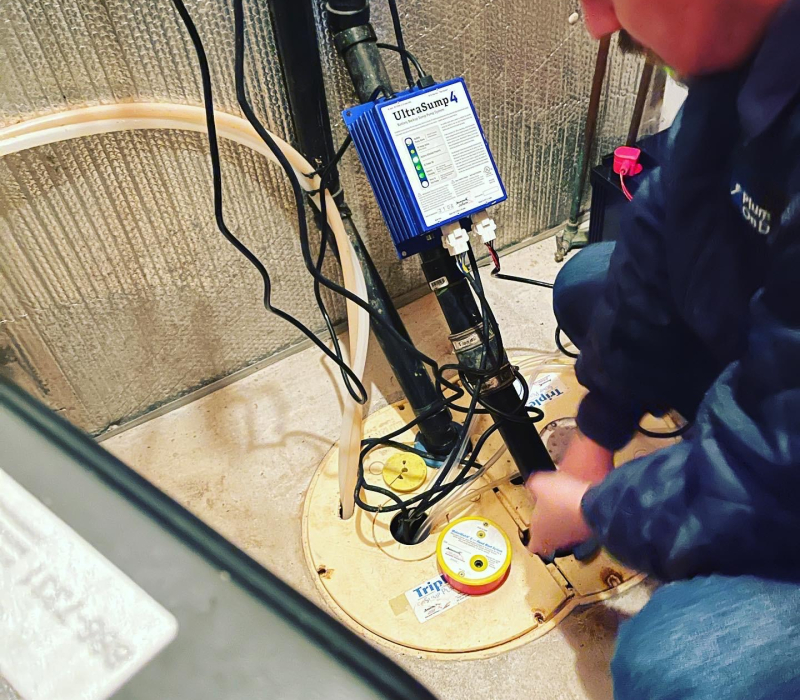
At Plumber On Demand, we provide sump pump installation as part of basement waterproofing. We set a pit, liner, and pump and connect drainage.
If you need a new sump system for groundwater or seepage, contact Plumber On Demand today at 289-501-6316.
What Sump Pump Installation Means
Sump pump installation means building a low point that collects water and pumps it away. The pit collects groundwater or interior drain tile.
A complete sump pump installation may include:
- Locating the pit where water collects or drain tile can gravity-feed
- Excavating a basin sized for the liner, pump, and expected inflow
- Setting a perforated or solid liner so soil does not collapse into the pit
- Bedding and backfill that let water enter the basin
- Selecting a primary pump for head and duty cycle
- Installing a check valve so discharge water cannot fall back into the pit
- Routing a discharge line to a freeze-aware exterior outlet
- Providing electrical service and an optional battery backup pump
Installation is a system. A pump in an unlined hole with a hose out a window is not a finished sump.
Why Sump Pump Installation Matters
Groundwater does not wait for a convenient time. When the water table rises, collected seepage has to go somewhere.
Without a working sump, it ponds on the slab, wets the cove joint, and soaks stored belongings.
A properly installed sump system helps:
- Collect water at a controlled low point instead of across the floor
- Relieve hydrostatic pressure that drives seepage
- Give interior drain tile a place to empty
- Reduce standing water that damages finishes and goods
- Create a path for a backup pump if power is lost
- Create a mechanical collection point instead of relying on mops alone
Dehumidifiers address airborne moisture. They do not replace a pit that intercepts liquid water.
When a New Sump System Is Needed
Not every wet basement has a usable pit. Many were built without one, or with a shallow hole that cannot take a modern liner and pump.
Sump pump installation is commonly needed when:
- The basement has no pit and water appears after rain or snowmelt
- An old crock is too small, cracked, or collapsing
- Interior drain tile is being added and needs a collection point
- Water enters at the wall-floor joint and has no path to a pump
- A crawlspace holds standing water with no mechanical removal path
- A previous “sump” is a bucket, a plastic tote, or an unlined hole
- The existing location cannot be reused safely
Replacing only the pump is a different job. If there is no sound basin or discharge line, the property needs installation.
Signs You Need Sump Pump Installation
A new system is often indicated when:
- Water ponds in the same corner after wet weather
- The cove joint is damp even when the slab looks dry
- You have been bailing or running a portable pump
- There is no pit, or the pit is an irregular hole in the soil
- Drain tile was started and has nowhere to terminate
- Staining shows repeated seepage at the floor edge
- A prior pump sits on the slab with a garden hose as discharge
Standing water from a burst pipe or sewage backup is a flooding event. Sump pump installation manages seepage, not flood cleanup.
Pit Location, Depth, and Liner Choice
Where the pit sits matters as much as which pump goes in it. A sump in the wrong place cannot intercept the water you have.
• Location
The basin is usually placed at the lowest practical point, near seepage, or where drains can slope to it.
A pit under a future staircase or tight against a furnace may be possible, but access for service has to remain.
• Depth and Diameter
The basin must be deep enough for the intake, a water cushion, and float travel. A shallow dish will short-cycle or suck air.
Diameter must leave room for a primary pump and, when planned, a backup pump.
• Liners
A liner keeps soil out of the pit and gives the pump a stable well. Perforated liners are used when drain tile should feed the basin.
Solid sections may be used where the pit wall needs to stay intact.
An unlined hole can cave, silt in, and destroy the pump. Liner selection is part of installation.
Pump Selection for a New Installation
The pump has to match the water load and the discharge height. Undersized pumps run constantly.
Oversized pumps short-cycle and wear out switches.
Sump pump installation typically considers:
- Gallons per hour at the actual head (vertical lift plus friction)
- Submersible vs. pedestal design for the pit and the environment
- Switch type and whether a backup switch is warranted
- Solids handling if silt or gravel may enter the basin
- Horsepower as a result of duty, not as a marketing number alone
- Whether a second pump will share the pit from day one
We size the pump for the waterproofing system it serves. A shelf pump chosen without measuring lift is a guess.
Why DIY Sump Pump Installation Is Risky
Cutting a hole and dropping in a utility pump looks simple. Failures show up later: collapsed pits and frozen discharge.
DIY sump pump installation may:
- Place the pit where drain tile cannot reach it
- Leave an unlined excavation that silts in within a season
- Omit a check valve, so water slams back and the pump short-cycles
- Discharge to a location that re-enters the foundation
- Use an extension cord as permanent power
- Skip a dedicated receptacle or GFCI protection
- Ignore freeze protection on the exterior line
- Fail to connect interior drains, so water still sheets on the slab
Professional installation treats the pit, pump, piping, and power as one component.
Our Sump Pump Installation Process
Every basement is different, but a new sump follows a clear sequence so the pit collects water and the pump can send it away.
• 1. Moisture and Layout Assessment
We identify where water enters, where it ponds, and how drains will reach a basin. Location is chosen for collection and discharge.
• 2. Slab Opening and Excavation
A controlled opening is cut in the floor. Soil is excavated to the depth and diameter the liner requires.
• 3. Liner, Bedding, and Drain Tie-Ins
The basin is set plumb and at the correct elevation. Interior drain lines, if in scope, are tied into the pit.
• 4. Backfill and Slab Restoration Around the Pit
Gravel and soil are placed so water can enter the liner where intended. The slab around the basin is restored so the rim is serviceable.
• 5. Pump Setting and Check Valve
The primary pump is set on a stable base, not in silt. Discharge piping includes a check valve and access for later service.
• 6. Discharge Line to the Exterior
The line is routed with slope, support, and freeze-aware detailing. We avoid dumping water against the same foundation.
• 7. Electrical Connection and Backup Option
Power is arranged for a permanent receptacle rather than a dangling cord. A backup pump, if included, is tested with the primary.
• 8. Testing, Handoff, and Care Guidance
The pit is filled to prove the switch, check valve, and discharge path. You leave with a working system, not a pump in an open hole.
Discharge Lines, Check Valves, and Freeze Protection
A sump that pumps into a collapsed hose or a frozen pipe is not protecting the basement. Discharge is part of the installation.
• Check Valves
The check valve stops water in the vertical run from falling back into the pit. Without it, the pump may restart immediately.
A missing check valve is a common reason a new pump seems to run constantly.
• Discharge Routing
The line should hold slope, stay supported, and be sized for the pump. Crimps, undersized hose, and long sagging runs reduce capacity.
• Freeze Protection
Exterior discharge can ice shut in winter. Routing, insulation, and outlet detailing are part of installation in cold climates.
A line that works in April can fail in January if freeze was never designed in.
Electrical Service and Battery Backup
Sump pumps fail in storms when power goes out while the water table is highest. Installation should plan for that.
• Permanent Power
A dedicated receptacle is the standard for a primary pump. Extension cords and cords across walkways are not a finished setup.
GFCI and local electrical requirements are part of a professional installation, not optional extras.
• Battery Backup Pumps
A battery backup is a second pump that can run when utility power is out. It is not a substitute for a correctly sized primary pump.
Backup capacity is limited by battery size and recharge. It is a bridge through an outage, not an unlimited supply.
• Water-Powered Backup
Some properties consider a water-powered backup where municipal pressure is available. That option depends on supply.
It is a design choice, not a default on every pit.
Tying Interior Drains to the Pit
Interior waterproofing often uses drain tile at the footing to intercept water at the wall-floor joint. That water needs a termination.
Sump pump installation is frequently the termination of that system:
- Drain tile or a formed channel slopes to the basin
- A sealed or grated lid still allows service of the pump
- The pit elevation is set so drains can gravity-feed
- Gravel around a perforated liner communicates with the drain field
- Cleanouts or access points remain usable after the slab is restored
A drain trench that dead-ends in soil will still wet the floor. The pit is the outlet.
If drain work is happening at the same time, the sump is sequenced so nothing is buried without a connection.
Sump Pump Installation for Residential Properties
Homeowners typically need a new sump when a basement takes on groundwater, when finishing is planned, or when storage keeps getting wet.
Residential installation often involves:
- Unfinished basements with open slab access
- Finished lower levels where pit location must respect living space
- Utility rooms with furnaces, water heaters, and limited floor area
- Crawlspaces that need a basin and a path for discharge
- Homes adding interior drains as part of waterproofing
Families usually want to know where the pit will sit and where water will exit. Answer those questions before the slab is cut.
Sump Pump Installation for Commercial Buildings
Commercial properties may need sumps in storage areas, loading levels, or mechanical rooms below grade.
Commercial installation often addresses:
- Higher inflow expectations and pump duty
- Access for service without disrupting operations
- Discharge routing that does not create ice or slip hazards
- Coordination with existing floor drains that are not groundwater sumps
- Documentation of what was installed for facility records
A sanitary floor drain is not a sump. Groundwater should not be mixed into plumbing that was never designed for that load.
Sump Pump Installation for Landlords and Property Managers
Rental sites often discover wet lower levels after a complaint or turnover. Installing a system is a property decision, not a pump drop.
We assist with:
- Pit placement that can be serviced between tenancies
- Clear notes on primary vs. backup equipment
- Discharge paths that do not soak sidewalks or neighboring units
- Scheduling around occupied buildings
- Distinguishing a new installation from a failed existing pump
A portable pump left for a tenant is not a waterproofing system. Installation creates a permanent collection point.
Primary Pumps, Dual Pumps, and Alarms
A single pump can protect a basement until it fails or inflow exceeds capacity. Installation is when redundancy is decided.
• Primary Only
A correctly sized primary pump with a sound pit and discharge is the baseline. Many properties start here when inflow is modest.
• Dual Primary Setup
Two pumps in one basin can share load or back up a failed switch. Spacing and discharge joining must keep the pumps from fighting each other.
• High-Water Alarms
An alarm that sounds when water rises above the normal off level gives occupants a chance to respond. It does not pump water.
It is a warning device, not a backup pump.
Sump Pump Installation Cost Factors
Cost varies because basements vary. Price is driven by excavation, liner, pump, discharge, electrical work, and drain tie-ins.
Factors that commonly affect cost include:
- Slab thickness and access for cutting and hauling soil
- Pit depth, diameter, and liner type
- Whether interior drains are connected in the same project
- Discharge run length, material, and freeze detailing
- Primary pump size and whether a backup is included
- Electrical work for a permanent receptacle
- Finished vs. unfinished space around the pit
- Soil conditions that slow excavation or require extra bedding
A shallow pit in an open basement is different from a deep basin in a finished room. An on-site assessment estimates the work.
Insurance and Sump Pump Installation Documentation
Some policies treat sewer, sump, or water backup separately from sudden plumbing failures. Coverage depends on the policy.
Documentation still helps you describe what was built.
Helpful documentation during sump pump installation includes:
- Photos of the pit location before and after liner placement
- Notes on pump model, check valve, and discharge outlet
- Records of drain tile tie-ins to the basin
- A simple description of primary vs. backup equipment
We do not file claims or promise that a carrier will pay. We capture what was installed so conversations are based on the system.
What Sump Pump Installation Does Not Include
It is useful to know where installation stops and other waterproofing work begins.
Sump pump installation is not:
- Replacing only a dead pump in a finished, adequate pit (that is pump service)
- Flood cleanup after a burst pipe, appliance failure, or sewage backup
- Full interior drain excavation if that work is a separate waterproofing scope
- Exterior grading, downspout repairs, or landscape drainage unless added to the job
- A guarantee that groundwater will never appear if other entry paths remain open
- Insurance coverage or claim filing
Installation builds the collection and pumping system. Waterproofing may still need wall treatment, drain channels, or grading work.
Mixing those jobs without a clear scope leads to a pump that runs while water still enters elsewhere on the wall or slab.
Areas We Serve
Plumber On Demand provides sump pump installation for residential and commercial properties across a wide range of communities.
We work with:
- Homeowners
- Property managers
- Landlords
- Contractors
- Business owners
- Facility managers
- Real estate professionals
The Importance of Acting Quickly
The longer groundwater sits on a slab, the more it stains goods and drives moisture into finishes. A shop vacuum is not a storm plan.
Prompt sump pump installation can help:
- Stop repeated ponding in the same basement area
- Give new interior drains a working outlet
- Reduce the chance that a finishing project traps moisture
- Put a backup option in place before the next power-loss storm
- Replace an unlined hole before it collapses around a pump
If you already have seepage, waiting for a drier year rarely changes the water table. The pit still needs to exist.
Schedule Sump Pump Installation Today
If your basement takes on groundwater and you do not have a proper pit, pump, and discharge system, Plumber On Demand is ready to help.
Our sump pump installation services focus on the basin, liner, pump, check valve, discharge, power, and drain tie-ins.
Contact Plumber On Demand today at 289-501-6316 to schedule an assessment.
Lids, Pedestals, and Living-Space Considerations
A working sump in a finished basement still has to be livable. Lids reduce odor, debris, and objects falling into the pit.
We help plan:
- Sealed or child-resistant lids that still allow service
- Pedestal vs. submersible placement when the room will be finished
- Clearance so the float cannot hang up on the liner
- Vibration and noise expectations for a room that will be occupied
A lid that cannot be opened is as unhelpful as no lid at all. Service access is part of the installation.
Where the Water Goes After It Leaves the Pit
Discharge must leave the foundation zone. Pumping onto a splash block beside the same wall recreates the original problem.
Outlet planning may include:
- Daylight to a location that slopes away from the building
- Connection to an approved storm path where that is allowed
- Avoiding sanitary sewer connections never meant for groundwater
- Ice and slip control where water exits near walks
- Site-drainage awareness so water is not simply moved next door
Informal ties into sanitary plumbing can create backups and code problems. Discharge design is part of the installation.
Why Homeowners Trust Plumber On Demand
Wet basements are frustrating. People want the water gone, and a system that still works after the first hard rain and the first freeze.
Clients choose Plumber On Demand because we offer:
• System Installation, Not a Pump Drop
We treat the pit, liner, pump, valve, discharge, and power as one installed assembly.
• Waterproofing Coordination
When interior drains are part of the project, the basin is built as their outlet from day one.
• Reliable Communication
You know what was installed, how to test it, and what the system is not meant to do on its own.
Frequently Asked Questions About Sump Pump Installation
• Is sump pump installation the same as replacing a pump?
No. Installation builds a new pit, liner, discharge path, and electrical setup.
Pump replacement assumes a sound existing basin and piping.
• Do I need a sump if I only get water after heavy rain?
Often yes, if that water is groundwater or seepage collecting on the slab. Rain-timed wetness is a common reason to install a sump.
• What is a sump liner?
A liner is the basin that holds the pump and keeps soil from collapsing into the pit. It is a core part of installation.
• Should the discharge go out a window with a hose?
That is not a finished discharge. A proper line is supported, valved, and routed to an appropriate outlet with freeze in mind.
• Do I need a battery backup?
A backup is worth discussing if outages coincide with wet weather. It is sized to the pit and the risk, not automatic on every job.
• Can interior drain tile empty into the new pit?
Yes. That is a common waterproofing design.
The pit elevation and liner have to be set so drains can gravity-feed.
• Will a sump fix wall leaks above the floor?
A sump manages water collected at or below slab level. Leaks higher on the wall may still need crack repair or other wall work.
• How loud is a new sump pump?
Sound depends on pump type, lid, and whether the room is finished. We can discuss placement before the slab is cut.
• Does insurance pay for sump pump installation?
Coverage depends on your policy and the reason for the work. We document what was installed. We do not file claims or promise payment.
• How long does installation take?
Timelines vary with pit size, slab, discharge length, and drain tie-ins. An open basement is different from a finished-room installation.
• What should I do while waiting for service?
If it is safe, move storage off the wet floor, stay away from water near electrical equipment, and photograph where water appears.
• How do I get started?
Call Plumber On Demand at 289-501-6316 to describe the seepage or missing sump and schedule an assessment.
Contact Plumber On Demand Today
Groundwater should not be managed with buckets. A basement that ponds after rain needs a real pit, pump, and discharge path.
Plumber On Demand provides sump pump installation services for residential and commercial clients.
If you need a new sump system for basement waterproofing, contact Plumber On Demand today.
📞 Call 289-501-6316
Speak with our team, request an assessment, and learn how sump pump installation can move collected water out of the building.