
Exterior Basement Waterproofing Clarington
 (459)
(459)
(459)

Professional Exterior Basement Waterproofing Services | Plumber On Demand
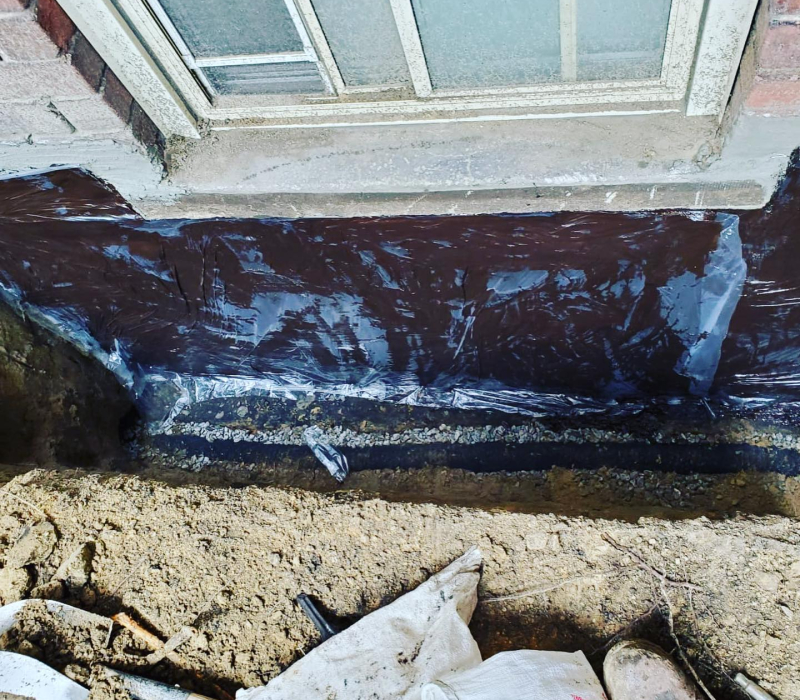
Excavation, Exterior Membrane, Dimple Board, and Footing Drainage From the Outside
Exterior waterproofing stops water at the foundation wall before it reaches the interior. Crews excavate to the footing, apply membrane or dimple board, set exterior weeping tile, and backfill.
At Plumber On Demand, we provide exterior basement waterproofing for homes and commercial buildings. Work happens on the soil side of the wall, not as an interior drain retrofit.
If groundwater, grade, or a failed exterior drain is wetting the basement from the outside, contact Plumber On Demand today at 905-409-0657.
What Exterior Basement Waterproofing Means
Exterior waterproofing is a below-grade system on the outside of the foundation. It sheds water, relieves pressure, and keeps the wall from absorbing moisture.
A complete exterior approach may include:
- Excavation to the footing along the affected walls
- Cleaning and repair of the exposed foundation surface
- Application of a waterproofing membrane or dimple drainage board
- Exterior weeping tile in a gravel bed at the footing
- Window well reconstruction where wells dump water against the wall
- Controlled backfill and finish grading that slopes away from the building
This is not interior paint. It is a drainage-and-barrier system on the buried wall.
Interior methods collect water after it reaches the inner face. Exterior work keeps that water from getting that far.
Why Exterior Waterproofing Matters
Water on the outside of a foundation does not stay outside. After rain or snowmelt, soil moisture becomes pressure against the wall and cove.
Prompt, correctly built exterior waterproofing helps:
- Reduce hydrostatic pressure on foundation walls
- Keep soil moisture from soaking through masonry or concrete
- Direct water to a perimeter drain instead of into the basement
- Protect window wells from becoming funnels against the wall
- Limit repeated dampness that damages stored goods and finishes
Managing indoor symptoms while the exterior stays wet leaves the wall saturated. The basement can still smell damp when floors look dry.
How Water Reaches a Foundation From the Outside
Exterior waterproofing is chosen when the path is soil-side: poor grade, clogged or missing exterior drains, failed dampproofing, or window wells that hold water.
Typical exterior drivers include:
- Grade that slopes toward the foundation
- Downspouts that dump next to the wall
- Heavy clay soils that hold water against the foundation
- Failed or never-installed exterior weeping tile
- Cracked or missing original tar or dampproofing
- Window wells without drains or with clogged drains
A wall can look sound inside while the buried face stays wet for months. Exterior work treats that buried face.
Signs Exterior Waterproofing May Be Needed
Exterior work is often considered when:
- Dampness or seepage appears after rain, not after a plumbing failure
- Water shows at the cove joint where the wall meets the floor
- Efflorescence or staining tracks on the lower wall
- Window wells pond and then the wall below them weeps
- An older exterior drain has collapsed, silted, or never existed
- Interior patches keep failing because pressure is still on the outside
If a single crack is the only leak, targeted leak repair may be enough. If the wall is wet along a long run after storms, the exterior system is the right scale.
Exterior Methods vs. Interior Methods
Interior waterproofing uses an interior drain, wall membrane, or cove collection after water reaches the inside. It is useful when excavation is blocked.
Exterior waterproofing is different:
- Work happens outside, at the footing, on the soil side of the wall
- A membrane or dimple board keeps water off the structure
- Exterior weeping tile intercepts water before it loads the wall
- Landscaping, walks, and access become part of the job
This page is the exterior job. Interior systems are a separate scope. The choice depends on access, soil, wall condition, and where water travels.
Membrane, Dimple Board, and Drainage Layers
The exterior wall needs a barrier and a drainage path, not only a black coating.
• Waterproofing Membrane
A membrane is a coating or sheet on the prepared foundation. It keeps water from soaking into concrete or masonry.
Membranes fail when the wall was dirty, cracks were ignored, or backfill tears the coating.
• Dimple Board
Dimple (drainage) board creates a gap against the wall. Water travels down the dimples to the footing drain instead of sitting on the surface.
Dimple board is not a substitute for a drain at the bottom. Without an outlet, the gap can fill.
• Working Together
Many exterior systems combine a membrane, drainage board, and weeping tile. The stack is only as good as the footing drain and the backfill.
Exterior Weeping Tile, Gravel, and Filter
Exterior waterproofing without a working footing drain leaves water at the base of the new membrane.
Exterior weeping tile at this scope usually means:
- Perforated pipe set at or near the footing
- A gravel envelope so water can reach the pipe
- Filter fabric or a sock so fines do not clog the stone and pipe
- A clear outlet to a sump, storm connection, or approved discharge
Gravel is drainage media, not decoration. Fine soil dumped against the pipe is a common reason older systems fail.
Window Wells as Part of Exterior Work
Window wells are a frequent leak point even when the rest of the wall is treated.
A well that holds water presses against the window and the wall below. Exterior work often includes:
- Excavating and draining the well to the perimeter tile
- Repairing or replacing well walls that lean or leak
- Confirming the window and well joint is not an open path
- Keeping soil and mulch from overflowing into the well
A new membrane that stops at a flooded well is an incomplete exterior job.
Why DIY Exterior Waterproofing Is Risky
Digging next to a foundation is not a weekend trench. Depth, soil, utilities, and wall stability matter.
DIY exterior waterproofing may:
- Undercut the footing or leave an unstable trench
- Strike buried utilities
- Apply membrane to a dirty, wet, or cracked wall that will not hold it
- Install pipe with no slope or no outlet
- Backfill with native clay that smashes the board and clogs the stone
- Collapse a window well or sidewalk edge
A failed DIY excavation is expensive to correct and can make seepage worse. Exterior waterproofing is a construction sequence, not a coating.
Our Exterior Basement Waterproofing Process
Every property is different, but exterior work follows a sequence so the wall, drain, and backfill work together.
• 1. Site and Access Assessment
We review where water shows inside, how grade sits outside, what must be opened, and which walls need excavation.
• 2. Protection of Landscaping and Adjacent Surfaces
Walks, plantings, and finishes in the work zone are planned before digging. Equipment access and spoil piles are part of the scope.
• 3. Excavation to the Footing
Soil is removed to expose the foundation to drain elevation. The trench must be wide and deep enough to work the wall and set pipe.
• 4. Foundation Cleaning and Repair
Dirt, failed coatings, and loose material come off. Cracks and voids that would leak behind a new membrane are repaired first.
• 5. Membrane and Dimple Board Installation
The waterproofing layer and drainage board are applied so water sheds to the footing drain instead of into the wall.
• 6. Exterior Weeping Tile and Gravel Envelope
Pipe is set with slope, bedded so it can drain, and connected to a defined outlet. Gravel and filter complete the envelope.
• 7. Window Wells and Penetrations
Wells, pipe penetrations, and other openings in the excavated run are detailed so they do not bypass the system.
• 8. Backfill, Compaction, and Finish Grade
Backfill is placed so it does not crush the board or pipe. Final grade moves surface water away from the wall.
Access, Equipment, and Landscaping Disruption
Exterior waterproofing is honest about disruption. You cannot treat a buried wall without opening the ground.
Access issues that change the job include:
- Narrow side yards that limit machines
- Decks, stairs, or patios built against the foundation
- Mature plantings along the wall
- Utilities, irrigation, and buried lines in the trench path
- Occupied buildings that need safe pedestrian routes
Some walls are good exterior candidates because the yard is open. Some are poor candidates because a structure sits on the soil you would need to move. That is why interior methods exist as a different job.
We explain what will be opened, what can be restored, and what sits outside waterproofing, such as new landscaping design.
Backfill, Soil, and Grading After the Membrane
The membrane and pipe can be perfect and still fail if backfill is wrong.
Proper backfill practice typically means:
- Protecting the drainage board during placement
- Using drainage-friendly material against the system where specified
- Avoiding giant clay clods dumped on dimple board
- Compacting in lifts so the grade does not settle into a trench next to the wall
- Restoring a slope that sheds surface water away from the foundation
A swale toward the house undoes exterior work. Grading is part of waterproofing, not curb appeal.
When Exterior Waterproofing Is the Right Choice
Exterior work is often the better choice when:
- The original exterior dampproofing or drain has failed
- Water clearly arrives from soil and weather, not from a plumbing leak
- The wall can be excavated without destroying essential structures
- Window wells and grade are contributing to the wet wall
- You want the water managed outside rather than collected inside
Exterior work is a weaker fit when excavation is blocked, when the leak is a single interior path, or when the problem is a plumbing failure. Those situations need a different scope.
Exterior Waterproofing for Residential Properties
Homes commonly need exterior waterproofing along:
- Rear or side walls where grade is high
- Walk-out or garden-level walls with soil against masonry
- Walls under window wells
- Additions where the original exterior drain was never tied in
- Older foundations whose original tar coating has failed
Homeowners care about yards, fences, and access during excavation. We plan the work so disruption is understood up front, not on the first day of digging.
Exterior Waterproofing for Commercial Buildings
Commercial buildings add loading docks, public walks, and occupied hours to an excavation job.
Commercial exterior waterproofing often addresses:
- Foundation walls along parking or landscaped setbacks
- Below-grade storage or mechanical rooms with soil-side seepage
- Window wells or areaways at public sidewalks
- Phasing so tenants and deliveries can still use the site
- Documentation of what was installed on each elevation
Downtime and access routes matter as much as the membrane. The drainage physics are the same; the logistics are not.
Exterior Waterproofing for Landlords and Property Managers
Rental and multi-unit buildings may use basements for storage, laundry, or living space. Exterior work affects common yards and tenant access.
We assist with:
- Identifying which elevations actually need excavation
- Sequencing work around occupied units
- Clear notes on membrane, drain, wells, and backfill
- Distinguishing groundwater seepage from unit plumbing leaks
- Planning restoration of walks and grade after the trench is closed
Incomplete work on one wall can leave seepage tenants still report as a basement leak. Scope should match the wet elevations.
Exterior Waterproofing Cost Factors
Cost follows the trench, not a single “basement size” number.
Factors that commonly affect cost include:
- Linear footage of wall to excavate
- Depth to footing and soil type
- How much hardscape, decking, or landscaping must be opened
- Membrane and drainage board product and wall repairs needed
- Length and outlet of exterior weeping tile
- Number and condition of window wells
- Backfill, haul-off, and finish grading requirements
A short, open side-yard wall is a different job than a deep excavation under a patio. An on-site assessment estimates the work.
Insurance and Exterior Waterproofing Documentation
Some policies treat seepage and groundwater differently from sudden plumbing failures. Coverage depends on the policy and the cause. We do not promise payment.
Helpful documentation during exterior waterproofing includes:
- Photos of interior seepage locations before excavation
- Photos of the opened wall, existing coatings, and old drains
- Notes on grade, wells, and soil conditions observed
- Records of membrane, board, pipe, and outlet as installed
We do not file claims or interpret your policy. We capture what the foundation and soil were doing so conversations are based on observed conditions.
What Exterior Basement Waterproofing Does Not Include
It is useful to know where this job stops.
Exterior basement waterproofing is not:
- Interior drain-tile or interior wall-cavity waterproofing as the primary method
- Repair of a single crack or pipe penetration without excavating the wall (that is leak repair)
- Sump pump replacement as a standalone mechanical job
- Full landscaping redesign, new patios, or decorative hardscape
- A guarantee that an insurance policy will pay for groundwater or seepage
If the basement is already flooded from a burst pipe, that is extraction and cleanup—not exterior waterproofing. A targeted patch on one leak path is a different scope.
Areas We Serve
Plumber On Demand provides exterior basement waterproofing for residential and commercial properties across a wide range of communities.
We work with:
- Homeowners
- Property managers
- Landlords
- Contractors
- Business owners
- Facility managers
- Real estate professionals
The Importance of Acting Quickly
The longer soil water loads a foundation, the more the wall stays saturated and the more finishes and stored items are at risk.
Prompt exterior waterproofing can help:
- Stop repeated storm-driven seepage at the source side
- Prevent a small wet cove from becoming a long wet wall
- Reduce the chance that interior “quick fixes” hide an exterior drain failure
- Keep window wells from undermining the wall they sit against
Waiting for “a dry year” does not rebuild a collapsed exterior drain. The soil path is still there.
Schedule Exterior Basement Waterproofing Today
If groundwater, grade, or a failed exterior drain is wetting your foundation from the outside, Plumber On Demand is ready to help.
Our exterior waterproofing services focus on excavation, wall preparation, membrane or dimple board, exterior weeping tile, window wells, and proper backfill.
Contact Plumber On Demand today at 905-409-0657 to schedule an exterior waterproofing assessment.
Utilities, Depth, and Safe Excavation
Exterior waterproofing is a trench next to a loaded wall. Depth to the footing can be several feet. Soil can slough. Buried services can sit in the strip you open.
Professional excavation planning includes:
- Locating known utilities before digging
- Shoring or benching where the trench requires it
- Keeping spoil far enough from the wall that it does not slide back in
- Protecting the footing so the drain can sit at the right elevation
This is why exterior waterproofing is scheduled as construction, not a same-day coating visit.
Benefits of Hiring Plumber On Demand for Exterior Waterproofing
Exterior work fails when the drain, the board, and the backfill are treated as unrelated tasks.
When you choose Plumber On Demand, you benefit from:
• Soil-Side Focus
We treat the buried wall, the footing drain, and the grade as one system.
• Honest Access Planning
We tell you what must be opened and when interior methods would be the more practical path.
• Drain-First Thinking
A membrane without an outlet is only half a job. Weeping tile and gravel are part of the sequence.
• Clear Communication
You know which elevations are in scope, what happens to landscaping, and where the water is supposed to go.
• Residential and Commercial Support
We work with homeowners, landlords, property managers, and business owners.
Downspouts, Surface Water, and the Exterior System
Even a new membrane can be overwhelmed if roof water dumps at the wall.
After exterior waterproofing, property owners should keep:
- Downspouts extended away from the backfill
- Gutters clear so they do not overflow at the foundation
- Grade from settling into a trench next to the wall
- Window well drains free of leaves and soil
Exterior waterproofing manages soil water at the wall. It is not a license to drain the roof into the new trench.
Why Homeowners Trust Plumber On Demand
Excavating a foundation is a big decision. People want the basement dry, and they want the wall, yard, and drain done in the right order.
Clients choose Plumber On Demand because we offer:
• Straightforward Scope
We explain exterior waterproofing as excavation and a soil-side system—not as interior sealer.
• System-Level Installation
Membrane, dimple board, weeping tile, wells, and backfill are planned together.
• Reliable Communication
You get practical next steps about access, disruption, and what the system will and will not do.
Frequently Asked Questions About Exterior Basement Waterproofing
• Is exterior waterproofing the same as interior waterproofing?
No. Exterior work excavates the soil side and installs membrane, drainage board, and footing drains outside. Interior work manages water after it reaches the inside.
• Will you have to dig up my whole yard?
Only the elevations that need treatment. Linear footage, depth, and what sits against those walls determine how much is opened.
• What is dimple board?
Dimple board is a drainage panel with a gap against the foundation so water can run down to the weeping tile.
• Do you always replace exterior weeping tile?
If the existing exterior drain is clogged, collapsed, or missing, replacing it is part of doing the job correctly. A membrane over a dead drain is a common failure.
• Will landscaping be put back exactly as it was?
Waterproofing restores grade and backfill. Decorative landscaping, specialty plantings, and new hardscape design are separate.
• Can I waterproof the exterior myself with a coating?
Coatings fail on dirty walls, without a drain, and without proper excavation. Digging to the footing is not a DIY coating project.
• How long does exterior waterproofing take?
Timelines vary with wall length, depth, soil, weather, and access. A short open run is different from a deep excavation under decks.
• Does this fix a plumbing leak in the basement?
No. A supply, drain, or sewer leak is a plumbing repair. Exterior waterproofing addresses soil and groundwater at the foundation.
• Will insurance pay for exterior waterproofing?
Coverage depends on your policy and the cause of the water. Seepage and groundwater are often treated differently from sudden plumbing events. We document conditions; we do not promise payment.
• Do window wells have to be part of the job?
If wells sit on the excavated wall and hold or direct water, they should be drained and detailed with the exterior system.
• What should I do while waiting for service?
If it is safe, keep downspouts extended, avoid piling soil against the wall, photograph wet areas after rain, and keep storage off damp floors.
• How do I get started?
Call Plumber On Demand at 905-409-0657 to describe the seepage and schedule an assessment.
Contact Plumber On Demand Today
Soil-side water should be managed at the wall and footing—not left to soak through until the basement stays damp.
Plumber On Demand provides exterior basement waterproofing for residential and commercial clients.
If you need help with excavation, membrane, dimple board, or footing drainage, contact Plumber On Demand today.
📞 Call 905-409-0657
Speak with our team about your situation, request an assessment, and learn how waterproofing can help.