
Concrete Work Alliston
 (459)
(459)
(459)

Professional Concrete Work Services | Plumber On Demand
Floor Cutting, Channel Patching, Parging, and Slab Restoration for Waterproofing
Concrete work here is waterproofing construction—not a patio, driveway, or decorative overlay.
Floor channels, cove joints, wall patches, and slab replacement after drains are why the concrete is opened and then closed.
At Plumber On Demand, we provide concrete work as part of basement waterproofing.
We cut floor channels, restore the slab after interior drains, parge and patch walls, and rebuild the cove joint so water enters the drain instead of the finished floor.
If you need concrete work to complete interior basement waterproofing, contact Plumber On Demand today at 705-220-2903.
What Concrete Work Means
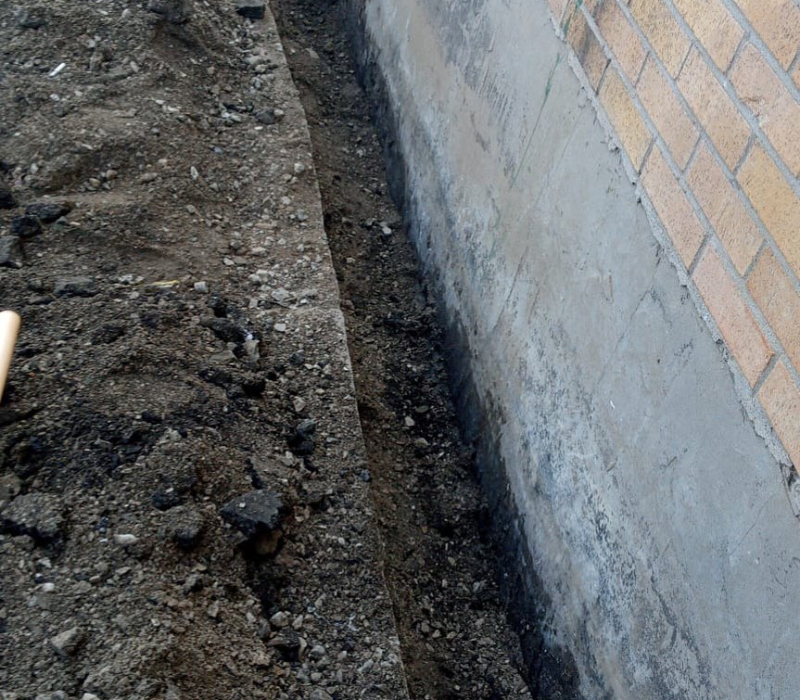
Concrete work means cutting, patching, and replacing concrete required to manage foundation moisture.
The floor is opened for drains, and the wall face is patched or parged so water is directed, not trapped.
Professional concrete work for waterproofing may include:
- Saw-cutting interior drainage channels along the perimeter or specified paths
- Removing a strip of slab so drain tile or a formed channel can be installed
- Rebuilding the cove joint at the wall-floor intersection
- Replacing floor sections after interior drains are bedded and connected
- Patching wall openings after pipe, membrane, or drain penetrations
- Parging selected foundation wall areas as part of the moisture-control design
- Matching slab thickness and elevation so doors, stairs, and drains still work
- Finishing patches so the basement can return to storage or later finishing
This is not decorative flatwork. A patio and a perimeter drain trench are different crafts.
Why Concrete Work Matters in Waterproofing
Interior waterproofing lives in the concrete. Drains cannot be placed without opening the slab first.
Water at the footing cannot be intercepted if the cove joint is left as a dam.
Broken wall concrete left open is still a leak path.
Proper concrete work helps:
- Create a continuous channel for interior drainage
- Restore a walkable, load-bearing floor after drains are in
- Direct water at the wall-floor joint into the system instead of across the room
- Close wall patches so soil and moisture are not entering through broken concrete
- Provide a stable surface for later flooring if the basement will be finished
- Keep drains buried where they must be, and accessible where they should be
Leaving a trench open, or filling it with debris, is not completing the waterproofing. The concrete has to go back correctly.
When Concrete Work Is Needed
Concrete work is needed when the waterproofing design must pass through the slab or the wall face.
Typical situations include:
- Installing interior drain tile or a drainage channel at the footing
- Connecting that channel to a sump pit
- Repairing a broken cove joint where seepage appears
- Replacing a section of floor that was removed for plumbing or drainage
- Patching foundation walls after interior or limited exterior access work
- Parging deteriorated interior wall surfaces that shed grit and hold dampness
- Correcting a previous trench that was poorly backfilled
Full underpinning, basement lowering, and decorative outdoor concrete are outside this scope.
The job is moisture management through targeted concrete work.
Signs You Need Waterproofing-Related Concrete Work
Concrete work is often indicated when:
- Water appears at the wall-floor joint after rain or snowmelt
- The slab has been trenched before and the patch is cracked, sunken, or leaking
- You can see a gap or failed cove where the wall meets the floor
- Interior drains are planned and the floor has not yet been opened
- Wall concrete is spalled, hollow, or missing at seepage points
- A sump pit was added but the surrounding slab was never restored
- Stored items keep rusting or staining along the same perimeter strip
If the basement is wet from a burst supply pipe, that is a flooding event.
Concrete work for waterproofing addresses groundwater and seepage at the slab and wall.
Interior Drain Channels and Floor Cutting
The most common task is cutting a channel in the basement floor.
The cut has to be located and deep enough for the drain and bedding—not a random groove.
• Perimeter Channels
Many interior systems run along the foundation wall so water at the footing can enter a drain and travel to a sump.
A channel that is too shallow will crush the drain. A channel that wanders away from the wall will miss the seepage line.
• Lateral Ties and Pit Connections
Channels may also run to a basin. Those laterals need slope and clean junctions so they are not pinched.
The connections are formed in the concrete so they are not pinched when the slab is replaced.
• Dust and Control
Saw-cutting a slab produces slurry and dust.
Professional work plans extraction and containment so the rest of the building is not coated.
Cove-Joint Work
The cove joint is where the foundation wall meets the basement slab.
It is a frequent seepage line because it is a construction joint.
Cove-joint work may include:
- Relieving the joint so water can enter the new drain instead of ponding
- Forming a new cove after the drain is in place
- Sealing or detailing the joint according to the waterproofing design
- Avoiding a raised lip that dams water onto the slab
A caulk bead on a leaking cove is not the same as rebuilding the joint as part of an interior drain.
The concrete and the drain have to work together.
Why DIY Concrete Work Is Risky
Renting a saw and opening the basement floor can create a problem harder than the original seepage.
DIY concrete work may:
- Cut the channel in the wrong place, missing the footing seepage line
- Undermine the wall or slab edge with an uncontrolled excavation
- Leave the drain without slope, bedding, or a sump connection
- Patch with the wrong mix, thickness, or bond, so the floor cracks and settles
- Trap water by closing the cove without a drainage path
- Fill a trench with dirt and a thin skim coat that fails under load
- Spread slurry into drains, sump pits, and living spaces
- Use overlay products that do not restore structural thickness
Professional concrete work is sequenced with drainage. The floor is opened for a reason and closed to the right elevation.
Our Concrete Work Process
Waterproofing concrete follows a sequence so the slab is opened only as far as needed and then restored.
• 1. Layout and Protection
We mark channel lines, pit connections, and patch areas.
Storage and mechanical equipment are protected as much as the layout allows.
• 2. Controlled Slab Cutting
The floor is saw-cut along the planned path. Cuts are aligned to the wall, the drain design, and existing joints.
• 3. Removal and Excavation for Drainage
Concrete is broken out and hauled. Soil is excavated to the depth required for drain tile or a formed channel.
• 4. Drain Placement and Cove Preparation
Drainage components are set to slope toward the collection point. The wall-floor joint is prepared so water can enter.
• 5. Wall Patches and Parging Where Specified
Openings and deteriorated wall areas are patched or parged as part of the moisture-control design, not as cosmetic plaster.
• 6. Backfill and Slab Replacement
Bedding and backfill are placed so the drain is not crushed.
New concrete restores thickness, elevation, and a serviceable surface.
• 7. Joint Finishing and Elevation Checks
The cove, joints, and transitions to the existing slab are finished so traffic and water behave as intended.
Door clearances are checked.
• 8. Cure, Cleanup, and Handoff
The work is protected during cure. You receive a clear picture of what was cut, replaced, and when the floor can take traffic.
Parging and Wall Patches
Parging is a cementitious coat over masonry or concrete.
In waterproofing, it rebuilds a deteriorated interior face and fills voids where the design calls for it.
• When Parging Helps
Spalled block, crumbling joints, and rough faces can shed grit and hold dampness. Parging can stabilize that face as part of a larger plan.
Parging is not a waterproof skin by itself. Water under pressure can still find paths if drainage and cracks are not addressed.
• Wall Patches
Patches close holes from pipes, failed concrete, or previous drainage attempts. A patch must bond, match thickness, and not create a ledge that traps water.
Holes left open in a foundation wall are not a drainage strategy. They are still openings.
Floor Replacement After Interior Drains
Once drain tile or a channel is in, the slab has to come back. Floor replacement is structural concrete, not a thin topping over a trench.
Floor replacement after interior drains typically considers:
- Original slab thickness and whether the new pour should match it
- Load from storage, future walls, or mechanical equipment
- Bond or isolation at the cut edges
- Slope, if any, toward a drain or sump
- Timing so the drain is not disturbed while concrete is placed
- A surface that can accept future flooring if finishing is planned
A sunken trench line is a trip hazard and a sign the backfill or thickness was wrong. Replacement should finish flush unless a recess was specified.
Concrete Work for Residential Properties
Homeowners usually need this work when a basement is wet at the perimeter, when interior drains are added, or when a previous trench was never finished.
Residential concrete work often involves:
- Perimeter cutting in unfinished basements
- Limited cutting in finished lower levels with access constraints
- Cove rebuilding along laundry and storage walls
- Floor restoration around a new or existing sump
- Interior wall patches in block or poured foundations
Families typically want to know how much floor will be open, how dusty it is, and when belongings can return. Those questions should be answered before the saw starts.
Concrete Work for Commercial Buildings
Commercial lower levels may need channels in storage rooms, stairwells, or mechanical spaces where groundwater shows at the slab edge.
Commercial concrete work often addresses:
- Phased cutting so operations can continue in other rooms
- Load requirements for forklifts, racking, or equipment pads
- Matching existing floor elevations at doors and docks
- Dust control in occupied buildings
- Documentation of what was opened and restored
A channel through a warehouse slab is still waterproofing concrete, not a renovation pour. The drain has to remain functional after the floor is back in service.
Concrete Work for Landlords and Property Managers
Rental properties often show perimeter dampness during turnovers. Opening a tenant basement floor requires a clear scope and a restored surface.
We assist with:
- Defined cut lines so the trench is not larger than the design requires
- Scheduling around occupied units
- Notes on what floor area was replaced vs. patched
- Coordination with drain and sump work so the space is not left open
- A walkable slab before the unit is re-listed or re-occupied
An open trench in a rental basement is a liability. Concrete work includes closing that floor.
Matching Existing Slabs, Thickness, and Transitions
New concrete that sits high binds doors. New concrete that sits low collects water in a trough along the cut.
Matching the existing slab is part of the waterproofing finish, not an extra.
• Thickness
Replacement should restore structural thickness, not a skim that breaks under a water heater or rack.
• Transitions
Saw-cut edges need a clean joint. Ragged breakout makes weak patches that fail early.
Professional removal gives the new pour a sound shoulder to bond against.
• Future Flooring
If the basement will be finished later, the restored slab should be a reasonable substrate. Waterproofing concrete is still a floor.
Concrete Work Cost Factors
Cost varies because every slab and drain layout is different. Price is driven by cutting footage, depth, access, haul-off, and wall work.
Factors that commonly affect cost include:
- Linear feet of channel to cut and restore
- Slab thickness and reinforcement encountered
- Access, stairs, and whether soil and concrete must be hand-carried
- How much wall parging or patching is specified
- Number of laterals and sump connections
- Finished vs. unfinished space and dust-control needs
- Whether the cove joint is rebuilt along the full perimeter
- Cure protection and return-to-service timing
A short channel to an existing pit is different from a full-perimeter drain with complete floor replacement. An on-site assessment estimates the work.
Insurance and Concrete Work Documentation
Concrete cutting for seepage control is often a building improvement or a repair of long-term moisture. Whether any policy responds depends on the policy and the cause.
Documentation still helps you describe the work.
Helpful documentation during concrete work includes:
- Photos of seepage lines and the cove joint before cutting
- Photos of open channels, drain placement, and completed pours
- Notes on what linear footage was opened and restored
- A description of wall patches vs. floor replacement
We do not file claims or guarantee that a carrier will pay. We help capture what the concrete and drainage work actually included.
What Concrete Work Does Not Include
It is useful to know where this concrete work stops.
Waterproofing-related concrete work is not:
- Decorative patios, walkways, driveways, or stamped overlays
- Full basement underpinning or lowering the floor for extra headroom
- Structural redesign of the foundation as a standalone engineering project
- Flood restoration after a burst pipe or sewage backup
- A surface sealer advertised as a complete waterproofing system by itself
- Insurance coverage or claim filing
Concrete work here opens and closes the slab so drains, cove details, and wall patches can manage moisture. Underpinning and outdoor flatwork are different projects.
Areas We Serve
Plumber On Demand provides concrete work for residential and commercial properties across a wide range of communities.
We work with:
- Homeowners
- Property managers
- Landlords
- Contractors
- Business owners
- Facility managers
- Real estate professionals
The Importance of Acting Quickly
An open or failed trench gets worse. Soil sloughs, drain pipe is crushed, and plywood is not a floor.
Seepage at an untreated cove continues through every wet period that follows.
Prompt concrete work can help:
- Complete interior drains before the next high water table
- Restore a safe walking surface
- Stop a failed patch from channeling water into a finished room
- Close wall openings that are admitting soil and moisture
- Protect mechanical equipment sitting near a broken slab edge
If the floor is already cut, leaving it open until a drier month risks damaging the drainage the cut was meant to protect.
Schedule Concrete Work Today
If your waterproofing plan requires floor channels, cove-joint work, wall patches, parging, or slab replacement, Plumber On Demand is ready to help.
Our concrete work services focus on controlled cutting, patching, parging, cove details, and restoring the floor so the waterproofing system can operate.
Contact Plumber On Demand today at 705-220-2903 to schedule a concrete work assessment.
Dust, Occupied Homes, and Mechanical Equipment
Basement concrete work happens next to furnaces, water heaters, laundry, and stored belongings. Containment is part of the job.
We help plan:
- Which belongings must move before cutting
- How to keep slurry out of sump pits and floor drains
- Protection for mechanical equipment and electrical panels
- Phasing so a household can still use stairs and laundry when possible
A waterproofing trench that wrecks the rest of the basement is a failed project even if the drain is correctly placed.
Cure Time and Returning the Space to Use
New concrete needs time before it takes point loads, shelving posts, or a finished floor. Rushing storage onto a green slab can crack the patch.
Return-to-use planning typically covers:
- Light foot traffic vs. heavy storage
- When a water heater or appliance can sit on a replaced section
- Moisture from curing vs. seepage that would indicate a problem
- When flooring or further finishing can be considered
Cure is not waterproofing failure. It is concrete behaving as concrete during the first days.
We distinguish the two so you are not alarmed by normal drying of a new pour versus a new leak.
Why Homeowners Trust Plumber On Demand
People want a dry basement, a floor they can walk on, and a trench that does not reappear as a crack the following year.
Clients choose Plumber On Demand because we offer:
• Waterproofing-First Concrete
Cuts and pours serve drains, cove joints, and wall moisture control—not a patio catalog.
• Restoration of the Slab
We treat floor replacement as part of the system, not a leftover hole.
• Reliable Communication
You know what will be opened, how it will be closed, and what the concrete is meant to do.
Frequently Asked Questions About Concrete Work
• Is this the same as pouring a patio?
No. This concrete work cuts and restores basement slabs and patches foundation surfaces so interior waterproofing can function.
• Will you cut my entire basement floor?
Usually not. Channels follow the drainage design, often along the perimeter and to a sump.
Full-floor replacement is a different decision.
• What is a cove joint?
It is the intersection of the foundation wall and the basement slab. It is a common seepage line in interior drain detailing.
• Do you underpin or lower the basement?
No. This service does not include full underpinning or basement lowering.
It is targeted concrete for drainage and patching.
• How messy is floor cutting?
Saw-cutting creates dust and slurry. Professional work includes control and cleanup so the rest of the property is protected.
• Can you patch a previous trench that failed?
Often yes, if the drain can be reset and the slab restored to thickness. A skim over a collapsed trench is not a lasting repair.
• Is parging the same as waterproofing?
Parging can be part of the wall work. It does not replace drains, a sump, or crack repair when those are still needed.
• When can I put storage back on the new concrete?
After the pour has cured enough for the load. Timing depends on mix, thickness, and temperature.
We provide guidance for your specific patch.
• Does insurance cover this concrete work?
Coverage depends on your policy and why the work is being done. We document the construction. We do not file claims or promise payment.
• Will the new floor match the old floor exactly?
Color and texture of new concrete often differ from aged slab. Elevation and thickness are matched for function, not appearance.
Appearance is secondary to a working drainage system.
• What should I do while waiting for service?
If it is safe, keep storage off the wet perimeter, avoid covering seepage with finish flooring, and photograph where water appears.
• How do I get started?
Call Plumber On Demand at 705-220-2903 to describe the seepage or open trench and schedule an assessment.
Contact Plumber On Demand Today
Interior waterproofing cannot live in an uncut slab or an unfinished trench. The floor and wall have to be opened, detailed, and restored.
Plumber On Demand provides concrete work services for residential and commercial clients.
If you need floor cutting, cove-joint work, parging, or slab replacement for waterproofing, contact Plumber On Demand today.
📞 Call 705-220-2903
Speak with our team about your situation, request an assessment, and learn how concrete work can support interior drainage.