
Water Remediation Cheltenham
 (459)
(459)
(459)

Professional Water Remediation Services | Plumber On Demand
Technical Drying, Moisture Mapping, and Controlled Remediation After Indoor Water Events
Water remediation is the technical process of finding remaining moisture, controlling the environment, and drying or removing materials using industry-standard methods. It is not mopping. It is moisture mapping, air movement, dehumidification, antimicrobial treatment when appropriate, containment when the work requires it, and demolition when materials cannot be remediated in place.
At Plumber On Demand, we provide water remediation services built around drying science and controlled work practices. We measure, dry, and open what must be opened so moisture is not left in assemblies where it will continue to damage the building.
If you need water remediation after a leak, overflow, or indoor water event, contact Plumber On Demand today at 905-220-5006 to schedule an assessment.
What Water Remediation Means
Water remediation means correcting the moisture condition in building materials through a controlled technical process.
Remediation commonly includes:
- Moisture mapping to locate remaining water in materials and cavities
- Establishing drying goals based on material type and conditions
- Air movers to promote evaporation from wet surfaces
- Dehumidifiers to remove moisture from the air so drying can continue
- Containment when demolition or contaminated materials require it
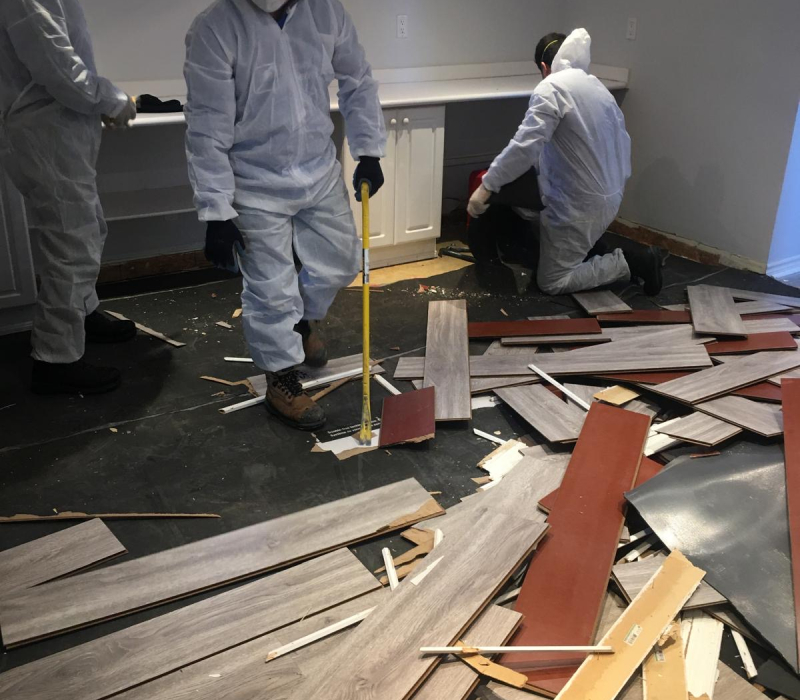
- Selective demolition of materials that cannot dry in place
- Antimicrobial application on remaining surfaces when appropriate
- Monitoring until moisture readings support stopping equipment
Remediation is the science-and-process layer between “the puddle is gone” and “the structure is actually dry.”
Why Water Remediation Is Important
Surface-dry is not the same as remediated. Materials can feel dry while cavities, insulation, and dense substrates still hold moisture.
Professional water remediation helps:
- Find moisture that visual inspection misses
- Dry structural materials under controlled conditions
- Reduce secondary damage from lingering dampness
- Decide when demolition is required for remediation to succeed
- Limit cross-contamination during invasive drying work
- Document drying progress with readings rather than guesses
- Create conditions where later repairs are less likely to fail
Without remediation, finishes may be replaced over still-wet assemblies.
Common Causes That Require Remediation
Remediation is needed when water has entered materials, not only when it is standing on a floor.
Typical causes include:
- Pipe failures that wet wall cavities and subfloors
- Overflows that wicked into drywall and trim
- Appliance leaks that soaked adjacent assemblies
- Ceiling wetting from above that loaded insulation
- Finished-space seepage into wall bases
- Water under flooring systems
- Delayed response after a leak, leaving bound moisture in materials
The longer water stays in an assembly, the more remediation depends on mapping and equipment rather than towels.
Signs You Need Technical Water Remediation
You may need remediation when:
- A leak was extracted but materials still read or feel damp
- Humidity stays high in the affected zone
- Wall bases, subfloors, or ceilings were wet
- Insulation was in the wetting path
- Odor continues after visible water is gone
- Previous drying was done with household fans only
- You need to know whether demolition is required
- Finishes failed after an earlier “it dried” attempt
If moisture may still be in the assembly, remediation is the process that answers that question with measurements and a drying plan.
Industry-Standard Remediation Concepts
Professional water remediation follows widely used industry practices for drying and moisture control. These concepts are used across the restoration field; they describe method, not a specific certification claim.
Core ideas include:
- Remove liquid water before relying on evaporation
- Move air across wet materials to speed evaporation
- Dehumidify so evaporated moisture leaves the space
- Measure materials, not only room air
- Open assemblies when they cannot dry closed
- Control contamination when demolition or dirty water is involved
Plumber On Demand applies these industry-standard principles to the actual building in front of us.
Why DIY Drying Is Not Remediation
A box fan pointed at a wet wall is not a remediation plan.
DIY drying may:
- Evaporate water into a closed room until humidity stalls drying
- Miss wet cavities entirely
- Spread contaminated dust if materials are opened casually
- Run heat in ways that warp finishes
- Stop when the surface looks dry
- Leave insulation wet against framing
- Skip containment during demolition
Remediation uses equipment and measurements together. Equipment without mapping, or mapping without a drying system, is incomplete.
Our Water Remediation Process
A typical remediation process follows measured steps.
• 1. Initial Moisture Mapping
We identify wet materials, likely cavities, and the footprint of remaining moisture.
• 2. Category and Safety Review
We consider contamination and whether containment or personal-protection practices are needed before invasive work.
• 3. Extraction of Remaining Liquid Water
Liquid water is removed so dehumidification is not wasted on standing moisture.
• 4. Containment When Required
If demolition or contaminated materials are involved, work zones may be isolated to reduce spread.
• 5. Directed Demolition for Drying
Unrestorable wet materials—often pad, wet drywall, or soaked insulation—are removed because they block remediation.
• 6. Air Movement and Dehumidification
Air movers and dehumidifiers are placed to evaporate moisture and remove it from the air.
• 7. Antimicrobial Treatment When Appropriate
Remaining structural surfaces may be treated as part of a controlled remediation plan, not as a substitute for drying.
• 8. Monitoring Until Goals Are Met
Moisture readings are checked so equipment is not pulled too early or left without purpose.
Moisture Mapping
Moisture mapping is how remediation stays technical instead of visual.
Mapping may involve:
- Checking floors, walls, and ceilings beyond the stain
- Comparing affected materials to dry unaffected materials
- Identifying wicking up wall cavities
- Finding moisture under flooring edges and transitions
- Re-mapping as drying progresses
A map at day one and a map later in the process should tell a drying story. If readings do not move, the plan—equipment, openings, or demolition—needs adjustment.
Air Movers, Dehumidifiers, and Drying Systems
Remediation equipment is selected for the materials and the space.
• Air Movers
Promote evaporation from wet surfaces. Placement matters; random fans are not a system.
• Dehumidifiers
Pull moisture from air so evaporation can continue. Without dehumidification, a closed wet room can stay humid and stall.
• Specialty Drying
Some assemblies need directed drying into cavities or under floors rather than room-only airflow.
Equipment is a tool. Remediation is the plan that tells that equipment where to work and when it has finished.
When Demolition Is Part of Remediation
Demolition during water remediation is not remodeling. It is opening or removing materials so drying can succeed.
Demolition may be required when:
- Wet drywall traps moisture in cavities
- Insulation holds water against framing
- Pad and underlayment block subfloor drying
- Materials are contaminated and should not dry in place
- Closed assemblies show moisture that will not release
The purpose is remediation: get moisture out of the building. Finish restoration comes after the assembly is actually dry.
Containment During Remediation
Containment is used when the work could spread dust, debris, or contamination.
Containment may include:
- Isolated work zones
- Controlled access
- Protection of unaffected rooms
- Dust and aerosol control during demolition
Not every clean-water drying job needs full containment. Dirty water, demolition, and occupied buildings often do. Remediation planning matches containment to the risk.
Residential Water Remediation
In homes, remediation often focuses on wall bases, subfloors, bathrooms, kitchens, and finished basements.
Residential remediation typically addresses:
- Wet drywall and insulation after plumbing failures
- Moisture under living-area floors
- Humidity control in occupied houses
- Equipment placement that still allows partial occupancy when safe
- Clear communication about readings and next steps
Homeowners benefit from a process that explains why equipment is running and when it can come out.
Commercial Water Remediation
Commercial remediation must work around operations, larger assemblies, and shared systems.
Commercial considerations include:
- After-hours equipment operation
- Moisture in large floor plates and concealed ceilings
- Containment in occupied tenant spaces
- Documentation of readings for managers and insurers
- Minimizing disruption while still drying correctly
Offices, retail, restaurants, warehouses, multi-unit buildings, and service facilities all need technical remediation when water has entered building materials.
Save vs. Replace as a Remediation Decision
In remediation, save-versus-replace is a drying decision.
More likely to dry in place:
- Sound structural wood that can be accessed with air and dehumidification
- Some hard surfaces after liquid water is removed
- Limited wetting of dense materials with a workable drying plan
More likely to remove as part of remediation:
- Wet insulation
- Swollen drywall that blocks cavities
- Carpet pad after significant wetting
- Contaminated porous materials
- Assemblies that will not release moisture closed
Removing a material can be the remediation method that saves the structure behind it.
What Water Remediation Costs
Remediation cost follows how much moisture is in the building and how hard it is to remove.
Cost drivers include:
- Area and depth of wetting
- Number of days of equipment and monitoring
- Whether demolition is required
- Containment needs
- Material types (carpet, hardwood, plaster, concrete, cavities)
- Access and occupancy constraints
- After-hours commercial work
A small, accessible wetting costs less to remediate than a multi-cavity loss that needs openings, equipment, and several monitoring visits.
Insurance and Water Remediation
Insurers often look for a documented drying process after a covered water loss.
Useful documentation includes:
- Moisture maps and progress notes
- Equipment used and duration
- Photos of openings made for drying
- Distinguishing remediation from later finish repairs
Plumber On Demand can describe the remediation process performed. Coverage remains with your policy and carrier.
Preventing Moisture From Returning After Remediation
Remediation fails if the source is still active.
Prevention includes:
- Repairing the leak or plumbing failure
- Controlling indoor humidity after equipment is removed
- Not closing walls until readings support it
- Addressing condensate and drainage issues
- Leak detection at high-risk appliances
Remediation dries this event. Source control keeps the next one from starting.
Why Choose Plumber On Demand for Water Remediation
Technical drying should be planned, measured, and explained.
When you choose Plumber On Demand, you benefit from:
• Process-Driven Drying
Mapping, equipment, monitoring, and openings are treated as one system.
• Industry-Standard Methods
We follow widely used drying and moisture-control practices.
• Honest Demolition Decisions
We open what must be opened for remediation to work.
• Clear Monitoring Communication
You understand why equipment is in place and what readings are doing.
• Residential and Commercial Support
We work with homeowners, landlords, property managers, and business owners.
Psychrometry in Plain Language
Drying depends on the relationship between wet materials, air temperature, and humidity.
In practical terms:
- Wet materials release moisture into air
- If air is already humid, drying slows or stops
- Dehumidification lowers humidity so evaporation can continue
- Air movement helps moisture leave the material surface
You do not need a lab to benefit from this. You need a remediation plan that uses it instead of hoping a fan is enough.
Antimicrobial Use in Water Remediation
Antimicrobial products are sometimes used on remaining structural surfaces after cleaning and as part of a controlled plan.
They are not:
- A replacement for drying
- A reason to leave wet porous materials in place
- A guarantee against later mold if moisture returns
Used correctly, they are one tool in remediation. Used instead of moisture removal, they are a shortcut.
Areas We Serve
Plumber On Demand provides water remediation services for residential and commercial properties across a wide range of communities.
We work with:
- Homeowners
- Property managers
- Landlords
- Contractors
- Business owners
- Facility managers
- Real estate professionals
If moisture remains in materials after a water event, we can help plan technical remediation.
The Importance of Measuring Before Closing Up
Closing a wall because the surface looks dry is a common failure.
Measured remediation helps:
- Avoid trapping moisture
- Reduce later mold in cavities
- Protect new finishes
- Provide a clearer end point for equipment
If you cannot show that materials have dried, remediation is not finished.
Schedule Water Remediation Today
If a water event left moisture in walls, floors, or cavities, Plumber On Demand is ready to help with technical remediation.
Our water remediation services focus on moisture mapping, drying systems, containment when needed, and demolition when materials cannot dry in place.
Contact Plumber On Demand today at 905-220-5006 to schedule water remediation.
Equipment Placement in Occupied Buildings
Remediation equipment is loud and needs power and clearance.
Planning includes:
- Pathways that still allow safe occupancy when appropriate
- Protecting contents from airflow
- Avoiding electrical overloads
- Placing dehumidifiers where they can actually condition the wet zone
Good remediation is effective and livable enough for the situation—not equipment scattered without a plan.
Concrete, Hardwood, and Dense Materials
Some materials hold moisture longer and dry differently than drywall.
Dense-material remediation may require:
- Longer equipment run times
- Different humidity targets
- Patience based on readings, not calendar guesses
- Care to avoid finish damage from overly aggressive heat
This is why remediation is technical. Material type changes the drying system.
Stopping Equipment at the Right Time
Pulling equipment too early leaves moisture in materials. Leaving it too long wastes time and can over-dry finishes.
The right stop point is based on:
- Moisture readings compared with unaffected materials
- Humidity in the affected zone
- Whether cavities that were opened have released moisture
- Visual checks that demolition openings are ready to close later
Remediation ends when measurements support it—not when the calendar feels long enough.
Frequently Asked Questions About Water Remediation
• Is remediation the same as mopping up water?
No. Remediation is the technical drying and moisture-control process after liquid water is addressed.
• Why do you need dehumidifiers if you already have fans?
Fans evaporate moisture into the air. Dehumidifiers remove that moisture so drying can continue.
• What is moisture mapping?
It is locating remaining moisture in materials and tracking it as drying proceeds, rather than judging by appearance.
• Will you have to tear out drywall?
Sometimes. If cavities cannot dry closed, or materials cannot be remediated in place, demolition is part of remediation.
• How long does remediation take?
It depends on material type, how wet the assembly is, and how quickly readings move. Monitoring determines the end point.
• Do you use antimicrobial treatments?
When appropriate, as part of a controlled plan—not as a substitute for drying or removal.
• Can I stay in the building during remediation?
Often yes, depending on scope, contamination, and equipment. We provide guidance for your situation.
• What if a previous crew already ran fans?
If moisture remains in materials, remediation may still be needed. Mapping shows whether drying actually occurred.
• Does insurance cover water remediation?
Documented drying after a covered loss is often part of a claim, subject to your policy. Ask your carrier what they need.
• Is this the same as mold remediation?
Water remediation dries and controls moisture in materials. If mold is already present, additional controlled work may be required.
• Do you remediate commercial properties?
Yes. Commercial jobs often need containment, after-hours equipment, and documented readings.
• How do I get started?
Call Plumber On Demand at 905-220-5006 to discuss moisture in your building and schedule remediation.
Contact Plumber On Demand Today
Water remediation is the technical process that makes a wet building actually dry: mapping moisture, running a drying system, containing work when needed, and opening materials that cannot dry in place.
Plumber On Demand provides water remediation services for residential and commercial clients.
If you need professional drying and moisture control after a water event, contact Plumber On Demand today.
📞 Call 905-220-5006
Speak with our team about your situation, request an assessment, and learn how our water remediation services can help dry building materials using industry-standard process and measurement.