
Water Damage Cheltenham
 (459)
(459)
(459)

Professional Water Damage Response | Plumber On Demand
Understanding Water Damage as a Building Problem—and How We Help You Respond
Water damage is the condition a property is in after water has contacted building materials, contents, or systems. It is not the same as “a puddle on the floor.” Water can travel through assemblies, change category as it picks up contaminants, and cause secondary damage—swelling, staining, mold, and electrical issues—after the original leak looks like it has stopped.
At Plumber On Demand, we help property owners understand the water damage they are dealing with and respond with a practical plan. We assess how water moved, what category and class appear present, what is at risk next, and what should happen to stabilize the property.
If you are dealing with water damage after a leak, overflow, backup, or indoor flooding, call Plumber On Demand today at 905-220-5006.
What Water Damage Is
Water damage is the harm and change that occur when water contacts a building and its contents. It includes immediate wetting and the secondary effects that follow if moisture remains.
Water damage can involve:
- Wet or swollen wood, drywall, and flooring
- Staining, buckling, and delamination of finishes
- Contents that absorbed water
- Concealed moisture in cavities and under floors
- Electrical and mechanical components that got wet
- Conditions that support mold growth if materials stay damp
- Odors from wet building materials and contents
Understanding water damage as a phenomenon—how water behaves, how it is categorized, and how it progresses—helps you choose the right response.
Why Understanding Water Damage Matters
Two properties can both be “wet” and still need very different responses.
Knowing the nature of the water damage helps:
- Set safety priorities (electrical, contamination, structural softness)
- Decide whether materials can dry or must be removed
- Anticipate secondary damage before it appears
- Communicate clearly with insurers and contractors
- Avoid under-reacting to hidden moisture
Water damage is a building and safety problem, not only a cleaning task. We start by characterizing the damage, then recommending work that matches it.
Categories of Water: Clean, Gray, and Black
Industry practice commonly describes water by contamination category. Appearance alone does not always tell the full story, because clean water can become dirtier as it travels.
• Clean Water (Category 1)
Water from sanitary sources such as supply lines, sinks, tubs, and some appliance lines. It starts relatively clean but can pick up soil, insulation, and bacteria as it moves through the building.
• Gray Water (Category 2)
Water with significant contamination, such as washing-machine discharge, dishwasher overflow, or water that has been standing and degrading. It requires more careful handling than clean supply water.
• Black Water (Category 3)
Grossly contaminated water, including sewage backups, flooding that has passed through soil or drains, and water contaminated with waste. This category requires stricter safety practices and typically more removal of porous materials.
Category can change over time. Clean water that sits, mixes with contents, or contacts unsanitary surfaces may need to be treated as a higher category.
Classes of Water Damage
Separate from category (how dirty the water is), class describes how much water is present and how absorbent the wet materials are. This affects drying difficulty and how far damage may spread.
Class considerations often include:
- How much water was introduced
- Whether wetting is limited to a small area or widespread
- How absorbent the wet materials are (carpet and pad vs. hard surfaces)
- Whether water is bound in dense materials such as plaster, hardwood, or concrete
- Whether cavities, insulation, and wall systems are involved
A small, clean puddle on tile is a different class of problem than the same volume soaked into carpet, pad, and wall cavities. Class helps explain why two similar-looking events can take very different effort to stabilize.
How Water Travels Through a Building
Water does not stay where it landed. Gravity, capillary action, and building pathways move it.
Common travel paths include:
- Under doors into hallways and adjacent rooms
- Along subfloors and into lower levels
- Into wall cavities through base plates and penetrations
- Behind cabinets, tub surrounds, and built-ins
- Into insulation, where it is held against framing
- Across finished ceilings from an upstairs leak
- Under floating floors and into pad and underlayment
Water also wicks upward into drywall and trim even when the puddle looks like it is only on the floor. The visible “edge of the wet spot” is often smaller than the true damage.
Secondary Damage: What Happens After the Leak
The first damage is wetting. Secondary damage is what follows if moisture remains.
Secondary damage commonly includes:
- Swelling of wood flooring, doors, and trim
- Drywall softening, staining, and crumbling at the base
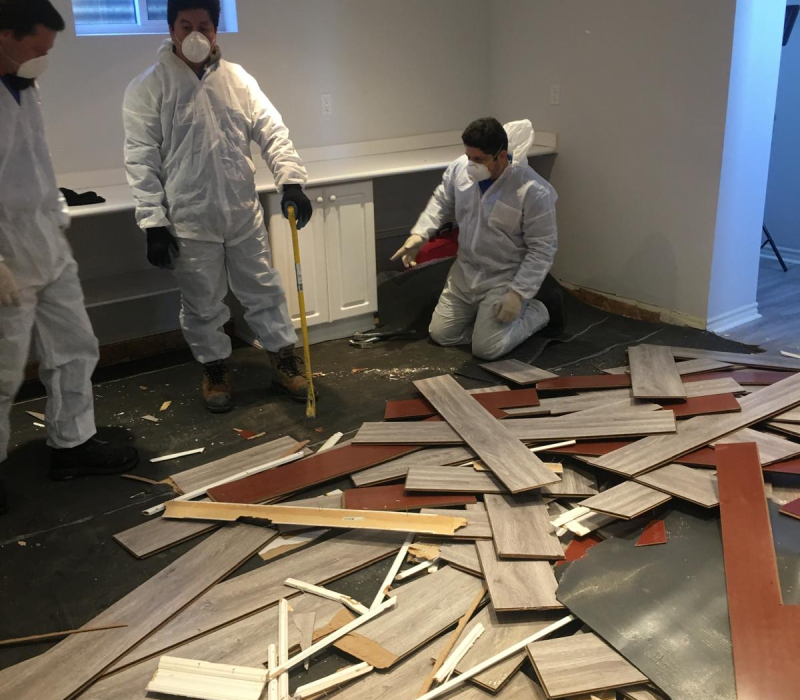
- Delamination of laminate, engineered flooring, and cabinetry
- Electrical hazards from wet outlets, fixtures, and appliances
- Musty odor as organic materials stay damp
- Mold growth on and inside wet building materials
- Finish failure such as peeling paint and bubbling surfaces
Secondary damage often costs more than the original leak because more materials must be repaired or replaced. Hours of standing moisture are different from days.
Common Causes of Water Damage
Water damage can start from plumbing, weather, appliances, or building envelope failures.
Typical causes include:
- Burst or frozen pipes
- Failed supply lines and fixture connections
- Overflowing fixtures
- Appliance failures (washers, dishwashers, water heaters, ice makers)
- Drain and sewer backups
- Roof, window, and flashing leaks that wet interiors
- Foundation seepage into finished spaces
- HVAC condensate overflows
- Sprinkler discharges
- Slow leaks that wet cavities long before anyone sees a stain
The cause matters for stopping the source and for understanding category. A supply-line burst and a sewage backup are both water damage, but they are not the same condition.
Signs of Water Damage
Water damage is not always a visible puddle.
Warning signs include:
- Stains on ceilings, walls, or flooring
- Soft, spongy, or swollen materials
- Buckling, cupping, or lifting floors
- Doors and drawers that suddenly stick
- Peeling paint, bubbling drywall, or warped baseboards
- Musty or sour odor without an obvious spill
- Corrosion or mineral deposits near plumbing
- Tripped breakers or outlets that were in a wet area
- Contents that feel damp, stained, or collapsed
- Recurring dampness in the same location after “it dried”
If you see signs of water damage without knowing the path water took, an assessment helps characterize the problem.
Electrical, Structural, and Occupant Safety
Water damage is a safety condition as well as a materials condition.
Safety concerns may include:
- Wet outlets, switches, and junction boxes
- Appliances that were sitting in water
- Slippery floors and collapsed ceiling materials
- Soft floors or ceilings that may not be structurally reliable
- Contaminated water from backups
- Hidden moisture in electrical chases
If electrical components got wet, treat them as a hazard until evaluated. Avoid using wet outlets and appliances.
Why DIY Assessment of Water Damage Is Risky
Homeowners often judge water damage by what they can see. That misses how water actually behaves.
DIY assessment may:
- Underestimate travel into cavities and under floors
- Treat black or gray water as a simple mop job
- Run household fans that spread contaminated droplets
- Energize wet electrical devices
- Assume a room is fine because the surface looks dry
- Miss secondary swelling that appears days later
- Discard or keep the wrong contents because category was ignored
A professional look at category, class, travel paths, and secondary-risk timing is more reliable than a visual guess.
How Plumber On Demand Responds to Water Damage
Our response starts with characterizing the damage, then acting on what the building actually needs.
• 1. Safety and Source Review
We consider electrical concerns, contamination, and whether the water source is stopped.
• 2. Event History
We review what happened, when it started, and how long materials have been wet. Time changes both category and secondary risk.
• 3. Mapping How Water Traveled
We look beyond the obvious wet spot to rooms, cavities, and lower levels water may have reached.
• 4. Category and Class Characterization
We describe how dirty the water appears to be and how extensive and absorbent the wetting is.
• 5. Identifying Secondary-Damage Risks
We note swelling, electrical exposure, mold risk, and finishes that may fail if moisture remains.
• 6. Stabilization Recommendations
Depending on conditions, next steps may include extraction, drying, material removal, or further cleanup and restoration.
• 7. Documentation of Affected Areas
You receive a clearer picture of what is damaged now versus what is at risk if moisture remains.
• 8. A Practical Path Forward
We explain options in plain language so you can decide on cleanup, drying, repairs, and insurance documentation.
Hidden Water Damage
Some of the most expensive water damage is the damage you cannot see yet.
Hidden damage often occurs:
- Inside exterior walls after slow plumbing leaks
- Under floating floors and sheet goods
- In ceiling cavities after upstairs fixture failures
- Behind tub surrounds and kitchen cabinets
- In insulation after roof or pipe leaks
- Under finished basement walls after seepage
Clues include persistent odor, repeated staining, and finishes that fail in the same place. Hidden damage usually requires moisture evaluation, not only a look at the stain.
Residential Water Damage
In homes, water damage often affects both living space and the assemblies behind it.
Common residential damage patterns include:
- Supply-line failures that wet kitchens and baths, then travel into hallways
- Finished-basement wetting from seepage or plumbing
- Attic and ceiling damage from roof or upstairs plumbing leaks
- Flooring systems that cup or delaminate after a single event
- Closets and bedrooms wetted by bathroom overflows
Homeowners benefit from knowing whether they have a surface event or a cavity-and-assembly problem.
Commercial Water Damage
In commercial buildings, water damage can interrupt operations even when the wet area looks small.
Commercial considerations include:
- Multi-tenant pathways and shared chases
- Inventory and records exposure
- Public-area slip risk
- After-hours events that sit undiscovered
- Larger floor plates and concealed ceilings
- Coordination among owners, tenants, and managers
Offices, retail, restaurants, warehouses, multi-unit buildings, and service facilities all experience water damage as a building condition that needs characterization first.
Save vs. Replace When Water Damage Is Present
Save-versus-replace decisions should follow category, class, material type, and time wet—not guesswork.
More often salvageable:
- Hard, non-porous materials wetted by clean water for a short time
- Structural wood that can be dried and remains sound
- Some hard flooring if drying starts promptly and swelling is limited
More often replaced:
- Porous materials wetted by black water
- Carpet pad after significant wetting
- Drywall that is swollen, crumbled, or contaminated
- Insulation that has held dirty or prolonged moisture
- Finishes that have already delaminated or cupped beyond use
Plumber On Demand helps you match the decision to the damage instead of treating every wet material the same.
What Water Damage Response Can Cost
Cost follows the nature of the damage more than the headline.
Cost drivers include:
- Category of water (clean vs. gray vs. black)
- How large an area is wet and how absorbent the materials are
- Whether cavities, insulation, and subfloors are involved
- How long materials have been wet (secondary damage)
- Access, occupancy, and after-hours constraints
- How much material must later be cleaned or replaced
A fast, clean, contained event costs less to stabilize than delayed, contaminated, or hidden damage.
Insurance and Water Damage
Insurers typically evaluate water damage based on cause: sudden vs. long-term seepage, weather vs. plumbing, backup endorsements, and similar policy terms.
Helpful documentation includes:
- When the event was discovered
- The likely source
- Photos of affected rooms and materials
- Notes on category concerns (for example, sewage vs. supply water)
- A description of travel paths and secondary effects
Plumber On Demand can describe the condition of the property. Coverage stays with your insurer.
Preventing Water Damage
You cannot prevent every failure, but you can reduce how often water damage occurs and how far it spreads.
Prevention often includes:
- Replacing aging supply hoses and washing-machine connectors
- Knowing shutoff locations
- Leak alarms near water heaters, laundry, and sinks
- Maintaining drains to reduce backup risk
- Addressing slow drips before they wet cavities
- Seasonal checks on exposed piping
- Keeping storage off floors in leak-prone rooms so damage is visible sooner
Prevention also means responding quickly, because secondary damage is often the expensive part.
Why Choose Plumber On Demand for Water Damage
Water damage is easier to handle when the condition is explained clearly.
When you choose Plumber On Demand, you benefit from:
• Condition-First Assessment
We characterize category, travel, and secondary risk instead of a generic “flood” script.
• Plumbing-Aware Insight
Many events start with plumbing. We understand fixtures, lines, drains, and how failures wet a building.
• Safety Awareness
We consider electrical, contamination, and occupant concerns as part of the damage picture.
• Plain-Language Planning
You get a clear explanation of what is damaged, what may be next, and what options you have.
• Residential and Commercial Support
We work with homeowners, landlords, property managers, and business owners.
A Simple Timeline of Water Damage Progression
While every building is different, a useful way to think about water damage is by time.
• Immediate
Water is present. Slip, electrical, and contamination hazards are highest.
• Hours
Materials absorb. Clean water may pick up soil. Swelling can begin. Hidden migration continues.
• Days
Secondary damage becomes obvious: odor, staining, cupping, and a rising mold risk on wet organic materials.
• Longer term
Unresolved moisture can mean persistent odor, mold, finish failure, and damage that looks unrelated to the original leak.
This timeline is why “it looks a little wet” is not a complete description of the problem.
Water Damage in Wall and Floor Assemblies
Finished surfaces hide assemblies. Water damage in those assemblies is different from a wet top layer.
Assembly concerns include:
- Wet insulation against framing
- Base-plate wetting that wicked into drywall
- Subfloor saturation under finished floors
- Ceiling cavities wet from above
- Vapor and humidity remaining after the visible leak stops
If the assembly is wet, drying or opening it may be required even when the paint still looks intact.
Mold and Water Damage
Mold is a secondary effect of water damage when organic materials stay damp. It is not automatic in every wet room, and it is not the whole story of water damage.
What matters:
- How long materials stayed wet
- Whether cavities held moisture
- Indoor humidity after the event
- Material type (paper-faced drywall vs. non-porous surfaces)
Addressing water damage promptly is one of the most practical ways to reduce later mold problems. If mold is already present, that becomes part of the condition to plan for.
Areas We Serve
Plumber On Demand provides water damage assessment and response for residential and commercial properties across a wide range of communities.
We work with:
- Homeowners
- Property managers
- Landlords
- Contractors
- Business owners
- Facility managers
- Real estate professionals
If you need help understanding the water damage in your building—not only mopping a puddle—we can help characterize the problem and plan next steps.
Schedule a Water Damage Assessment Today
If your property has stains, swelling, odor, wet materials, or a recent leak, Plumber On Demand is ready to help you understand the water damage and respond.
Our approach focuses on the condition itself: category, class, travel, secondary risk, and a practical plan.
Contact Plumber On Demand today at 905-220-5006 to schedule a water damage assessment.
Water Damage During Property Transactions and Renovations
Water damage sometimes appears during inspections, flooring replacement, or opening walls for plumbing work.
Professional characterization can help separate old staining from active moisture, identify whether a problem is historic or ongoing, and avoid covering wet assemblies during a remodel.
When “It Dried” Still Means Water Damage
A room can look dry and still have water damage:
- Cupped floors that dried in a distorted shape
- Stains that remain after moisture is gone
- Cavities that stayed wet while the surface dried
- Electrical devices that were wet even if they now “work”
- Odors from materials that were wet too long
Water damage is the condition of the materials and systems, not only whether a puddle is present today.
Frequently Asked Questions About Water Damage
• Is all water damage the same?
No. Clean, gray, and black water are different categories, and class (how much wetting and how absorbent the materials are) also changes the problem.
• Can clean water become dirty after it sits?
Yes. Water can pick up contaminants from soil, contents, and materials, and standing water can degrade in category over time.
• How does water get into walls if I only see a floor puddle?
Water wicks into drywall and travels along plates, penetrations, and cavities. The visible edge is often smaller than the true wetting.
• What is secondary water damage?
Swelling, staining, mold, odor, electrical issues, and finish failure that develop after the original wetting if moisture remains.
• Is a stain on the ceiling water damage?
A stain is a sign. Damage may include wet cavities, insulation, and drywall above, even if the room below looks dry.
• Should I turn on fans right away?
Uncontrolled airflow can spread contaminated water. Consider safety and category first.
• When does water damage become a mold problem?
Mold risk rises when organic materials stay damp. Time, material type, and hidden moisture all matter.
• Can water damage affect electrical systems?
Yes. Wet outlets, fixtures, and appliances should be treated as a safety concern until evaluated.
• Does insurance cover water damage?
Coverage depends on cause and policy language. Sudden plumbing failures are often reviewed differently than long-term seepage or backups.
• How do I know if damage is hidden?
Odor, repeated stains, soft materials, and moisture in adjacent rooms are clues. Moisture evaluation beats a visual guess.
• Is a slow leak still water damage?
Yes. Slow leaks often create cavity damage more extensive than a sudden puddle of the same volume.
• How do I get started?
Call Plumber On Demand at 905-220-5006 to describe what you are seeing and schedule an assessment.
Contact Plumber On Demand Today
Water damage is the condition of your building after water has been there—how dirty it is, how far it traveled, and what it will do next if moisture remains.
Plumber On Demand provides water damage assessment and response for residential and commercial clients.
If you need help characterizing water damage, contact Plumber On Demand today.
📞 Call 905-220-5006
Speak with our team, request an assessment, and learn how we can help you understand water damage and respond before secondary problems take over.