
Flood Restoration Cheltenham
 (459)
(459)
(459)

Professional Flood Restoration Services | Plumber On Demand
Rebuilding Drywall, Flooring, Trim, and Finishes After Flood Drying
Flood restoration is the rebuild. It puts a property back together after water is removed, residue cleaned, and materials dried. Restoration is new drywall, flooring, trim, and paint—not mopping or running dehumidifiers.
At Plumber On Demand, we provide flood restoration for homes and commercial properties that are ready to be reconstructed. We confirm drying is complete, replace materials that cannot stay, and rebuild finishes in the right order.
If your home or building needs to be put back together after a flood, contact Plumber On Demand today at 905-220-5006 to schedule a restoration assessment.
What Flood Restoration Means
Flood restoration means reconstructing the building finishes that flooding destroyed or that had to be removed during mitigation. Once wet materials are gone and remaining structure is dry, restoration returns walls, floors, and trim to usable condition.
Flood restoration commonly includes:
- Replacement of removed drywall and insulation
- Subfloor repairs or replacement where water damage remains
- New flooring after carpet, vinyl, laminate, or hardwood loss
- Baseboards, casing, and other trim
- Doors, jambs, and some cabinetry
- Texture, primer, and paint
- Final detailing so rooms can be occupied again
Restoration assumes a prior sequence: stop the water, extract, clean, dry, then rebuild. Starting restoration while materials are still wet traps moisture and leads to failed finishes.
Flood Restoration vs. Flood Cleanup
This difference is the point of restoration as a service.
• Flood Cleanup
Cleanup removes what the flood left behind:
- Standing water support and wet debris
- Silt, mud, and contaminated contents
- Surface cleaning and sanitizing
- Decisions about what belongings to discard
Cleanup makes the space sanitary and workable. It does not put walls and floors back.
• Flood Restoration
Restoration rebuilds what cleanup and drying took out or proved unsalvageable:
- Hanging and finishing drywall
- Installing flooring
- Replacing trim and paint
- Restoring the room as a finished space
A property can be cleaned and still look gutted. That is not a failed cleanup. That is a property waiting for restoration. Mixing the two jobs causes confusion: people expect a rebuilt kitchen on a cleanup invoice, or they paint over damp drywall and call it restored.
Plumber On Demand treats restoration as the reconstruction phase that follows drying—not as a synonym for “flood help.”
Why Flood Restoration Is Important
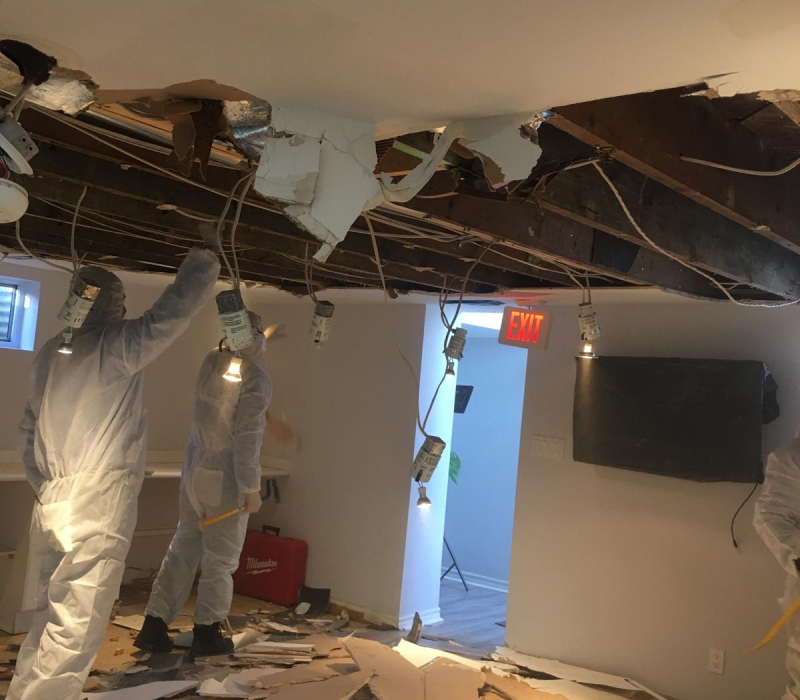
After a flood, an open wall cavity or missing floor is not a finished repair. Unfinished demolition leaves gaps, unsealed rooms, and a building that cannot be used as intended.
Timely flood restoration helps:
- Return rooms to occupancy
- Protect remaining structure once it is dry
- Close wall cavities so temperature and air control work again
- Restore flooring systems that are safe to walk on
- Complete the insurance and recovery process with a defined end point
- Prevent a “temporary gutted look” from becoming the long-term condition of the property
Restoration is how a flood event actually ends for the people who live or work in the building.
Common Causes of Flood Damage That Lead to Restoration
Restoration is needed when water has already forced removal of finishes. Typical originating events include:
- Burst pipes that soaked drywall and flooring
- Water heater failures that ruined adjacent finishes
- Appliance floods in kitchens and laundry rooms
- Drain backups that required removal of porous materials
- Basement flooding that destroyed lower-level finishes
- Ceiling leaks that collapsed drywall from above
The cause matters for prevention and insurance. The restoration scope is driven by what materials were removed or are too damaged to remain.
Signs Your Property Is Ready for Flood Restoration
Restoration should begin when mitigation is actually finished—not when the room merely looks less wet.
Common signs a rebuild can start:
- Moisture readings on remaining structure are in an acceptable range
- Wet drywall, insulation, and flooring that needed removal are already out
- Cleanup of silt and contaminated residue is complete
- The leak or flood source has been repaired
- You have a clear list of finishes to replace (walls, floors, trim, paint)
- Remaining framing, concrete, or subfloor is structurally sound
If walls are still damp, if odor remains from wet materials, or if the source is not fixed, restoration is premature. Rebuilding over moisture is one of the most expensive mistakes after a flood.
The Rebuild Sequence After a Flood
Restoration has an order. Skipping steps creates callbacks.
A typical rebuild sequence:
1. Confirm dryness and complete any remaining demolition
2. Repair or sister damaged framing if needed
3. Replace insulation in open cavities
4. Hang, tape, and finish drywall
5. Prime and paint walls and ceilings
6. Install flooring after moisture-sensitive substrates are ready
7. Reinstall baseboards, casing, doors, and finish carpentry
8. Complete punch-list items, fixtures, and final cleaning of construction dust
Flooring before drywall dust is controlled, or paint before moisture is verified, creates problems that look like “the flood coming back” when they are really sequence errors.
Why DIY Flood Restoration Is Risky
Some property owners hang a few sheets of drywall and consider the flood over. Incomplete restoration can hide remaining moisture, mismatch fire or insulation details, and fail as soon as humidity rises.
DIY restoration may:
- Close wall cavities before they are dry
- Omit insulation or vapor details that the original wall had
- Install flooring over a still-damp subfloor
- Paint over stained, swollen, or contaminated drywall that should have been replaced
- Leave no gap or transition details, causing new floors to fail
- Create insurance documentation gaps if rebuild work is informal
- Produce finish quality that shows every flood line and patch
Professional restoration treats the room as a system: structure, insulation, wall finish, floor, trim, and paint have to work together.
Our Flood Restoration Process
• 1. Restoration Readiness Review
We confirm that extraction, cleanup, and drying have done their job. Moisture conditions and remaining demolition needs are checked before new materials go in.
• 2. Scope of Finishes
We identify which walls, ceilings, floors, cabinets, and trim are part of the rebuild. The scope is based on damage and prior removal, not on cosmetic preference alone.
• 3. Structural and Substrate Repairs
If subfloors, plates, or framing were compromised, those repairs happen before finishes. New drywall cannot fix a swollen floor system.
• 4. Insulation and Drywall Replacement
Open cavities are insulated as specified, then drywall is installed, taped, and finished to match the surrounding surfaces as closely as practical.
• 5. Flooring Replacement
Flooring is selected and installed only when the substrate is ready. This may include vinyl, tile, carpet, engineered products, or other finishes appropriate to the room.
• 6. Trim, Doors, and Millwork
Baseboards, casing, and doors restore the edges of the room. This step is what makes a rebuilt space look complete rather than patched.
• 7. Painting and Finish Work
Primer and paint close the visual rebuild. Stain blocking and finish coats are planned around previous water staining where remaining surfaces were saved.
• 8. Walkthrough and Completion
You review completed rooms against the agreed scope. Restoration is done when the space is put back together—not when materials are merely delivered to the site.
Drywall, Flooring, and Trim: What Usually Gets Rebuilt
• Drywall
Flood-cut drywall is common when water wicked up from the floor or soaked a ceiling from above. Restoration replaces those sections, finishes joints, and blends texture. Saving stained, soft, or contaminated drywall is not restoration; it is delayed demolition.
• Flooring
Carpet and padding are frequently gone before restoration starts. Laminate, some hardwoods, and swollen underlayment often cannot return. Restoration installs a floor that belongs on a dry, sound substrate.
• Trim
Baseboards sit in the wettest zone of a floor-level flood. Even when walls are saved, trim is often replaced because it swelled, stained, or was removed for drying.
• Paint
Paint is the last visual step. Painting a gutted or still-damp room is not restoration. Paint belongs on finished, dry surfaces.
Flood Restoration for Residential Properties
Home restoration after a flood often involves the rooms people use every day:
- Finished basements
- Bathrooms and laundry rooms
- Kitchens after cabinet-base flooding
- Living areas with ruined flooring
- Bedrooms after ceiling collapses from above
Homeowners typically want the house to look like a home again, not a job site. Restoration planning includes matching adjacent finishes where possible and sequencing work so parts of the home can remain usable when the damage is localized.
Flood Restoration for Commercial Buildings
Commercial restoration has operational deadlines. A restaurant, office, retail floor, or warehouse office cannot stay in a demolished state indefinitely.
Commercial flood restoration may include:
- After-hours or phased rebuilds
- Flooring systems specified for traffic and sanitation
- Drywall and paint to match existing commercial finishes
- Coordination with occupancy and inspection needs
- Minimizing downtime for adjacent tenant or customer areas
We help business owners and facility managers treat restoration as a construction phase with a defined finish date, not an open-ended patch list.
Save vs. Replace During Restoration
Restoration is where remaining materials are either incorporated or removed.
• Often Saved
- Framing that dried sound
- Concrete slabs after cleanup and drying
- Some solid-wood trim if it did not distort
- Cabinets that never took on water in the carcass
- Drywall well above any flood cut, if clean and dry
• Often Replaced
- Flood-cut drywall and wet insulation
- Swollen subfloor panels
- Carpet, padding, and many floating floors
- Baseboards that sat in water
- Doors that delaminated or swelled shut
- Painted surfaces that still show contamination or odor after drying
The goal is a durable rebuild. Saving a stained, out-of-square component to “keep costs down” often shows in the finished room and fails sooner.
Flood Restoration Cost Factors
Restoration cost is a construction cost. It tracks materials, labor, and how many trades the rebuild requires.
Cost drivers include:
- How many rooms and wall-feet of drywall were removed
- Flooring type and square footage
- Trim, doors, and cabinet work
- Ceiling repairs vs. floor-level repairs only
- Finish matching (texture, paint sheen, flooring transitions)
- Access, occupied-building constraints, and phasing
- Whether structural repairs are needed before finishes
A single bathroom floor is a different restoration than a full lower level. Estimates should follow a readiness review so you are not pricing work that cannot start yet.
Insurance and Flood Restoration
Restoration is often the largest dollar part of a water-damage claim because it is the rebuild. Insurers typically distinguish mitigation (extract, dry, prevent further damage) from permanent repairs (restoration).
Useful practices include:
- Keeping mitigation separate from rebuild scopes in documentation
- Photographing open walls before they are closed
- Listing finishes to be replaced (drywall, flooring, trim, paint)
- Confirming the cause of loss with your carrier
- Not starting optional upgrades without clarity on what the policy covers
We do not decide coverage. We help document what must be rebuilt so you and your insurer are looking at the same rooms. Sudden plumbing discharges and weather-related flooding can be treated very differently depending on the policy.
Living in the Property During Restoration
Unlike emergency extraction, restoration is construction. Dust, noise, and room closures are part of the work.
Planning may include:
- Which rooms will be offline
- Dust control between living space and work zones
- Kitchen or bathroom access if those rooms are in scope
- Pet and occupant safety during finishing products and debris
- A realistic timeline so “a few days of drywall” is not confused with a full flooring replacement
If the flood was limited to a basement or a single wing, occupants can often remain. If finishes are being rebuilt in primary living spaces, temporary disruption should be expected and planned.
Prevention After Restoration
A beautiful rebuild does not protect against the next flood if the original failure remains.
After restoration, prevention may include:
- Confirming the pipe, appliance, or drainage repair is complete
- Water heater replacement if the tank caused the loss
- Supply-line and washing machine hose upgrades
- Better shutoff access
- Flooring and base details that are more resilient in flood-prone rooms, when that is part of the agreed scope
Restoration closes the walls. Prevention keeps the next event from opening them again.
Benefits of Hiring Plumber On Demand for Flood Restoration
Property owners need a restoration plan that respects the difference between cleaning a flood and rebuilding a room.
When you choose Plumber On Demand, you benefit from:
• Rebuild-Focused Scope
Drywall, flooring, trim, and paint are planned as construction—not as leftover cleanup.
• Readiness Checks
We do not hang new finishes on wet structure.
• Clear Sequencing
Insulation, walls, floors, and trim happen in an order that lasts.
• Straightforward Communication
You know what is being replaced, what is being saved, and when rooms should be usable again.
• Residential and Commercial Support
We work with homeowners, landlords, property managers, and business owners.
Matching Finishes After a Flood
One restoration challenge is blending new work with undamaged rooms.
Matching may involve:
- Drywall texture
- Paint color and sheen
- Flooring transitions at doorways
- Baseboard profiles
- Cabinet finishes if only some boxes were lost
Perfect factory matches are not always available for discontinued products. Restoration planning should say so early, so you can choose “match as close as possible,” replace a larger area for consistency, or select a new finish for the rebuilt zone.
Ceilings vs. Floors in Flood Restoration
Not every flood starts on the floor. A burst pipe in a ceiling or an upstairs bath can destroy the room below.
Ceiling restoration may include:
- Drywall replacement overhead
- Insulation in floor/ceiling cavities
- Light fixture and register reinstallation after finishes
- Paint of the entire ceiling plane so patches do not telegraph
Floor-level floods more often drive baseboard, lower drywall, and flooring replacement. The restoration plan should follow where water actually traveled—including downward through ceilings.
Areas We Serve
Plumber On Demand provides flood restoration services for residential and commercial properties across a wide range of communities.
We work with:
- Homeowners
- Property managers
- Landlords
- Contractors
- Business owners
- Facility managers
- Real estate professionals
The Importance of Finishing the Rebuild
A dried, empty room is only halfway recovered. Until walls, floors, and trim are restored, the property remains damaged.
Completing restoration helps:
- Restore occupancy and function
- Protect the dried structure
- Close insurance and contractor scopes with a defined end
- Return the building to a condition people can live or work in
If cleanup and drying are done, the next professional step is restoration—not another round of fans.
Schedule Flood Restoration Today
If your property has been dried after a flood and now needs drywall, flooring, trim, and paint put back, Plumber On Demand is ready to help.
Our flood restoration services focus on rebuilding finishes after mitigation is complete so the home or building is whole again.
Contact Plumber On Demand today at 905-220-5006 to schedule a flood restoration assessment.
Cabinets, Doors, and Built-Ins After Flooding
Lower cabinets, vanity bases, and hollow-core doors often fail even when wall framing survives. Particleboard swells. Veneers lift. Doors rub and will not latch.
Restoration decisions for millwork include:
- Replacing only water-touched boxes vs. entire runs for appearance
- New doors and jambs when swelling is permanent
- Hardware reuse when it is undamaged
- Countertop support after cabinet bases are replaced
This is rebuild work. It is not solved by wiping cabinets that have already lost their structure.
Why Homeowners Trust Plumber On Demand
After a flood, people are tired of demolition. They want the house put back together correctly.
Clients choose Plumber On Demand because we offer:
• A Clear Definition of Restoration
Rebuild after drying—not another word for cleanup.
• Practical Finish Planning
We explain what has to be replaced and what can remain.
• Reliable Communication
You get sequence, scope, and completion criteria in plain language.
Frequently Asked Questions About Flood Restoration
• How is flood restoration different from flood cleanup?
Cleanup removes water, silt, contents, and contamination. Restoration rebuilds drywall, flooring, trim, and paint after the property is dry.
• Can restoration start while the house is still drying?
New finishes should not close over wet materials. Restoration starts when remaining structure is ready.
• Do you always replace drywall after a flood?
Only the drywall that was removed or is too damaged to remain. Drywall above a proper flood cut may stay if it is clean and dry.
• What flooring is typically restored?
Whatever was lost or unsalvageable—often carpet, padding, laminate, or damaged wood—installed on a sound, dry substrate.
• How long does flood restoration take?
Timelines depend on drywall finishing, flooring lead times, number of rooms, and whether occupants must remain in the building.
• Can I live at home during restoration?
Often yes if damage is localized. Primary kitchen, bath, or whole-level rebuilds may require more disruption.
• Will the new walls match the old ones?
We blend texture and paint as closely as practical. Discontinued finishes may require a larger replacement area or a planned transition.
• Does insurance pay for restoration?
Permanent repairs are often part of a water-damage claim, but coverage depends on the policy and cause of loss. Confirm with your insurer.
• What if odor remains when we are ready to rebuild?
Odor usually means remaining wet or contaminated material. That should be resolved before new drywall and flooring go in.
• Is painting the same as restoration?
No. Paint is one finish step. Restoration includes the substrates—walls, floors, and trim—that make paint possible.
• What should be repaired before restoration?
The water source. Rebuilding over an unrepaired pipe or appliance failure invites a second loss.
• How do I get started?
Call Plumber On Demand at 905-220-5006 to discuss whether your property is ready for flood restoration.
Contact Plumber On Demand Today
A flood is not finished when the fans come out. When drying and cleanup are complete, the property still needs to be rebuilt. Drywall, flooring, trim, and paint are how rooms become rooms again.
Plumber On Demand provides flood restoration services for residential and commercial clients.
If your property is ready to be put back together after a flood, contact Plumber On Demand today.
📞 Call 905-220-5006
Speak with our team about your situation, request an assessment, and learn how our flood restoration services can help rebuild finishes and complete recovery after drying.